
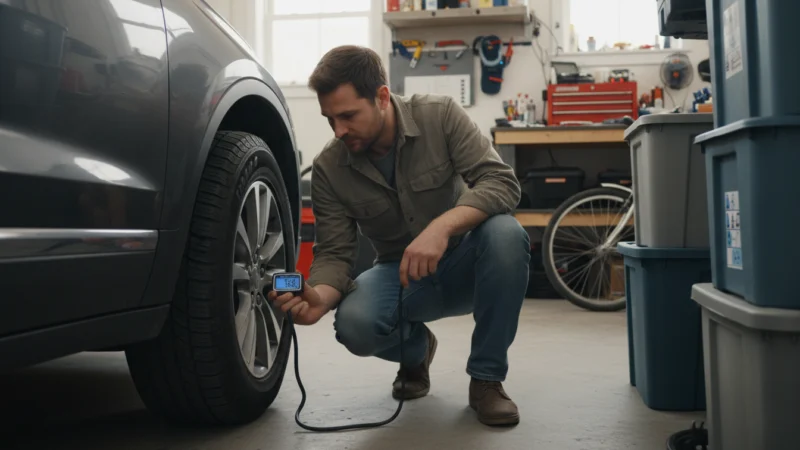
To check tyre pressure at home, ensure your tyres are cold, remove the valve cap, and firmly press a reliable tyre pressure gauge onto the valve stem. Read the displayed PSI (pounds per square inch) and compare it to your vehicle’s recommended pressure, typically found on the driver’s door jamb or in the owner’s manual. If the pressure is low, re-inflate to the correct specification.
- Always check tyre pressure when tyres are cold for accurate readings.
- Locate your vehicle’s recommended PSI on the driver’s door jamb or owner’s manual.
- Use a quality tyre pressure gauge for reliable measurements.
- Under-inflated or over-inflated tyres compromise safety and performance.
- Regular checks extend tyre life and improve fuel economy.
Why Maintaining Correct Tyre Pressure Matters
Maintaining the correct tyre pressure is a fundamental aspect of vehicle care that significantly impacts safety, fuel efficiency, and the lifespan of your tyres. Tyres are the sole point of contact between your vehicle and the road, making their condition paramount for safe operation. Incorrect pressure can lead to a host of problems, some of which may not be immediately obvious.
Under-inflated tyres cause increased rolling resistance, meaning the engine has to work harder to move the vehicle. This directly translates to reduced fuel economy, costing more at the pump. Furthermore, low pressure causes excessive heat buildup withinthe tyre structure, which can lead to premature wear, uneven tread patterns, and a higher risk of tyre failure, including blowouts. Handling and braking performance are also severely compromised, making the vehicle less responsive and harder to control, especially in emergency situations.
Conversely, over-inflated tyres can be just as detrimental. While they might offer slightly better fuel economy due to reduced contact patch, they lead to a harsher ride and significantly decrease the tyre’s ability to absorb road impacts. This can cause excessive wear in the center of the tread, reducing overall tyre life. More critically, over-inflation reduces the contact patch with the road, diminishing grip and increasing braking distances. It also makes the tyre more susceptible to damage from potholes and road debris, potentially leading to sudden deflation.
When and How Often Should You Check Your Tyres?
Regularity is key when it comes to tyre pressure maintenance. Experts recommend checking your tyre pressure at least once a month, or before embarking on any long journey. This consistent schedule helps catch any gradual pressure loss before it becomes a significant issue, ensuring your vehicle remains safe and efficient.
Beyond the monthly routine, certain situations warrant more frequent checks. Significant temperature changes, particularly drops, can cause tyre pressure to decrease. For every 10-degree Fahrenheit (approximately 5.5-degree Celsius) drop in ambient temperature, tyre pressure can decrease by about 1 PSI. Therefore, during seasonal transitions, especially from warmer to colder months, more frequent checks are advisable.
If your vehicle has been parked for an extended period, or if you notice any visual signs of a tyre appearing flatter than the others, an immediate check is necessary. Even a slow leak can quickly lead to dangerously low pressure. Always make it a habit to check your tyres when they are cold, meaning the vehicle has been parked for at least three hours or has been driven for less than a mile at a moderate speed. Driving heats up the tyres, causing the air inside to expand and leading to inaccurate readings.
Essential Tools for a Home Tyre Pressure Check
Performing an accurate tyre pressure check at home requires only a few simple, yet crucial, tools. Investing in quality equipment will ensure reliable readings and make the process straightforward and efficient.
- Tyre Pressure Gauge:This is the most critical tool. There are several types available:
- Pencil Gauge:These are inexpensive and compact, making them convenient to carry. While generally reliable, their accuracy can vary, and they might be harder to read precisely.
- Dial Gauge:Featuring a circular dial, these gauges are often more accurate and easier to read than pencil gauges. They tend to be more durable and provide a clear visual indication of pressure.
- Digital Gauge:Offering the highest level of precision and ease of reading, digital gauges display the pressure on an LCD screen. They are typically battery-operated and can be slightly more expensive, but their accuracy and user-friendliness are unmatched.
- Air Compressor (Optional but Recommended):While not strictly necessary for checking pressure, an air compressor is invaluable for inflating tyres at home. Portable 12-volt compressors that plug into your car’s accessory outlet are convenient for topping off tyres. Larger electric compressors offer faster inflation and can be used for other tasks around the home. Ensure your compressor has a reliable pressure hose and nozzle.
- Valve Cap Tool (Optional):Some valve caps can be tight. A small tool designed to grip and twist valve caps can be helpful, especially if you have decorative or metal caps.
Before each use, quickly inspect your gauge for any visible damage or blockages. A well-maintained gauge ensures consistent and accurate readings, which is vital for proper tyre care.
Finding Your Vehicle’s Recommended Tyre Pressure
Knowing your vehicle’s recommended tyre pressure is crucial before performing any checks or adjustments. This information is specific to your vehicle model and is determined by the manufacturer to optimize safety, handling, and tyre longevity. It is important to note that the recommended pressure is NOT found on the tyre sidewall itself.
The tyre sidewall typically displays the *maximum* pressure the tyre can safely hold, not the pressure recommended for your specific vehicle. Using the maximum pressure can lead to over-inflation and its associated risks. Always refer to your vehicle’s manufacturer specifications.
The most common places to find your vehicle’s recommended tyre pressure are:
- Driver’s Side Door Jamb:Open the driver’s door and look for a sticker or placard on the door frame. This sticker usually contains information about tyre size, recommended cold tyre inflation pressure for front and rear tyres (and the spare, if applicable), and sometimes even different pressures for light versus full loads.
- Owner’s Manual:Your vehicle’s owner’s manual is a comprehensive resource for all maintenance information. Look under sections related to ‘Tyres,’ ‘Wheels,’ or ‘Maintenance Specifications.’
- Glove Compartment:In some older vehicles, a sticker might be located inside the glove compartment.
- Fuel Filler Door:Less common, but some manufacturers place a tyre pressure sticker inside the fuel filler door.
Once you locate this information, make a mental note or take a picture. It will typically list two pressure values: one for the front tyres and one for the rear tyres, as these can differ. Some vehicles also specify different pressures for normal load versus maximum load conditions. Always use the ‘cold inflation pressure’ values.
Your Step-by-Step Guide to a Tyre Pressure Check at Home
Performing a tyre pressure check at home is a simple yet vital maintenance task that anyone can do. Follow these steps for an accurate and effective check:
- Gather Your Tools:Ensure you have a reliable tyre pressure gauge (digital, dial, or pencil) and, if needed, an air compressor or access to an air pump.
- Ensure Tyres Are Cold:This is critical for accuracy. The vehicle should have been parked for at least three hours, or driven for less than a mile at a moderate speed. Driving heats up the tyres, causing the air inside to expand and giving a falsely high reading.
- Locate Recommended Pressure:Find your vehicle’s recommended cold tyre inflation pressure on the sticker inside the driver’s door jamb or in your owner’s manual. Note the separate pressures for front and rear tyres.
- Remove Valve Cap:Unscrew the valve cap from the tyre’s valve stem. Keep the cap in a safe place to avoid losing it.
- Attach the Gauge:Press the tyre pressure gauge firmly and squarely onto the valve stem. You should hear a brief hiss of air, which indicates the gauge is properly seated. If the hiss continues, adjust the gauge until it seals tightly.
- Read the Pressure:For digital gauges, the reading will appear instantly. For dial gauges, the needle will point to the pressure. For pencil gauges, a small bar will slide out, indicating the pressure at its end. Read the pressure carefully.
- Compare and Record:Compare the reading from your gauge to the manufacturer’s recommended cold tyre pressure. It’s helpful to record the pressure for each tyre, especially if you plan to adjust them.
- Repeat for All Tyres:Perform steps 4-7 for all four road tyres and, if applicable, your spare tyre. The spare tyre is often overlooked but is equally important to keep properly inflated.
- Replace Valve Caps:Once you have checked each tyre, screw the valve caps back on tightly. These caps help prevent dirt and moisture from entering the valve stem and causing issues.
If any tyre is under-inflated, proceed to inflate it to the correct pressure using an air compressor. If a tyre is over-inflated, carefully release air by pressing the small pin in the center of the valve stem until the correct pressure is reached, then re-check with your gauge.
Inflating Your Tyres: What You Need to Know
Once you’ve identified an under-inflated tyre during your home check, the next step is to inflate it to the correct pressure. This process is straightforward but requires attention to detail to ensure safety and accuracy.
If you have a portable air compressor at home, connect it to your vehicle’s accessory outlet or a standard wall socket, depending on its power source. Attach the compressor’s hose nozzle firmly to the tyre’s valve stem. Most compressors have a built-in gauge, but it’s always best to use your separate, trusted tyre pressure gauge for final verification. Add air in short bursts, checking the pressure frequently with your gauge until it matches the recommended cold PSI. Avoid over-inflating, as releasing air can be more tedious than adding it.
If you don’t have a home compressor, you can use the air pumps available at most petrol stations. These pumps often have a built-in gauge, but their accuracy can vary. It’s still advisable to use your own gauge to confirm the pressure. Drive to the station, inflate your tyres, and then re-check them with your personal gauge once they’ve cooled down slightly, or account for the slight increase in pressure due to the short drive.
Always inflate tyres to the cold inflation pressure specified by your vehicle manufacturer. Never exceed the maximum pressure listed on the tyre sidewall, as this can be dangerous. After inflating, replace the valve caps securely. These caps are not just for aesthetics; they protect the valve stem from dirt, moisture, and potential damage, which could lead to slow leaks.
Common Mistakes to Avoid During Tyre Pressure Checks
While checking tyre pressure seems simple, several common mistakes can lead to inaccurate readings or even compromise safety. Being aware of these pitfalls can help you perform the task correctly and effectively.
- Checking Hot Tyres:The most frequent error is checking tyre pressure after driving. As tyres roll, friction generates heat, causing the air inside to expand and the pressure to increase. A reading from a hot tyre will be higher than the true cold pressure, leading you to potentially under-inflate the tyre to the recommended cold PSI. Always wait until the vehicle has been stationary for at least three hours or driven minimally.
- Using an Inaccurate Gauge:Not all tyre pressure gauges are created equal. Cheap or old, damaged gauges can provide misleading readings. Invest in a quality digital or dial gauge and consider calibrating it periodically or comparing it with a known accurate gauge.
- Forgetting the Spare Tyre:Many drivers neglect to check the pressure of their spare tyre. A flat or under-inflated spare is useless in an emergency. Include it in your regular monthly checks.
- Ignoring the Vehicle’s Recommended Pressure:Some individuals inflate their tyres to the maximum pressure listed on the tyre sidewall. This is incorrect and can lead to over-inflation, reducing grip and increasing wear. Always use the pressure specified by your vehicle manufacturer.
- Not Replacing Valve Caps:Valve caps protect the valve stem from dirt, moisture, and road grime, which can cause the valve to stick or leak. Always replace them securely after checking or adjusting pressure.
- Over-inflating:While under-inflation is more common, over-inflating can also be detrimental, leading to a harsher ride, reduced contact patch, and increased susceptibility to damage. Aim for the exact recommended pressure.
By avoiding these common mistakes, you can ensure your tyre pressure checks are accurate and contribute positively to your vehicle’s safety and performance.
Understanding Your Tyre Pressure Monitoring System (TPMS)
Modern vehicles are equipped with a Tyre Pressure Monitoring System (TPMS), a safety feature designed to alert drivers when one or more tyres are significantly under-inflated. This system has become standard in many regions due to its role in preventing accidents caused by tyre failure and improving fuel efficiency.
There are two main types of TPMS: direct and indirect. Direct TPMS uses sensors located inside each tyre, typically mounted on the valve stem, to directly measure the air pressure and temperature. These sensors transmit data wirelessly to the vehicle’s onboard computer. When a tyre’s pressure drops below a predetermined threshold (usually 25% below the recommended cold inflation pressure), an indicator light illuminates on the dashboard, often accompanied by a specific tyre pressure reading for each wheel.
Indirect TPMS, on the other hand, works in conjunction with the vehicle’s Anti-lock Braking System (ABS) wheel speed sensors. It monitors the rotational speed of each wheel. An under-inflated tyre will have a slightly smaller diameter and thus rotate at a different speed compared to a properly inflated tyre. The system detects these discrepancies and triggers a warning light. Indirect systems do not provide specific pressure readings for each tyre.
While TPMS is a valuable safety feature, it should not replace manual tyre pressure checks. The system typically only alerts you when pressure is significantly low, meaning your tyres could still be under-inflated enough to affect performance and wear without triggering the warning light. Regular manual checks ensure your tyres are always at their optimal pressure, not just above the critical warning threshold.
Troubleshooting Persistent Tyre Pressure Issues
Even with regular checks, you might encounter persistent tyre pressure issues, such as a tyre that consistently loses air faster than the others. This indicates a problem that requires further investigation beyond a simple top-off. Addressing these issues promptly is crucial for safety and to prevent further damage.
One of the most common causes of persistent low pressure is a slow puncture. This could be due to a nail, screw, or other sharp object embedded in the tread or sidewall. Sometimes, the object is small and acts as a plug, allowing air to escape slowly. Visually inspect the tyre’s tread and sidewalls for any foreign objects or visible damage.
Another frequent culprit is a leaking valve stem. The rubber or metal valve stem can degrade over time, or the valve core inside can become loose or faulty. You can test for a valve stem leak by applying a small amount of soapy water to the valve stem and watching for bubbles, which indicate escaping air. A loose or damaged valve core can often be tightened or replaced relatively easily.
Leaks can also occur where the tyre bead meets the wheel rim. Corrosion on the rim, a bent rim, or improper tyre mounting can prevent a perfect seal, leading to slow air loss. This type of leak is harder to diagnose at home and usually requires professional attention to dismount the tyre and inspect the rim and bead area.
If you suspect a persistent leak, especially after checking for visible punctures and valve stem issues, it is always best to consult a professional mechanic or tyre shop. They have the equipment to properly inspect the tyre, locate the source of the leak, and perform safe and effective repairs or recommend replacement if the tyre is irreparable.
Seasonal Tyre Pressure Adjustments
Tyre pressure is not a static value; it fluctuates with ambient temperature. Understanding this relationship is key to maintaining optimal tyre pressure throughout the year, especially during seasonal changes.
As a general rule, for every 10-degree Fahrenheit (approximately 5.5-degree Celsius) change in ambient temperature, your tyre pressure will change by about 1 PSI. When temperatures drop significantly, as they do in autumn and winter, the air inside your tyres contracts, causing the pressure to decrease. Conversely, during warmer spring and summer months, the air expands, and pressure increases.
This means that if you set your tyre pressure to the recommended cold PSI in the summer, it will likely be under-inflated by several PSI once winter arrives. Similarly, if you inflate your tyres to the correct cold pressure in the dead of winter, they might become slightly over-inflated when summer temperatures soar. Therefore, it’s essential to perform more frequent tyre pressure checks during seasonal transitions.
In colder months, you might find yourself needing to add air more often to compensate for the temperature drop. In warmer months, you might occasionally need to release a small amount of air if the pressure has risen above the recommended level. Always remember to check and adjust pressure when the tyres are cold to get the most accurate reading and ensure your vehicle is prepared for the prevailing weather conditions.
Conclusion: Tyre Pressure Check at Home (Quick Recap)
Checking tyre pressure at home takes only a few minutes but makes a big difference in safety, tyre life, and fuel economy. Always measure cold tyre pressure, match the PSI on your door jamb placard, and adjust gradually with frequent re-checks. If a tyre repeatedly loses pressure, don’t ignore it—check for punctures, valve leaks, or bead/rim issues and visit a tyre shop if needed. Make this a monthly habit and your vehicle will handle better, stop shorter, and cost less to run.
Frequently Asked Questions
1: What PSI should I put in my tyres?
Use the recommended PSI on the driver’s door jamb sticker (cold pressure). Do not use the max PSI written on the tyre sidewall.
2: Can I check tyre pressure right after driving?
Not ideal. Driving heats tyres and increases PSI. Wait at least 3 hours after driving, or drive less than 1 mile slowly before checking.
3: Why is my tyre pressure low every few weeks?
Common reasons: small puncture, leaking valve core/stem, rim bead leak, or seasonal temperature drop.
4: Should front and rear tyres be the same PSI?
Not always. Many cars have different front vs rear recommended PSI. Follow the sticker values.
5: How much pressure drops in cold weather?
Roughly 1 PSI drop for every 10°F (≈5.5°C) temperature decrease. So winter often needs top-ups.
6: TPMS light is on but tyres look fine—what should I do?
Manually check all tyres with your gauge. TPMS often triggers only when pressure is significantly low. Also check the spare if your car monitors it.
Related Guides: How to Check Tire Tread at Home, Why You Should Use Wheel Chocks, Why You Should Always Use Wheel Chocks f, How To Use Tire Pressure Gauge Diy.