
A beginner mechanic tools list typically includes fundamental hand tools like socket sets, wrench sets, screwdrivers, pliers, and a reliable jack and jack stands for safety. Essential diagnostic tools such as a multimeter and a basic OBD-II scanner are also crucial for identifying common vehicle issues. These items form the core of a functional toolkit for basic automotive maintenance and repair.
- Start with foundational hand tools for versatility.
- Prioritize safety gear to protect yourself during repairs.
- Invest in basic diagnostic tools to understand vehicle issues.
- Choose quality tools for durability and reliability.
- Organize your tools for efficiency and easy access.
Starting Your Journey: Why the Right Tools Matter
Embarking on the path of DIY auto repair can be a rewarding experience, offering both cost savings and a deeper understanding of your vehicle. However, the success and safety of any automotive project hinge significantly on having the correct tools for the job. Attempting repairs with inadequate or improper equipment can lead to frustration, damage to vehicle components, and, most importantly, personal injury.
A well-curated toolkit empowers you to tackle common maintenance tasks and minor repairs with confidence. It ensures that fasteners can be properly tightened or loosened, components can be safely removed, and systems can be accurately diagnosed. For beginners, understanding which tools are truly essential can feel overwhelming, but focusing on versatile, high-quality basics provides a solid foundation.
The Foundational Hand Tools Every Beginner Needs
Hand tools are the workhorses of any mechanic’s arsenal, forming the backbone of nearly every repair or maintenance task. These are the items you will reach for most frequently, making their selection critical for efficiency and effectiveness. Investing in durable, ergonomic hand tools will make your DIY projects more manageable and enjoyable.
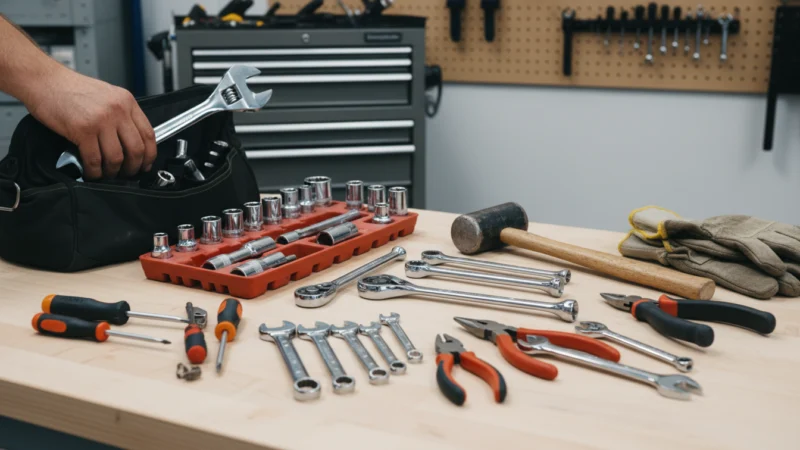
Socket Sets
Socket sets are indispensable for working with nuts and bolts of various sizes. A comprehensive set typically includes a range of sockets in both standard (SAE) and metric measurements, along with ratchets of different drive sizes (1/4-inch, 3/8-inch, and 1/2-inch). Extensions and universal joints are also valuable additions, allowing access to fasteners in tight or awkward spaces.
Wrench Sets
Similar to sockets, wrench sets are crucial for turning fasteners. Combination wrenches, which feature an open end on one side and a box end on the other, are particularly versatile. Having a full range of standard and metric sizes ensures you can tackle most common automotive fasteners. Ratcheting wrenches can offer increased speed and convenience in certain situations.
Screwdrivers
A good set of screwdrivers, encompassing various sizes of Phillips, flathead, and Torx bits, is fundamental. Many modern vehicles utilize Torx fasteners, so having these on hand is increasingly important. Magnetic tips can be a helpful feature for preventing dropped screws in hard-to-reach areas.
Pliers
Pliers come in several forms, each serving a specific purpose. Slip-joint pliers are general-purpose gripping tools, while needle-nose pliers are excellent for reaching into confined spaces and manipulating small parts. Locking pliers (Vise-Grips) provide a strong, temporary grip, and cutting pliers are useful for wires and small hoses. Channel-lock pliers offer adjustable gripping for larger items.
Hammers
While not used for every task, a few types of hammers are beneficial. A standard claw hammer can be useful for general purposes, but a rubber mallet or dead-blow hammer is often preferred for automotive work to avoid damaging delicate components or finishes. These are ideal for gently persuading parts into place or loosening stubborn connections.
Your Essential Beginner Mechanic Tools List: Core Equipment
Beyond the foundational hand tools, a beginner mechanic tools list requires severalother core pieces of equipment to handle a wider array of tasks safely and effectively. These items are often larger or more specialized but are equally vital for a well-rounded DIY toolkit.
Torque Wrench
A torque wrench is critical for ensuring fasteners are tightened to the manufacturer’s specified settings. Overtightening can strip threads or damage components, while undertightening can lead to parts coming loose. A 3/8-inch drive torque wrench is a versatile choice for many automotive applications, with a 1/2-inch drive useful for larger, higher-torque fasteners.
Breaker Bar
For stubborn or seized nuts and bolts, a breaker bar provides significantly more leverage than a standard ratchet. Its longer handle and solid construction allow you to apply substantial force without fear of damaging the tool. This is an essential item for tasks like lug nut removal or suspension work.
Oil Filter Wrench
Changing your engine oil is one of the most common DIY maintenance tasks. An oil filter wrench, available in various styles (cap, strap, or claw), makes removing and installing oil filters much easier. Ensure you have one that fits the filter type on your specific vehicle.
Drain Pan
A sturdy drain pan is necessary for collecting used fluids like engine oil, coolant, or transmission fluid. Look for one with a good capacity and a spout for easy, mess-free pouring into recycling containers.
Funnel
To prevent spills when refilling fluids, a set of funnels in various sizes is invaluable. This simple tool helps direct liquids precisely into their respective reservoirs, keeping your engine bay clean.
Wire Brush and Scraper
These tools are excellent for cleaning rust, grime, and old gasket material from surfaces before reassembly. A clean mating surface is crucial for proper sealing and component function.
Must-Have Safety Gear for DIY Auto Repair
Safety should always be the top priority when working on any vehicle. Neglecting proper safety precautions can lead to serious injuries. Investing in quality safety gear is not an option; it is a necessity for every beginner mechanic.
Safety Glasses or Goggles
Eye protection is paramount. Flying debris, splashing fluids, and stray sparks can cause permanent eye damage. Always wear safety glasses or goggles that meet appropriate safety standards.
Work Gloves
Protecting your hands from cuts, scrapes, burns, and harsh chemicals is essential. Choose durable work gloves that offer good dexterity, such as mechanics’ gloves or heavy-duty nitrile gloves for fluid changes.
Hearing Protection
Some automotive tasks, like using air tools or grinding, can produce noise levels harmful to your hearing. Earplugs or earmuffs should be used in these situations to prevent long-term hearing damage.
Fire Extinguisher
Keep a readily accessible ABC-rated fire extinguisher in your workspace. Small fires can erupt from fuel leaks, electrical shorts, or hot components, and having an extinguisher nearby can prevent a minor incident from becoming a major disaster.
First-Aid Kit
Minor cuts, scrapes, and burns are common in any hands-on work. A well-stocked first-aid kit allows you to treat these small injuries promptly, preventing infection and allowing you to continue working safely.
Basic Diagnostic Tools: Understanding Your Car’s Signals
Modern vehicles are complex machines, and understanding their signals is crucial for effective troubleshooting. Basic diagnostic tools allow you to interpret what your car is trying to tell you, helping to pinpoint issues before they become major problems.
OBD-II Scanner
An On-Board Diagnostics II (OBD-II) scanner is perhaps the most important diagnostic tool for vehicles manufactured after 1996. It connects to your car’s diagnostic port and reads trouble codes (DTCs) that illuminate the Check Engine Light. Even a basic scanner can provide valuable information, guiding you toward the source of a problem.
Multimeter
A digital multimeter (DMM) is essential for electrical troubleshooting. It can measure voltage, current, and resistance, allowing you to test circuits, sensors, and components. Understanding basic electrical principles and how to use a multimeter opens up a wide range of diagnostic possibilities.
Test Light
A simple test light can quickly determine if power is present in a circuit or at a component. While less precise than a multimeter, it’s a fast and effective tool for basic electrical checks, such as verifying power to a fuse or a light bulb socket.
Lifting and Supporting: Jacks, Jack Stands, and Creeper
Working underneath a vehicle requires specialized equipment to liftand safely support it. Never rely solely on a jack to hold a vehicle; jack stands are non-negotiable for safety.
Floor Jack
A sturdy hydraulic floor jack is used to lift the vehicle off the ground. Look for one with a sufficient lifting capacity for your vehicle’s weight and a low profile if your car has limited ground clearance. Always lift on designated jacking points.
Jack Stands
Once the vehicle is lifted, jack stands are absolutely essential for supporting its weight. Never work under a vehicle that is not securely supported by jack stands. Use at least two, placed on solid, level ground, and ensure they are rated for your vehicle’s weight. Some prefer to use four for maximum stability.
Wheel Chocks
Wheel chocks are small wedges placed against the tires to prevent the vehicle from rolling while it is being jacked up or worked on. They provide an extra layer of safety, especially when working on inclines or uneven surfaces.
Creeper
A creeper is a low-profile board with wheels that allows you to easily slide under a vehicle. It significantly improves comfort and maneuverability when working on undercarriage components, reducing strain on your back and knees.
Keeping Organized: Smart Tool Storage Solutions
A disorganized toolkit is a frustrating toolkit. Efficient tool storage not only protects your investment but also saves valuable time during repairs. Knowing where every tool is located makes tasks smoother and more enjoyable.
Toolbox or Rolling Cabinet
For beginners, a sturdy toolbox with multiple drawers is a great starting point. As your collection grows, a rolling tool cabinet provides more storage capacity, better organization, and mobility. Look for durable construction and smooth-gliding drawers.
Tool Chest Dividers and Organizers
Within your toolbox or cabinet, dividers, trays, and foam inserts can help keep sockets, wrenches, and smaller items neatly arranged. This prevents tools from rattling around and makes it easy to spot the tool you need quickly.
Magnetic Trays and Holders
Magnetic trays are incredibly useful for holding small fasteners, nuts, and bolts during a repair, preventing them from getting lost. Magnetic strips can also be mounted on walls or inside toolboxes to hold frequently used tools like screwdrivers or pliers.
Building Your Toolkit Smartly: Budgeting and Quality
When assembling your beginner mechanic tools list, it’s natural to consider the investment involved. While it’s tempting to opt for the least expensive options, prioritizing quality over the lowest initial outlay can save you frustration and money in the long run. Durable tools perform better, last longer, and are safer to use.
Focus on acquiring essential, versatile tools first. You don’t need every specialized tool right away. Start with the basics and expand your collection as specific repair needs arise. Many reputable brands offer starter kits that provide a good balance of quality and value, often covering the most frequently used sizes and types of tools. Researching reviews and considering warranties can guide your choices toward reliable equipment that will serve you well for years.
Tool Maintenance Tips for Longevity
Proper tool maintenance is crucial for extending the life of your equipment and ensuring it performs reliably when needed. A little care goes a long way in protecting your investment.
- Clean Tools After Use:Wipe down tools to remove grease, oil, and dirt. This prevents corrosion and keeps them ready for the next job.
- Lubricate Moving Parts:Apply a light coat of oil to ratchets, pliers, and other tools with moving components to keep them operating smoothly and prevent rust.
- Store Tools Properly:Always return tools to their designated spots in your toolbox or cabinet. This prevents loss, damage, and makes them easy to find.
- Inspect for Damage:Before and after each use, quickly inspect tools for any signs of wear, cracks, or damage. Replace or repair damaged tools promptly to ensure safety and effectiveness.
- Protect from Moisture:Store tools in a dry environment to prevent rust. Consider using desiccant packets in your toolbox if you live in a humid area.
Expanding Your Arsenal: Next Steps for Aspiring Mechanics
Once you have mastered the basics and feel comfortable with your beginner mechanic tools list, you may find yourself ready to tackle more complex projects. Expanding your toolkit strategically can open up new possibilities for DIY repairs and maintenance.
Consider adding specialized tools for specific vehicle systems, such as brake caliper tools, suspension spring compressors (use with extreme caution), or fuel pressure testers. Air tools, like impact wrenches and air ratchets, can significantly speed up certain tasks, though they require an air compressor. As you gain experience, you’ll naturally identify the next tools that will be most beneficial for the types of work you enjoy doing or the specific needs of your vehicle.
Frequently Asked Questions
What is the absolute minimum beginner mechanic tools list I need to start?
The absolute minimum includes a basic socket set with ratchets, a combination wrench set, a screwdriver set (Phillips and flathead), a pair of pliers, and critically, a floor jack with jack stands for safety. These tools will allow you to perform very basic tasks like checkingfluids, changing a tire, or tightening accessible fasteners.
How much should I expect to spend on a quality beginner mechanic tools list?
The investment for a quality beginner mechanic tools list can vary widely based on brand and comprehensiveness. Focusing on durable, reliable tools is more important than seeking the lowest options. Many starter kits offer excellent value, providing a solid foundation that can be expanded over time.
Are expensive brands necessary for a beginner mechanic tools list?
Expensive brands are not strictly necessary for a beginner, but quality is paramount. Mid-range brands often offer a great balance of durability, performance, and reliability without the premium associated with professional-grade tools. Prioritize tools with good reviews and strong warranties.
What safety items should be on a beginner mechanic tools list?
Essential safety items include safety glasses, durable work gloves, and a fire extinguisher. When lifting a vehicle, jack stands and wheel chocks are non-negotiable. Hearing protection is also important for noisy tasks to prevent long-term damage.
Can I use a beginner mechanic tools list to perform advanced repairs?
While a beginner mechanic tools list provides a strong foundation, it is generally not sufficient for advanced repairs. More complex tasks often require specialized tools, diagnostic equipment, and a deeper understanding of automotive systems. Attempting advanced repairs without the right tools or knowledge can be unsafe and lead to further damage.
Where is the best place to buy items for my beginner mechanic tools list?
You can find items for your beginner mechanic tools list at various retailers, including automotive parts stores, hardware stores, and online marketplaces. Many stores offer complete starter kits, which can be a convenient and cost-effective way to acquire a foundational set of tools.
Conclusion
Building a comprehensive beginner mechanic tools list is the first crucial step toward confidently tackling DIY auto repair and maintenance. By prioritizing foundational hand tools, essential safety gear, and basic diagnostic equipment, you establish a solid and safe working environment. Remember that quality and proper tool maintenance are key to longevity and effective repairs.
As you gain experience, your toolkit will naturally evolve to meet new challenges. Start with the essentials, always prioritize safety, and enjoy the rewarding journey of understanding and maintaining your vehicle. For more detailed guides on specific repairs, consult trusted automotive resources or consider seeking advice from experienced mechanics.
Related Guides: How to Inspect Car Belts and Hoses, How to Fix Small Oil Leak Temporary, How to Clean Reusable Air Filter DIY, What Happens If You Overfill Engine Oil , When to Change Engine Air Filter.