
Choosing the right lifting tool is fundamental for safe and efficient DIY car maintenance. For most home mechanics, a floor jack offers superior stability, faster lifting, and easier maneuverability, making it the generally preferred choice. However, a bottle jack provides immense lifting power in a compact design, proving invaluable for heavier vehicles or when garage space is at a premium, though it demands more precise placement.
Understanding the Basics: What is a Floor Jack?
A floor jack, also known as a trolley jack, is a hydraulic liftingdevice designed for raising vehicles. It typically features a long handle, a low-profile frame with wheels, and a saddle that contacts the vehicle’s jacking point. The hydraulic mechanism allows for smooth, controlled lifting with relatively little effort.
These jacks are characterized by their broad base and rolling design, which contributes to their stability. They are commonly found in various capacities, suitable for everything from small sedans to larger SUVs and light trucks. Their design allows them to reach jacking points further under a vehicle.
Understanding the Basics: What is a Bottle Jack?
A bottle jack is a compact hydraulic jack named for its resemblance to a bottle. It operates vertically, using a hydraulic ram to push a lifting pad upwards. This design allows it to deliver significant lifting force within a very small footprint.
Bottle jacks are known for their high lifting capacity relative to their size. They are often used for heavy-duty applications, such as lifting trucks, agricultural equipment, or even house structures. Their vertical lift path means they require a stable, flat surface directly beneath the jacking point.
Floor Jack vs Bottle Jack for DIY: A Head-to-Head Comparison
When it comes to DIY automotive tasks, the choice between a floor jack and a bottle jack involves weighing several critical factors. Each tool has distinct advantages and disadvantages that make it more suitable for specific scenarios. Understanding these differences is key to equipping your home garage effectively and safely.
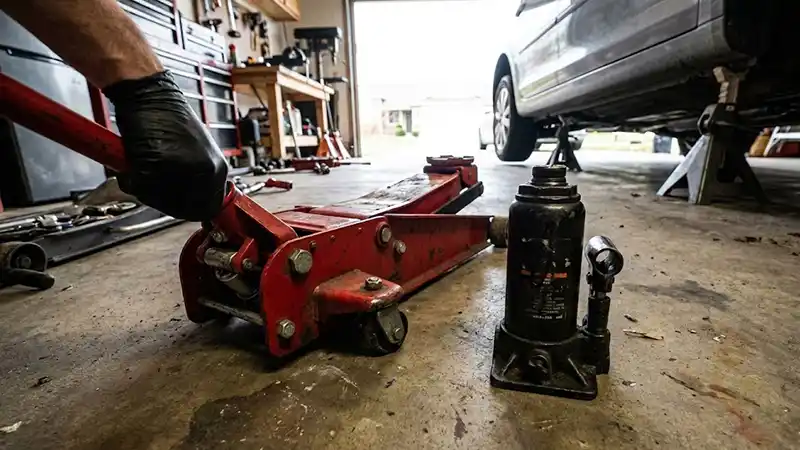
Key Differences: Lifting Capacity, Height, and Speed
Lifting capacity is a primary differentiator. Bottle jacks generally offer a higher lifting capacity for their size, often exceeding what many floor jacks can handle. This makes them ideal for heavier vehicles like large SUVs, trucks, or RVs.
Floor jacks, while having varying capacities, typically lift vehicles faster due to their longer pump stroke and larger hydraulic reservoirs. They also often provide a greater maximum lift height, allowing for more clearance under the vehicle. Bottle jacks, while powerful, can be slower and may have a more limited lift range.
Stability and Safety: Crucial Considerations for DIY Mechanics
Stability is paramount when working under a vehicle. Floor jacks, with their wide base and four wheels, offer superior stability during the lifting process. Their design allows for easy positioning and a more controlled, gradual lift and descent.
Bottle jacks, due to their smaller footprint and vertical lifting action, can be less stable, especially on uneven surfaces. They require very precise placement to prevent tipping or shifting. Regardless of the jack type, always use jack stands to support the vehicle once it is lifted; the jack itself is only for lifting, not for sustained support.
Maneuverability and Storage: Practical Aspects for Your Garage
Floor jacks, particularly the larger models, can be heavy and take up significant floor space. However, their wheels make them easy to roll into position under a vehicle. Compact floor jacks are available for those with limited space.
Bottle jacks excel in portability and storage. Their compact size means they can be easily stored in a toolbox, trunk, or a small corner of the garage. This makes them a convenient option for emergency roadside use or for DIYers with very tight workspaces.
Common DIY Applications: When to Use Each Jack
For routine DIY tasks like tire rotations, oil changes, brake jobs, or suspension work on most passenger cars and light trucks, a floor jack is generally the preferred tool. Its ease of positioning, speed, and stability make these common jobs much simpler and safer.
Bottle jacks are better suited for heavy-duty applications where sheer lifting power is needed, such as lifting a heavy truck axle, a trailer, or for specific tasks where a floor jack cannot fit due to clearance issues. They are also excellent for pressing bearings or other shop press applications.
Choosing the Right Jack for Your Specific DIY Project
Your choice should align with the types of vehicles you work on and the tasks you perform. If you primarily work on sedans, small SUVs, or light trucks, a good quality floor jack will likely be your best all-around tool. Look for one with a suitable capacity and a low-profile design if your vehicle has limited ground clearance.
If you own heavy trucks, commercial vehicles, or frequently tackle projects requiring immense lifting force in tight spots, a bottle jack might be a necessary addition. Many DIY enthusiasts find value in owning both types of jacks to cover a wider range of projects and ensure they always have the right tool for the job.
Essential Safety Practices When Using Any Jack
Safety should always be your top priority when lifting a vehicle. Never work under a vehicle supported solely by a jack. Always use appropriately rated jack stands placed on solid, level ground. Engage the parking brake and chock the wheels that remain on the ground to prevent the vehicle from rolling.
Ensure the jack is placed on a firm, level surface, such as concrete. Position the jack saddle correctly on the vehicle’s designated jacking points, which are typically outlined in your vehicle’s owner’s manual. Lift the vehicle slowly and deliberately, observing for any instability or shifting.
Maintenance Tips for Extending Your Jack’s Lifespan
Proper maintenance ensures your jack remains reliable and safe. Regularly inspect your jack for any signs of damage, leaks, or wear on moving parts. Keep the hydraulic ram and moving components clean and lightly lubricated to prevent rust and ensure smooth operation.
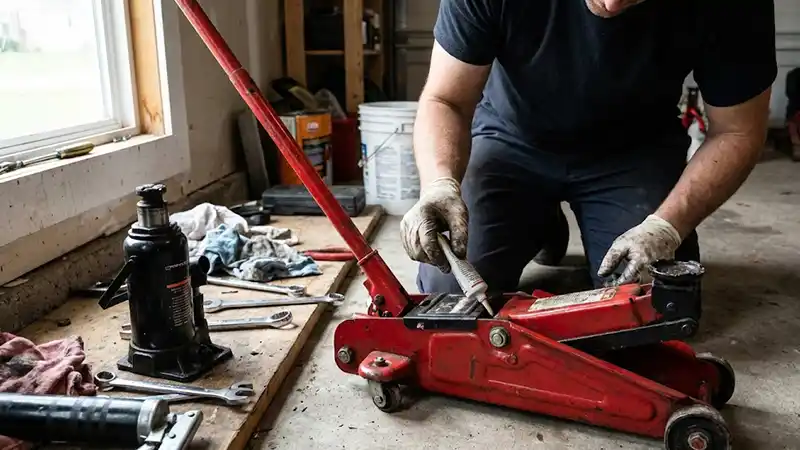
For hydraulic jacks, periodically check the fluid level and top it off with the manufacturer-recommended hydraulic jack oil if necessary. Bleed air from the hydraulic system as per the manufacturer’s instructions to maintain optimal performance. Store your jack in a clean, dry environment to protect it from the elements.
Beyond the Jack: Essential Jack Stands and Wheel Chocks
While a jack lifts the vehicle, jack stands are what truly secure it. They are designed to hold the vehicle’s weight safely for extended periods. Always use jack stands in pairs, placing them under sturdy frame points or axle components after the vehicle has been lifted.
Wheel chocks are equally important. These wedges are placed against the tires that remain on the ground to prevent the vehicle from rolling while it is being lifted or supported by jack stands. Using both jack stands and wheel chocks creates a much safer working environment.
Making Your Final Decision: Floor Jack or Bottle Jack?
The decision between a floor jack and a bottle jack for DIY use ultimately depends on your specific needs, vehicle types, and available garage space. Floor jacks offer greater stability and speed for general automotive work, making them a versatile choice for most home mechanics. Bottle jacks provide compact, high-capacitylifting for heavier tasks or tight spaces.
For optimal safety and versatility, many experienced DIYers recommend owning both. This ensures you are always prepared with the appropriate tool for any lifting challenge that arises in your home garage. Always prioritize safety by using jack stands and wheel chocks in conjunction with any lifting device.
Frequently Asked Questions
Is a floor jack or bottle jack better for general DIY car repairs?
For most general DIY car repairs, a floor jack is typically better due to its superior stability, faster lifting speed, and easier maneuverability. It allows for more precise positioning under various jacking points on common passenger vehicles.
Can a bottle jack be used safely for lifting a car for DIY tasks?
Yes, a bottle jack can be used safely for lifting a car for DIY tasks, provided it is placed on a flat, stable surface and positioned correctly on the vehicle’s jacking point. However, its smaller footprint means it requires more careful placement and is less stable than a floor jack during the lift.
What are the main safety differences between a floor jack vs bottle jack for DIY use?
The main safety difference lies in stability; floor jacks offer a wider, more stable base, reducing the risk of tipping during lifting. Bottle jacks, being more compact, require very precise placement and a perfectly level surface to maintain stability. In all cases, jack stands are essential for safety once the vehicle is lifted.
Which type of jack is more suitable for DIY projects with limited garage space?
A bottle jack is generally more suitable for DIY projects with limited garage space due to its compact size and vertical design. It takes up significantly less storage room compared to most floor jacks, making it a practical choice for smaller workspaces or for portability.
How do I decide between a floor jack vs bottle jack for DIY truck maintenance?
For DIY truck maintenance, consider the truck’s weight and ground clearance. A high-capacity bottle jack might be necessary for heavier trucks, especially if you need to lift specific axles. However, a heavy-duty floor jack with a high lift capacity and a long reach can also be very effective for general truck work, offering better stability.
Are there specific DIY tasks where a floor jack is clearly superior to a bottle jack?
Yes, a floor jack is clearly superior for tasks requiring frequent lifting and lowering, such as tire rotations, or when needing to reach jacking points deep under a vehicle. Its rolling design and greater stability make it more efficient and safer for these common automotive maintenance activities.
Conclusion
Selecting the appropriate jack for your home garage is a crucial decision for any DIY mechanic. While floor jacks offer broad utility, stability, and speed for most common automotive tasks, bottle jacks provide unmatched lifting power in a compact form for heavier vehicles and specific applications. Understanding the strengths of each tool allows you to make an informed choice that enhances both the efficiency and safety of your projects. Always remember to complement your jack with reliable jack stands and wheel chocks for a secure working environment.