
To check car battery health at home, begin with a visual inspection for damage or corrosion. Then, use a multimeter to measure the battery’s voltage; a reading of 12.6 volts or higher typically indicates a healthy charge. For a more thorough assessment, a dedicated load tester can simulate starting conditions and reveal the battery’s ability to hold a charge under stress.
- Always prioritize safety by wearing protectivegear and working in a well-ventilated area.
- A multimeter provides a quick voltage check, indicating the battery’s current charge level.
- A load tester offers deeper insight into the battery’s capacity to deliver power.
- Regular visual inspections can identify early signs of wear or damage.
- Understanding test results helps determine if replacement or maintenance is needed.
Understanding Your Car Battery’s Importance
The car battery is a fundamental component of any vehicle’s electrical system, responsible for providing the initial surge of power needed to start the engine. Beyond ignition, it also powers various electronic accessories when the engine is off, such as lights, radio, and power windows. A healthy battery ensures reliable starting and consistent performance of these systems.
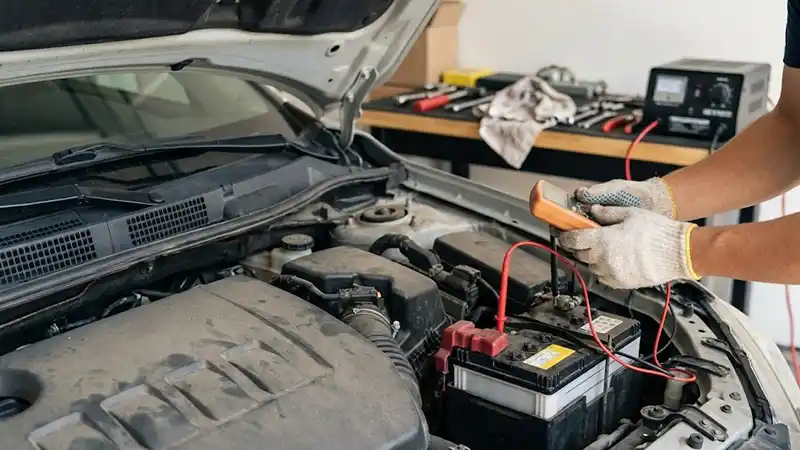
Its role extends to stabilizing the voltage for the entire electrical system, protecting sensitive electronic components from potential damage caused by voltage fluctuations. Over time, batteries naturally degrade due to factors like age, temperature extremes, and usage patterns. Regular checks are crucial to prevent unexpected breakdowns and maintain vehicle reliability.
Essential Tools for At-Home Battery Testing
Performing at-home battery health checks requires a few key tools to ensure accuracy and safety. These tools are generally affordable and readily available at automotive supply stores or online retailers. Having them on hand empowers car owners to proactively monitor their battery’s condition.
- Digital Multimeter:This versatile tool measures voltage, current, and resistance. For battery testing, its primary use is to measure the battery’s static voltage.
- Battery Load Tester:While a multimeter checks static voltage, a load tester simulates the demands placed on a battery during engine startup. This provides a more comprehensive assessment of its cranking ability.
- Battery Terminal Cleaner:A wire brush or specialized tool designed to remove corrosion from battery terminals and posts.
- Safety Glasses and Gloves:Essential personal protective equipment to shield eyes and hands from battery acid and electrical hazards.
- Wrench Set:For safely disconnecting and reconnecting battery terminals if cleaning or further inspection is required.
Prioritizing Safety During Battery Checks
Working with car batteries involves potential hazards, including exposure to corrosive battery acid, electrical shock, and explosive hydrogen gas. Adhering to strict safety protocols is paramount to prevent injuries. Never rush the process and always be mindful of your surroundings.
Always wear safety glasses and chemical-resistant gloves to protect your eyes and skin from battery acid. Ensure you are working in a well-ventilated area to disperse any hydrogen gas that may be released, which is highly flammable. Avoid creating sparks near the battery by not touching tools to both terminals simultaneously or dropping metal objects onto the battery.
Before beginning any work, ensure the vehicle’s ignition is off and the parking brake is engaged. If disconnecting terminals, always remove the negative (black) cable first, followed by the positive (red) cable. When reconnecting, attach the positive cable first, then the negative. This sequence minimizes the risk of accidental short circuits.
Visual Inspection: The First Step to Assessing Battery Health
Before using any testing equipment, a thorough visual inspection of your car battery can reveal significant clues about its health. This initial step is simple, requires no special tools, and can often identify problems that might affect test results or indicate immediate issues.
Look for any signs of physical damage to the battery casing, such as cracks, bulges, or leaks. These can indicate internal damage or overcharging. Check the battery terminals and cables for corrosion, which often appears as a white or bluish-green powdery substance. Corrosion impedes electrical flow and can lead to starting problems, even with a healthy battery.
Ensure that the battery cables are securely attached to the terminals. Loose connections can cause intermittent power delivery and prevent the battery from charging properly. Also, inspect the battery tray and hold-down clamp to confirm the battery is firmly secured, preventing vibrations that can shorten its lifespan.
Testing Battery Voltage with a Multimeter
A multimeter is an indispensable tool for checking your car battery’s static voltage, providing a snapshot of its current charge level. This test is straightforward and can be performed quickly at home. It’s important to test the battery after the car has been off for several hours, ideally overnight, to get an accurate resting voltage reading.
Set your digital multimeter to measure DC voltage (VDC) and select a range appropriate for 12-volt systems, typically 20V. Connect the red (positive) lead of the multimeter to the positive (+) terminal of the battery and the black (negative) lead to the negative (-) terminal. Ensure good contact for an accurate reading.
A fully charged, healthy car battery should read approximately 12.6 volts or higher. A reading between 12.4 and 12.6 volts suggests a good charge but not full. Readings below 12.4 volts indicate a partially discharged battery, while anything below 12.0 volts suggests a significantly discharged or potentially failing battery that may struggle to start the engine.
Performing a Battery Load Test for Deeper Insights
While a multimeter provides the battery’s static voltage, a battery load tester offers a more comprehensive assessment by simulating the high current draw experienced during engine startup. This test reveals the battery’s ability to maintain voltage under stress, which is crucial for reliable performance.
There are two main types of load testers: handheld digital testers and traditional carbon pile testers. Handheld digital testers are generally easier to use and provide quick, accurate results, often displaying not just voltage but also cold cranking amps (CCA) and overall health percentage. Carbon pile testers require more experience but offer precise control over the load applied.
To perform a load test, connect the tester’s clamps to the battery terminals, following the manufacturer’s instructions. The tester will apply a controlled load for a short period, typically 10-15 seconds, while monitoring the voltage. A healthy battery should maintain a voltage above 9.6 volts during the load test. A drop below this threshold indicates a weak battery that may struggle to start the vehicle, especially in cold weather.
how to check car battery health at home: A Step-by-Step Guide
Follow these steps to safely and effectively check your car battery’s health at home.
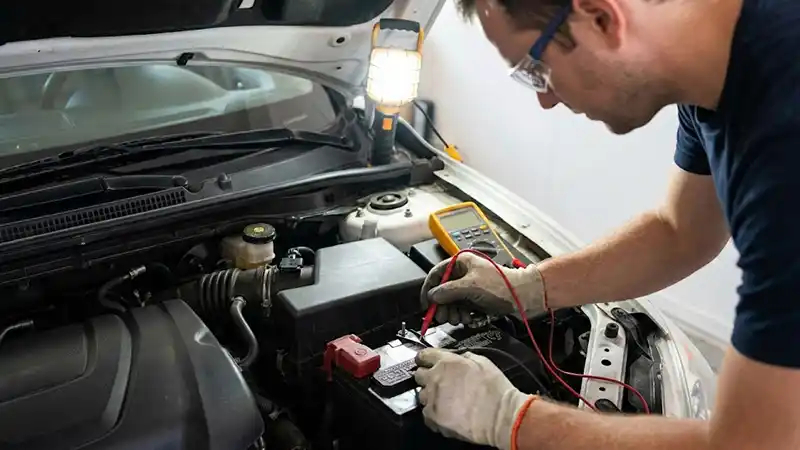
- Gather Your Tools and Safety Gear:Collect a digital multimeter, battery terminal cleaner, safetyglasses, and gloves. Ensure you have a well-ventilated workspace.
- Perform a Visual Inspection:Examine the battery for cracks, bulges, leaks, or loose connections. Check terminals and cables for corrosion and clean them if necessary using a battery terminal brush.
- Ensure Vehicle is Off and Cooled:Make sure the car’s ignition is off and the engine has cooled down. The battery should ideally have rested for several hours to get an accurate static voltage reading.
- Connect the Multimeter:Set your multimeter to DC voltage (VDC) at a 20V range. Connect the red positive (+) lead to the positive battery terminal and the black negative (-) lead to the negative battery terminal.
- Read the Static Voltage:Note the voltage reading on the multimeter. A healthy, fully charged battery should read 12.6 volts or higher.
- Perform a Load Test (Optional but Recommended):If you have a battery load tester, connect it according to its instructions. Apply the load for the recommended duration (usually 10-15 seconds) and observe the voltage drop. A healthy battery should stay above 9.6 volts.
- Interpret Your Results:Compare your readings to the healthy thresholds. Low static voltage or a significant voltage drop during a load test indicates a weak or failing battery.
- Secure and Reconnect:If you disconnected anything, ensure all terminals are securely reconnected, positive first, then negative.
Interpreting Your Car Battery Test Results
Understanding what your battery test results mean is key to determining its overall health and deciding on the next course of action. Both static voltage and load test results provide different but complementary information about the battery’s condition.
Static Voltage Readings:
- 12.6 volts or higher:The battery is fully charged and in good health.
- 12.4 – 12.6 volts:The battery is well-charged but not at 100%. This is generally acceptable.
- 12.0 – 12.4 volts:The battery is partially discharged. It might still start the car but indicates a need for charging or further investigation.
- Below 12.0 volts:The battery is significantly discharged and likely needs immediate charging. If it doesn’t hold a charge after charging, it may be failing.
Load Test Readings:
- Above 9.6 volts during load:The battery is strong enough to crank the engine effectively.
- Below 9.6 volts during load:The battery is weak and may struggle to start the car, especially in cold conditions. This often indicates a failing battery that needs replacement.
If your battery consistently shows low voltage or fails a load test, it’s a strong indicator that its capacity has diminished. This could be due to age, internal damage, or a faulty charging system in the vehicle. Further investigation by a professional might be necessary to rule out other vehicle issues.
Common Signs of a Failing Car Battery
Beyond direct testing, your car often provides several warning signsthat its battery is nearing the end of its life. Recognizing these symptoms early can help you address the issue before you’re stranded with a dead battery.
- Slow Engine Crank:One of the most common indicators is when the engine cranks more slowly than usual, sounding sluggish when you turn the key or push the start button. This suggests the battery isn’t delivering enough power.
- Dim Headlights and Interior Lights:If your headlights appear dim when the engine is off, or interior lights are noticeably weaker, it can signal a low battery charge or a weakening battery.
- Warning Light on Dashboard:Many modern vehicles have a battery warning light that illuminates when there’s an issue with the battery or the charging system.
- Corrosion on Battery Terminals:Excessive white or bluish-green powdery buildup on the battery terminals can impede electrical flow and is a sign of a potential issue.
- Foul Odor:A sulfur or rotten egg smell emanating from the battery can indicate a leak or internal damage, often due to overcharging.
- Swollen Battery Case:If the battery case appears swollen or bloated, especially on the sides, it’s a sign of internal damage, often caused by extreme heat or overcharging.
- Age of the Battery:Car batteries typically last 3-5 years. If your battery is older than this, it’s more prone to failure, even without obvious symptoms.
What to Do If Your Car Battery is Weak or Dead
Discovering a weak or dead car battery can be frustrating, but there are immediate steps you can take. The course of action depends on whether the battery is merely discharged or truly failing.
If the battery is weak but not completely dead, try jump-starting your car using jumper cables and another vehicle or a portable jump starter. Once the car is running, drive it for at least 20-30 minutes to allow the alternator to recharge the battery. If the car starts fine after this, the battery might just have been discharged due to leaving lights on or infrequent use.
If the battery is completely dead and won’t hold a charge after a jump start, or if it repeatedly dies, it likely needs replacement. In such cases, it’s advisable to have the battery professionally tested to confirm its condition and also to check the vehicle’s charging system (alternator) to ensure it’s functioning correctly. A faulty alternator can mimic battery problems by failing to recharge the battery.
Extending Your Car Battery’s Lifespan: Maintenance Tips
Proactive maintenance can significantly extend the life of your car battery and prevent premature failure. Simple habits and occasional checks can make a big difference.
- Keep Terminals Clean:Regularly inspect battery terminals for corrosion and clean them with a battery terminal brush and a baking soda and water solution if necessary. Ensure connections are tight.
- Secure the Battery:Make sure the battery is securely fastened in its tray. Vibrations from driving can damage internal components and shorten its life.
- Avoid Short Trips:Frequent short trips (under 20 minutes) do not allow the alternator enough time to fully recharge the battery, leading to gradual discharge. Combine short trips with longer drives when possible.
- Limit Accessory Use When Engine is Off:Avoid using accessories like the radio, lights, or charging devices when the engine is not running, as this drains the battery without replenishment.
- Check Charging System:Periodically have your vehicle’s charging system, including the alternator and voltage regulator, checked by a professional to ensure it’s functioning correctly and not over or undercharging the battery.
- Consider a Battery Tender for Storage:If you store your vehicle for extended periods, use a battery tender or trickle charger to maintain a full charge and prevent deep discharge, which can permanently damage the battery.
- Insulate in Extreme Temperatures:In very cold climates, a battery blanket can help retain warmth, improving starting power. In hot climates, ensure the battery area is clean and free of debris to allow for proper ventilation.
When is it Time to Replace Your Car Battery?
Knowing when to replace your car battery is crucial for avoiding unexpected breakdowns. While a battery’s lifespan can vary, several factors and indicators suggest it’s time for a new one.
The most straightforward indicator is age. Most car batteries last between three to five years. If your battery is approaching or has exceeded this age range, it’s wise to consider replacement, especially if you live in an area with extreme temperatures that accelerate battery degradation.
Consistent failure of at-home tests, such as low static voltage readings (below 12.0 volts) even after charging, or a significant voltage drop below 9.6 volts during a load test, are strong signs of a failing battery. Recurring slow engine cranks, dim lights, or the battery warning light illuminating frequently also point towards a need for replacement.
Physical signs like a swollen battery case, a strong sulfur smell, or excessive corrosion that returns quickly after cleaning are definitive indicators of internal damage. If your car has needed multiple jump starts recently, it’s a clear signal that the battery can no longer hold a sufficient charge and should be replaced.
Professional Battery Testing vs. DIY Checks
While at-home battery health checks provide valuable insights and are excellent for routine monitoring, professional battery testing offers a more comprehensive and diagnostic approach. Understanding the differences helps car owners make informed decisions.
DIY checks, using a multimeter and a basic load tester, are effective for identifying a battery’s current charge level and its ability to hold a basic load. They are convenient, empower car owners, and can catch early signs of trouble. However, they might not always diagnose underlying issues or provide detailed information about the battery’s internal resistance or overall capacity in the same way professional equipment can.
Professional battery testing, typically performed at an automotive service center, often involves advanced diagnostic tools that can assess factors like internal resistance, cold cranking amps (CCA) rating, and the battery’s overall state of health with greater precision. Mechanics can also test the entire charging system, including the alternator and starter, to ensure the battery issue isn’t a symptom of a larger problem. For definitive diagnoses, especially if you suspect a deeper electrical issue or if DIY tests are inconclusive, professional assessment is recommended.
Frequently Asked Questions
How often should I check my car battery health at home?
It is recommended to check your car battery health at home at least twice a year, ideally before the onset of extreme summer heat and winter cold. More frequent checks, such as monthly, are beneficial if your battery is older or if you frequently take short trips.
What voltage indicates a healthy car battery?
A healthy, fully charged car battery should read approximately 12.6 volts or higher when measured with a multimeter after the vehicle has been off for several hours. Readings below 12.4 volts suggest a partially discharged battery that may need charging or further investigation.
Can I check car battery health at home without special tools?
You can perform a basic visual inspection without special tools, looking for corrosion, damage, or loose connections. However, to accurately measure voltage and assess cranking ability, a multimeter and ideally a load tester are necessary for a comprehensive health check.
What are the signs of a dying car battery?
Common signs of a dying car battery include a slow or sluggish engine crank, dim headlights, a battery warning light on the dashboard, excessive corrosion on terminals, a swollen battery case, or a sulfur-like odor. Frequent jump starts are also a strong indicator.
Is it safe to check car battery health at home?
Yes, checking car battery health at home is safe when proper precautions are followed. Always wear safety glasses and gloves, work in a well-ventilated area, and avoid creating sparks near the battery. Follow the correct procedure for connecting and disconnecting tools.
How accurate are at-home car battery health checks?
At-home car battery health checks using a multimeter and a load tester can be quite accurate for assessing static voltage and basic cranking ability. They provide a good indication of the battery’s general condition. For the most precise diagnosis or to rule out other vehicle system issues, professional testing is recommended.
Conclusion
Regularly checking your car battery’s health at home is a proactive measure that can save you from unexpected breakdowns and extend your battery’s lifespan. By performing visual inspections, measuring voltage with a multimeter, and conducting a load test, you gain valuable insights into its condition. Prioritizing safety throughout these checks is paramount.
Understanding the signs of a failing battery and knowing how to interpret your test results empowers you to take timely action, whether that means cleaning terminals, recharging, or replacing the battery. Incorporating these simple maintenance tips into your routine will help ensure your vehicle remains reliable. If you encounter persistent issues or are unsure about your findings, consulting a trusted automotive professional for a more in-depth diagnosis is always a wise decision.
Related Guides: How to Clean Battery Terminals Car, How to Replace Car Battery Yourself, How To Replace Headlight Bulb At Home, How to Safely Disconnect Car Battery, Signs of Weak Car Battery DIY.
Also Read: How to Reset Car After Battery Change, Dim Headlights: Battery vs Alternator.