
When your car’s temperature gauge stops working, it’s more than just a minor annoyance. This small dial tells you if your engine is too hot or too cold, helping you avoid costly engine damage. But when it reads cold all the time, jumps around, or gets stuck, you lose a key warning system.
Luckily, you can often fix a temperature gauge problem with basic tools and a bit of patience. Let’s break down why this happens, how to diagnose the real issue, and what steps you should take to get your car’s temperature gauge working again.
Why The Car Temperature Gauge Matters
Many drivers ignore the temperature gauge until something goes wrong. But this small device gives you vital information about your engine’s health. Most engines run best between 195°F and 220°F (about 90°C to 104°C). If the temperature climbs too high, you risk overheating, blown head gaskets, or even a seized engine. If it stays too low, your car may use more fuel and run less efficiently.
A working gauge helps you spot problems early, like a coolant leak or a failing radiator. Without it, you’re driving blind—risking sudden breakdowns or expensive repairs.
Common Signs Of A Faulty Temperature Gauge
Before you grab your toolbox, let’s be sure your gauge is the real problem. Here are signs the temperature gauge itself isn’t working right:
- The needle stays at the lowest mark, even after driving for a long time.
- The needle jumps around or flickers.
- The gauge shows maximum hot (red zone) right after starting.
- The gauge doesn’t move at all, no matter how hot the engine gets.
- Warning lights related to temperature appear, but the needle stays normal.
If you notice these symptoms, it’s time to diagnose the cause.
How The Temperature Gauge System Works
To fix the problem, understanding the basic system helps a lot. Your car’s temperature reading involves a few key parts:
- Coolant temperature sensor (also called sender): Measures engine coolant temperature and sends a signal.
- Wiring and connectors: Carry the signal from the sensor to the dashboard.
- Temperature gauge: Displays the temperature reading.
- Instrument cluster: The dashboard unit housing the gauge.
Some cars also use the engine control unit (ECU) to process the signal before showing the reading. Knowing this chain helps you find where things might go wrong.
Diagnosing The Problem
Fixing a temperature gauge starts with proper diagnosis. Here’s a step-by-step method to find the real cause:
1. Check The Coolant Level
Low coolant can give false readings, or make the sensor sit in air, not liquid. Always check the coolant when the engine is cold. Look at the overflow tank and radiator. If the level is low, top it up with the correct coolant mix.
2. Inspect The Gauge Movement
Turn the ignition key to the “ON” position but don’t start the engine. The gauge should move slightly. If it doesn’t budge at all, the problem is likely electrical.
3. Look For Warning Lights
Some cars use warning lights instead of gauges. If your light works but the gauge doesn’t, it’s likely a gauge or wiring issue.
4. Test The Coolant Temperature Sensor
The sensor is usually found near the thermostat or on the engine block. Unplug its connector. Use a digital multimeter to check for resistance (ohms). At room temperature, most sensors read between 2,000 and 3,000 ohms. As the engine warms, resistance drops. If the reading is outside this range, the sensor may be bad.
5. Inspect The Wiring And Connectors
Wiring often gets damaged due to heat, oil, and vibration. Look for:
- Broken or frayed wires
- Corroded connectors
- Loose plugs
Wiggle the wires gently while watching the gauge. If it jumps or flickers, you’ve found a bad connection.
6. Test The Gauge And Instrument Cluster
If everything else checks out, the problem may be inside your dashboard. To test, unplug the sensor and ground the wire to the engine block. If the gauge goes to “hot,” the gauge is working. If not, the gauge or cluster may need repair.

Credit: www.youtube.com
Common Causes Of A Faulty Temperature Gauge
Let’s break down the most likely reasons your temperature gauge isn’t working:
| Cause | How it Affects the Gauge | Difficulty to Fix |
|---|---|---|
| Failed coolant temperature sensor | Gauge stays cold or reads wrong | Easy |
| Broken wire or connector | Gauge jumps, flickers, or stays dead | Medium |
| Blown fuse | No power to gauge | Easy |
| Faulty gauge or cluster | Gauge stays stuck or non-responsive | Hard |
| Bad thermostat (less common) | Gauge reads cold even when engine is hot | Medium |
Step-by-step Guide: How To Fix A Car Temperature Gauge Not Working
Once you find the likely cause, follow these steps to fix it.
1. Refill Or Replace Coolant
If the coolant is low, refill it to the correct level. If it’s dirty or rusty, flush the system and add fresh coolant. Never open the radiator cap when the engine is hot.
2. Replace The Coolant Temperature Sensor
If your tests show the sensor is faulty, replace it:
- Locate the sensor (usually near the thermostat housing)
- Disconnect the negative battery terminal
- Unplug the sensor’s connector
- Unscrew the sensor (use a wrench or socket)
- Quickly screw in the new sensor to avoid coolant loss
- Reconnect the plug and battery
A new sensor usually costs $10–$50, depending on your car.
3. Repair Damaged Wiring Or Connectors
If you find broken or corroded wires:
- Cut out the damaged section
- Strip both ends of the wire
- Use a soldering iron or crimp connectors to join
- Wrap with heat-shrink tubing or electrical tape
For corroded connectors, use electrical contact cleaner and a small brush. Replace connectors that are too rusty.
4. Check And Replace Fuses
Locate your car’s fuse box (under the dash or hood). Find the one for the instrument cluster or gauges. Pull it out and inspect:
- If the metal strip inside is broken, replace the fuse with the same rating.
- If it blows again, you may have a short circuit.
5. Fix Or Replace The Temperature Gauge
If the gauge or instrument cluster is faulty:
- Remove the dashboard trim carefully
- Unscrew the instrument cluster
- Disconnect wiring harnesses
- Replace the gauge or entire cluster if needed
Some clusters can be repaired by a specialist. This step is best left to professionals unless you’re comfortable with electronics.
6. Replace A Bad Thermostat
If your engine gets hot but the gauge stays cold, the thermostat may be stuck open. This keeps coolant flowing all the time, so the engine never warms up. To replace:
- Drain some coolant
- Remove the thermostat housing
- Swap in a new thermostat and gasket
- Reinstall and refill coolant
A stuck thermostat is less common than other problems but easy to overlook.
Key Mistakes To Avoid
Many beginners make errors that cause more problems. Watch out for these:
- Opening the radiator when hot — This can cause serious burns.
- Using the wrong coolant — Always use the type specified in your owner’s manual.
- Skipping wire checks — Many issues are due to bad wiring, not just the sensor.
- Guessing without testing — Always confirm the bad part before replacing.
- Ignoring warning lights — They may point to related issues.
When To Seek Professional Help
Sometimes, the problem is deeper—like a bad ECU, a broken dashboard circuit board, or a hidden wiring short. If you’ve replaced the sensor, checked wires, and swapped the fuse but the gauge still doesn’t work, it’s smart to let a qualified mechanic handle the rest.
A professional can use advanced tools to trace wiring, test the cluster, or diagnose computer issues. This can save time and prevent more damage.
Advanced Troubleshooting: Digital Vs. Analog Gauges
Modern cars often use digital temperature gauges or even just a warning light. Older cars use analog dials. The troubleshooting steps are similar, but some differences matter:
| Gauge Type | Typical Problems | Extra Steps Needed |
|---|---|---|
| Analog (needle) | Sensor, wiring, stuck needle | Check for mechanical sticking |
| Digital | Sensor, ECU, display issue | Scan for error codes |
| Warning light only | Sensor, wiring, bulb out | Test warning bulb |
If your car has a digital dashboard, you can often use a cheap OBD2 scanner to check for fault codes. These codes can tell you if the ECU is getting a signal from the sensor.
Real-world Example
Let’s say you drive a 2015 Toyota Corolla and notice the temperature gauge stays cold after 20 minutes of driving. You check the coolant and it’s full. You unplug the sensor and the gauge does not move. Using a multimeter, you find the sensor has zero resistance (shorted).
You replace it with a new one, reconnect everything, and the gauge now rises as the engine warms up. Problem solved for less than $30.
This process works on most cars, but always check your service manual for sensor location and wire colors.

Credit: www.meineke.com
Two Insights Most People Miss
- The sensor and gauge are often separate from the engine’s computer. Many cars have two sensors: One for the ECU (controls fuel and fans) and one just for the gauge. Be sure you’re testing or replacing the correct one.
- A bad thermostat can trick you. If the engine doesn’t get hot enough, the gauge may look dead—but the real problem is not electrical. Always check if the engine is actually warming up (feel the radiator hose for heat).
Safety Precautions
- Always disconnect the battery before working on electrical parts.
- Allow the engine to cool fully before touching the cooling system.
- Wear gloves and safety glasses when working under the hood.
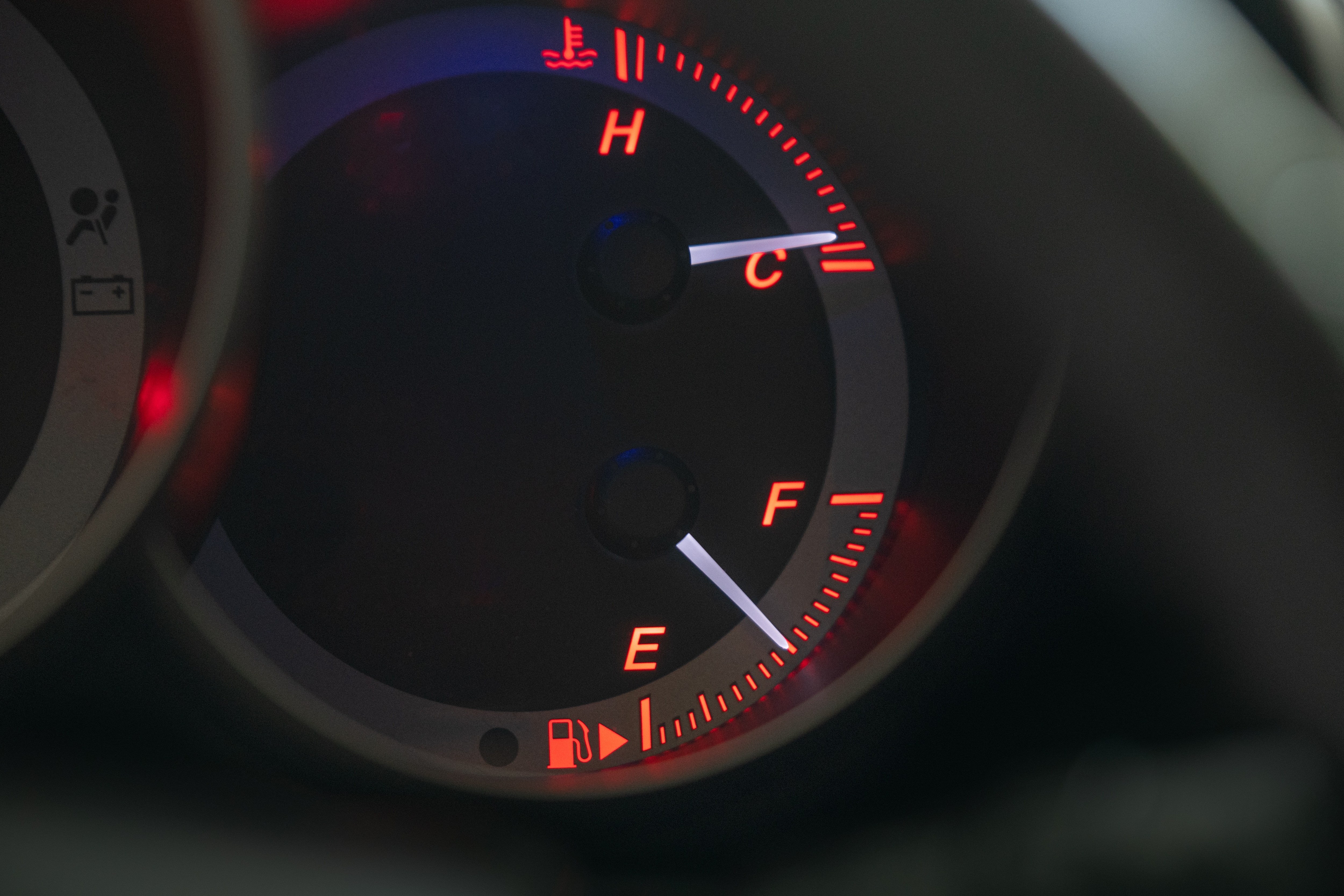
Credit: www.autozone.com
Frequently Asked Questions
Why Does My Temperature Gauge Stay On Cold?
Usually, this means the coolant temperature sensor is faulty or the thermostat is stuck open, so the engine never warms up enough. Check both before replacing any parts.
Can I Drive With A Broken Temperature Gauge?
You can drive, but it’s risky. Without a working gauge, you won’t know if the engine overheats. This can lead to severe engine damage. Fix the gauge as soon as possible.
How Do I Know If The Temperature Sensor Or Gauge Is Bad?
Test the sensor with a multimeter. If the reading is wrong or doesn’t change with temperature, replace it. If grounding the sensor wire makes the gauge move, the gauge works. If not, the gauge or wiring is likely bad.
Will A Bad Temperature Gauge Cause Engine Problems?
The gauge itself does not affect engine operation, but if you miss an overheating issue, you could damage the engine. Always repair the gauge quickly to avoid bigger issues.
How Much Does It Cost To Fix A Car Temperature Gauge?
Costs vary:
- Sensor replacement: $10–$50
- Thermostat: $20–$60
- Wiring repair: $0 (DIY) to $100 (shop)
- Gauge/cluster repair: $100–$400
For more on car electronics, visit the official Wikipedia page on coolant temperature sensors.
A working temperature gauge is your early warning system. Fixing it is worth the effort, saving you money and headaches in the long run. Take your time, follow the steps, and don’t be afraid to ask for help if you get stuck.
Your engine—and your wallet—will thank you.