
A beginner mechanic tool set typically includes fundamental hand tools like wrenches, sockets, screwdrivers, pliers, and a ratchet. These core items are crucial for common automotive tasks, allowing new DIYers to tackle basic repairs and maintenance effectively and safely.
- Start with essential hand tools for versatility.
- Prioritize safety gear before any repair.
- Organize your tools for efficiency and longevity.
- Invest in quality tools that will last.
- Continuously learn and expand your skill set.
Understanding the Basics: Why a Good Tool Set Matters
Embarking on automotive DIY projects requires more than just enthusiasm; it demands the right equipment. A well-chosen tool set empowers new mechanics to perform tasks accurately and efficiently. Having the correct tool for each job prevents damage to components and ensures a safer working environment. It also builds confidence, allowing beginners to progress from simple maintenance to more complex repairs.
Investing in a foundational set of tools is a commitment to self-sufficiency and understanding your vehicle better. It reduces reliance on professional services for minor issues, potentially saving time and effort. A comprehensive set ensures you are prepared for unexpected repairs and routine upkeep, making vehicle ownership moremanageable and rewarding.
Safety First: Essential Gear for Every Beginner Mechanic
Before any wrench is turned, safety must be the top priority. Automotive work can involve heavy components, hot fluids, and sharp edges, making protective gear indispensable. Neglecting safety can lead to serious injuries, so always equip yourself appropriately.
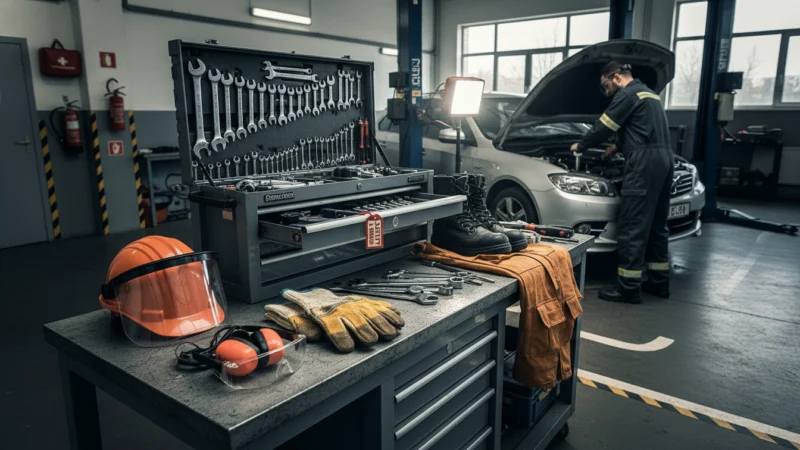
Key Safety Equipment:
- Safety Glasses:Protect your eyes from flying debris, sparks, and chemical splashes. This is non-negotiable for any automotive task.
- Work Gloves:Shield your hands from cuts, scrapes, grease, and harsh chemicals. Different tasks may require different types of gloves, such as nitrile for fluid changes or sturdy work gloves for general repairs.
- Jack Stands:Never work under a vehicle supported only by a jack. Jack stands are critical for safely supporting the vehicle’s weight, preventing catastrophic accidents.
- Wheel Chocks:These prevent the vehicle from rolling when it’s jacked up or parked on an incline, adding an extra layer of stability.
- Fire Extinguisher:Keep a suitable fire extinguisher (Class B or C) readily accessible in your workspace for electrical or flammable liquid fires.
- First-Aid Kit:A well-stocked first-aid kit is essential for treating minor cuts, burns, and other common workshop injuries.
The Core: Your Essential Beginner Mechanic Tool Set List
Building your initial toolkit can feel overwhelming, but focusing on versatile, frequently used items simplifies the process. This beginner mechanic tool set list covers the fundamental hand tools that will serve as the backbone of your automotive repair capabilities.
Wrenches:
- Combination Wrenches:A set ranging from 8mm to 19mm (metric) and 1/4 inch to 3/4 inch (SAE) is crucial. These have an open end and a box end, offering versatility.
- Adjustable Wrench:Useful for odd-sized fasteners or as a backup, though combination wrenches are preferred for their secure grip.
Sockets and Ratchets:
- Socket Set (3/8-inch drive):This is the most versatile drive size for general automotive work. Include both shallow and deep sockets in common metric and SAE sizes.
- Ratchet (3/8-inch drive):A quality ratchet with a comfortable grip and fine-tooth mechanism is essential for efficient fastening and loosening.
- Extensions:Various lengths (3-inch, 6-inch) help reach fasteners in tight spaces.
- Universal Joint:Allows the socket to pivot, accessing angled fasteners.
Screwdrivers:
- Phillips Head Screwdrivers:A set with various tip sizes (#1, #2, #3) and shaft lengths.
- Flathead Screwdrivers:A set with different tip widths and lengths. These can also serve as light pry tools.
- Torx and Hex Key Sets:Many modern vehicles use Torx (star-shaped) and Hex (Allen) fasteners, so having sets of these is increasingly important.
Pliers:
- Slip-Joint Pliers:General-purpose pliers for gripping and turning.
- Needle-Nose Pliers:Ideal for reaching into confined areas, bending wire, and retrieving small objects.
- Locking Pliers (Vise-Grips):Excellent for holding components firmly, clamping, or removing stripped fasteners.
- Diagonal Cutters:For cutting wire and small plastic components.
Other Essential Hand Tools:
- Hammer:A medium-weight ball-peen hammer is versatile for striking punches or light persuasion. A rubber mallet is also useful for delicate tasks.
- Utility Knife:Handy for cutting hoses, gaskets, and other materials.
- Feeler Gauges:Used for measuring small gaps, such as spark plug gaps or valve clearances.
- Wire Brush:For cleaning rust, corrosion, and old gasket material.
- Tire Pressure Gauge:Essential for routine tire maintenance.
- Flashlight or Headlamp:Provides crucial illumination in dark engine bays or under the vehicle.
Beyond the Basics: Specialized Tools for Common Tasks
Once your core tool set is established, you can gradually expand it with specialized tools that address specific, common automotive maintenance and repair tasks. These tools make particular jobs much easier and safer.
For Oil Changes:
- Oil Filter Wrench:Specific wrenches designed to grip and remove various types of oil filters.
- Drain Pan:A large capacity pan to collect used oil without spills.
- Funnel:For cleanly adding new oil.
For Brake Work:
- Brake Caliper Compressor:Essential for retracting brake caliper pistons when replacing pads.
- Brake Bleeder Kit:For removing air from the brake lines after fluid changes or component replacement.
For Tire and Wheel Maintenance:
- Torque Wrench:Crucial for tightening lug nuts and other fasteners to manufacturer specifications, preventing over-tightening or under-tightening.
- Lug Wrench or Breaker Bar:For loosening stubborn lug nuts.
For Electrical Diagnostics:
- Multimeter:Measures voltage, current, and resistance, invaluable for diagnosing electrical issues.
- Test Light:A simple tool to check for power and ground in circuits.
- OBD-II Scanner:For vehicles manufactured after 1996, this plugs into the diagnostic port to read trouble codes and access engine data, helping pinpoint issues.
Other Useful Additions:
- Jumper Cables:A must-have for jump-starting a dead battery.
- Fluid Transfer Pump:For moving fluids like transmission fluid or differential fluid.
- Pry Bar Set:For leverage when separating components.
Organizing Your Workspace: Tool Storage Solutions
A well-organized tool set is not just aesthetically pleasing; it significantly improves efficiency and protects your investment. Knowing where each tool is located saves time and reduces frustration during a repair. Proper storage also prevents tools from getting lost, damaged, or rusting.
Common Storage Options:
- Toolbox:A portable toolbox with multiple trays is an excellent starting point for a beginner. It keeps frequently used tools accessible.
- Rolling Tool Chest:As your collection grows, a multi-drawer rolling tool chest provides ample storage and mobility. Look for sturdy construction and smooth-gliding drawers.
- Wall-Mounted Pegboard or Cabinets:For a more permanent workshop setup, pegboards allowyou to hang tools for easy visibility and access. Wall cabinets offer enclosed storage, protecting tools from dust and grime.
- Socket Organizers:Rails or trays specifically designed to hold sockets keep them neatly arranged by size and drive.
Labeling drawers or sections can further enhance organization. Regularly returning tools to their designated spots after use is a habit that will serve you well throughout your DIY journey.
Choosing Your First Set: Quality vs. Cost Considerations
When assembling your beginner mechanic tool set list, balancing quality with your initial investment is key. While it might be tempting to opt for the least expensive options, remember that tools are an investment in your ability to perform repairs safely and effectively. Poor quality tools can break easily, damage fasteners, and even pose safety risks.
Consider starting with mid-range tools from reputable brands. These often offer a good balance of durability and functionality without requiring a significant upfront commitment. For tools you use frequently or that are critical for safety (like jack stands or a torque wrench), it is wise to prioritize higher quality. Less frequently used items can sometimes be acquired at a more accessible level initially, with upgrades made as needed.
Look for tools with strong warranties, as this often indicates a manufacturer’s confidence in their product’s longevity. Over time, you can gradually upgrade individual pieces or add specialized tools as your skills and needs evolve. The goal is to build a reliable collection that supports your learning and repair efforts for years to come.
Maintaining Your Tools: Tips for Longevity
Proper tool maintenance is crucial for ensuring their longevity and continued performance. Neglecting your tools can lead to rust, damage, and decreased effectiveness, ultimately requiring premature replacements.
Maintenance Best Practices:
- Clean After Use:Wipe down tools to remove grease, oil, and dirt. A simple rag is often sufficient, but a degreaser can be used for stubborn grime.
- Inspect Regularly:Before and after each use, quickly inspect tools for any signs of damage, wear, or cracks. Replace or repair damaged tools promptly.
- Lubricate Moving Parts:Apply a light coat of oil to the moving parts of ratchets, pliers, and adjustable wrenches to keep them operating smoothly and prevent rust.
- Store Properly:Always store tools in a dry environment to prevent rust. Use toolboxes, chests, or wall organizers to keep them protected and organized. Avoid leaving tools exposed to the elements.
- Sharpen Cutting Tools:Keep utility knives and wire cutters sharp for efficient and safe operation.
- Protect Edges:Store screwdrivers and chisels in a way that protects their tips and edges from damage.
By dedicating a small amount of time to tool maintenance, you extend their lifespan, ensure they are always ready for the next task, and protect your investment.
Learning and Growing: Resources for New Mechanics
Acquiring a beginner mechanic tool set list is just the first step; continuous learning is vital for any aspiring DIY mechanic. The automotive world is constantly evolving, and expanding your knowledge base will enhance your repair capabilities and confidence.
Valuable Learning Resources:
- Vehicle Service Manuals:Invest in a service manual specific to your vehicle’s make and model. These provide detailed instructions, diagrams, and specifications for nearly every repair.
- Online Tutorials and Videos:Platforms offer a wealth of how-to videos and guides for almost any automotive task. Visual demonstrations can be incredibly helpful for understanding complex procedures.
- Automotive Forums and Communities:Online forums connect you with experienced mechanics and fellow DIYers. These communities are excellent for asking questions, sharing experiences, and troubleshooting problems.
- Automotive Repair Guides:General repair books and guides can provide foundational knowledge applicable across various vehicle types.
- Local Workshops or Classes:Some community colleges or auto parts stores offer basic automotive maintenance classes that can provide hands-on experience and expert instruction.
Approach each repair as a learning opportunity. Start with simpler tasks and gradually work your way up to more challenging projects. Patience and persistence are key to developing your mechanical skills.
Frequently Asked Questions
What is the absolute minimum a beginner mechanic tool set list should include?
The absolute minimum for a beginner mechanic tool set should include a basic set of combination wrenches, a 3/8-inch drive socket set with a ratchet and extensions, Phillips and flathead screwdrivers, and a few essential pliers like slip-joint and needle-nose. These tools cover the most common fasteners and basic tasks encountered in automotive maintenance.
How much should I expect to spend on a quality beginner mechanic tool set?
The amount you might spend on a quality beginner mechanic tool set can vary significantly based on brand, size, and specific tool types included. It’s generally advisable to invest in reputable brands that offer good durability and warranties, as this often provides better value over time compared to very inexpensive options.
Are there specific brands recommended for a beginner mechanic tool set?
Several reputable brands are well-regarded for their quality and durability in the automotive tool market. Many experienced mechanics often recommend brands known for their strong warranties and robust construction. Researching user reviews and professional opinions can help guide your selection for a reliable beginner mechanic tool set.
What safety equipment should be part of every beginner mechanic’s tool set?
Every beginner mechanic’s tool set must include essential safety equipment suchas safety glasses, work gloves, and sturdy jack stands. Additionally, wheel chocks are crucial for preventing vehicle movement, and having a fire extinguisher and a first-aid kit readily available is highly recommended for any workshop environment.
Can I build my beginner mechanic tool set piece by piece instead of buying a complete kit?
Yes, building your beginner mechanic tool set piece by piece is an excellent strategy. This allows you to acquire tools as specific needs arise, ensuring you only purchase what you will actually use. It also enables you to invest in higher-quality individual tools for frequently used items, gradually assembling a customized and robust collection.
What are some common mistakes beginners make when assembling their first mechanic tool set?
Common mistakes beginners make include buying the cheapest tools available, which often leads to breakage and frustration, or purchasing specialized tools before acquiring the fundamental basics. Another error is neglecting essential safety equipment, which can put them at significant risk. It’s best to prioritize quality basics and safety first.
Conclusion
Assembling a comprehensive beginner mechanic tool set list is a foundational step for anyone venturing into automotive DIY. By starting with essential hand tools, prioritizing safety, and gradually expanding your collection with specialized items, you build a capable and reliable toolkit. Proper organization and maintenance will ensure your tools serve you well for years, empowering you to tackle a wide range of vehicle tasks with confidence.
Embrace the journey of learning and discovery that comes with working on your own vehicle. With the right tools and a commitment to safety, you’ll gain invaluable skills and a deeper understanding of your car. Continue to explore resources and expand your knowledge, making every repair an opportunity to grow as a mechanic.
Related Guides: Ultimate Guide, Mastering Your Space, The Essential Guide to a Budget Home Gar, Ultimate Garage Storage Ideas for Car To, Essential Personal Protective Equipment .
Also Read: How to Organize Small Garage for DIY.