
To check car fluids at home, park on level ground, follow the owner’s manual for engine temperature, and inspect each reservoir or dipstick for level, color, smell, and leak signs. Check engine oil, coolant, brake fluid, power steering fluid, transmission fluid, and windshield washer fluid. Stop driving and get help for overheating, oil-pressure warnings, a soft brake pedal, visible brake-fluid leaks, or any fluid level that keeps dropping.
- Use the exact fluid type listed in the owner’s manual or service information.
- Never open a hot radiator or pressurized coolant cap.
- Brake fluid is safety-critical; low fluid can point to worn pads or a hydraulic leak.
- Look for milky oil, rusty coolant, dark brake fluid, burnt-smelling transmission fluid, or repeated low levels.
- If brake fluid is low, also check brake pads at home and have leaks inspected before normal driving.
Understanding the Importance of Regular Fluid Checks
Fluid checks are useful because they reveal low levels, contamination, leaks, overheating risk, brake-system warning signs, and steering or transmission problems before they become harder to diagnose. Use this page as an inspection checklist, then rely on the owner manual or service information for exact fluid type, checking temperature, refill method, and service interval.
Essential Tools and Safety Precautions Before You Start
Before you begin checking your car’s fluids, gathering a few basic tools and observing key safety precautions is important. These steps help ensure accuracy and protect you from potential hazards.
Recommended Tools:
- Clean rags or paper towels for wiping dipsticks and spills.
- A funnel for topping up fluids without spillage.
- Gloves to protect your hands from chemicals and heat.
- Your vehicle’s owner’s manual for specific fluid types and capacities.
- Flashlight (optional, but helpful for better visibility).
Safety Precautions:
- Level Surface:Always park your car on a flat, level surface. This ensures accurate readings for fluid levels.
- Cool Engine:Most fluid checks, especially for engine oil and coolant, should be performed when the engine is cool. A hot engine can cause inaccurate readings and poses a burn risk.
- Parking Brake:Engage the parking brake to prevent the vehicle from rolling.
- Eye Protection:Consider wearing safety glasses to protect your eyes from splashes.
- Ventilation:Work in a well-ventilated area, especially if you are handling fluids with strong fumes.
- Read Manual:Always consult your vehicle’s owner’s manual. It provides specific instructions, fluid types, and recommended intervals for your particular make and model.
How to Check Car Fluids at Home: A Step-by-Step Guide
Work through the fluids one at a time. Some checks need a cold engine, while some transmission checks are vehicle-specific and may require a warm engine or a scan-tool procedure, so confirm the method before topping up.
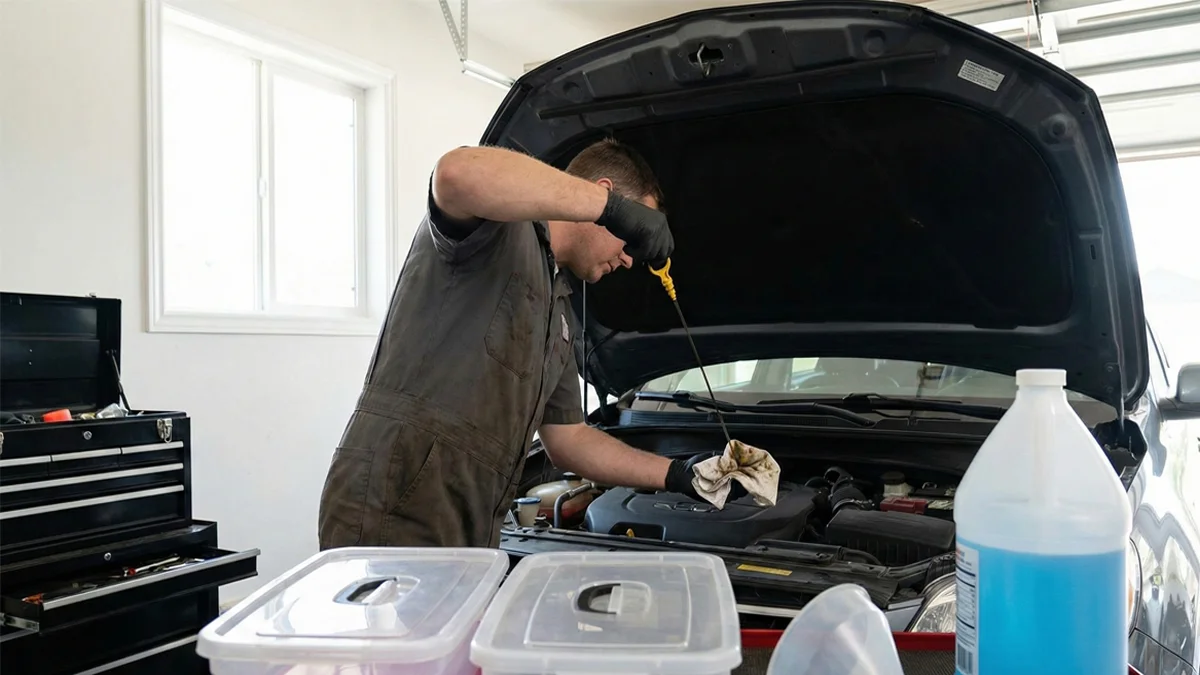
Checking Engine Oil: The Lifeblood of Your Car
Engine oil lubricates moving parts, reduces friction, and helps cool the engine. Checking it regularly is vital.
- Ensure the engine is cool and the car is on a level surface.
- Locate the engine oil dipstick, usually yellow or orange, often marked with an oil can symbol.
- Pull the dipstick out, wipe it clean with a rag, and reinsert it fully.
- Pull the dipstick out again and observe the oil level. It should fall between the ‘MIN’ and ‘MAX’ or ‘ADD’ and ‘FULL’ marks.
- Note the oil condition. Color alone is not a reliable service indicator because oil can darken normally in use. Look instead for an abnormal milky appearance, metal debris, fuel smell, or repeated low level, and follow the manufacturer’s service interval.
- If the level is low, add the recommended type of engine oil slowly, checking the level periodically until it reaches the ‘FULL’ mark. Do not overfill.
Monitoring Coolant Levels: Preventing Overheating
Coolant (antifreeze) prevents the engine from overheating and freezing. It’s crucial for engine temperature regulation.
- With the engine cool, locate the translucent plastic coolant reservoir, usually near the radiator.
- Observe the fluid level against the ‘MIN’ and ‘MAX’ or ‘COLD FILL’ lines on the side of the reservoir.
- If the level is low, carefully remove the reservoir cap and add a 50/50 mix of coolant and distilled water (or pre-mixed coolant) until it reaches the ‘MAX’ line.
- Never open the radiator cap when the engine is hot, as pressurized hot fluid can spray out and cause severe burns.
- Check for obvious contamination, sludge, oil film, or debris. Do not identify coolant type by color alone; use the exact specification required by the vehicle manufacturer.
Inspecting Brake Fluid: Ensuring Stopping Power
Brake fluid transmits the force from your brake pedal to the wheels, enabling your car to stop. Its level and condition are critical for safety.
- Locate the brake fluid reservoir, typically a small, translucent container on the driver’s side of the engine bay, often marked with a brake symbol.
- Check the fluid level against the ‘MIN’ and ‘MAX’ lines.
- If the level is low, do not simply fill it and forget it. Use only the manufacturer-specified brake fluid, avoid contamination, and inspect for pad wear or leaks before normal driving.
- Note the fluid’s color. It should be clear or light amber. Dark brown or black fluid suggests contamination and warrants professional inspection.
- A consistently low brake fluid level can indicate worn brake pads or a hydraulic leak. Brake fluid is regulated under FMVSS No. 116 for hydraulic brake-system use, so use the correct DOT type and keep the system clean. FMVSS No. 116.
Evaluating Power Steering Fluid: Smooth Maneuvering
Power steering fluid helps make turning the steering wheel easier. Maintaining its level ensures smooth and responsive steering.
- With the engine cool, locate the power steering fluid reservoir, often marked with a steering wheel symbol.
- Some vehicles require the engine to be running for an accurate check; consult your owner’s manual.
- Check the fluid level against the ‘MIN’ and ‘MAX’ lines on the reservoir. Some dipsticks have separate ‘HOT’ and ‘COLD’ markings.
- If low, add the specified power steering fluid until it reaches the appropriate mark.
- Inspect for abnormal darkening, burnt odor, foaming, or contamination and compare with the vehicle service information. Power-steering fluid appearance varies by fluid type.
Assessing Transmission Fluid: For Automatic Gearboxes
Transmission fluid lubricates and cools the transmission, enabling smooth gear changes. This check typically applies to automatic transmissions.
- For most automatic transmissions, the engine should be warm and running, and the car parked on a level surface with the parking brake engaged. Some manufacturers recommend checking with the engine off; always consult your owner’s manual.
- Locate the transmission fluid dipstick, usually red or yellow, often found towards the back of the engine bay.
- Pull the dipstick out, wipe it clean, reinsert it fully, and pull it out again to check the level.
- The fluid level should be between the ‘MIN’ and ‘MAX’ or ‘ADD’ and ‘FULL’ marks on the dipstick.
- Inspect the fluid as the manufacturer specifies. Transmission fluid color varies by formulation and use; a strong burnt odor, debris, or obvious contamination is more meaningful than expecting one universal color.
- If low, add the specific type of transmission fluid recommended by your manufacturer, using a funnel.
Topping Up Windshield Washer Fluid: Clear Visibility
Windshield washer fluid is essential for maintaining clear visibility, especially in adverse weather conditions.
- Locate the windshield washer fluid reservoir, typically a plastic container with a blue or black cap, often marked with a windshield symbol.
- The reservoir is usually translucent, allowing you to visually check the fluid level.
- If low, simply open the cap and fill the reservoir with windshield washer fluid. There are no ‘MIN’ or ‘MAX’ lines to worry about; fill it close to the top.
- This fluid does not require a specific type beyond standard washer fluid, though some specialized formulas offer de-icing properties.
Recognizing Warning Signs and When to Seek Professional Help
Routine fluid checks help, but they do not replace diagnosis. Repeated low levels, warning lights, overheating, soft brakes, hard steering, slipping shifts, contaminated fluid, or puddles under the car mean the system needs inspection instead of repeated top-ups.
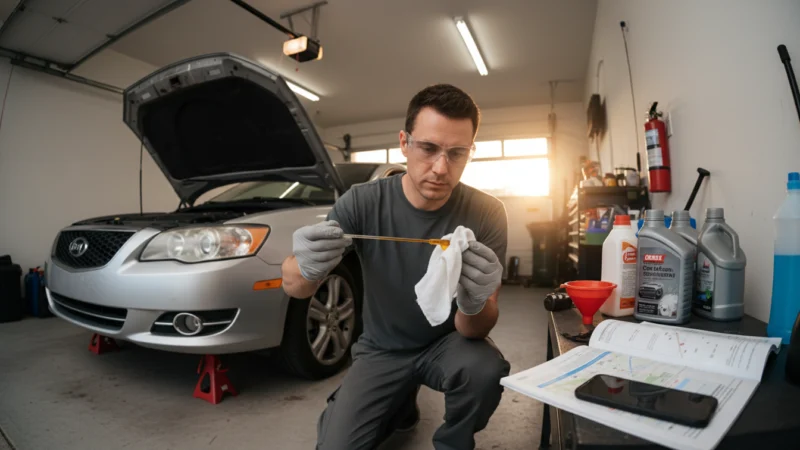
- Consistent Low Levels:If a fluid level repeatedly drops shortly after being topped up, it suggests a leak in the system. Leaks can range from minor drips to significant breaches that compromise system integrity.
- Unusual Fluid Appearance:Any fluid that appears milky, foamy, extremely dark, or contains metallic particles is a strong indicator of contamination or internal component wear. For example, milky engine oil can signal a head gasket issue, while burnt-smelling transmission fluid points to overheating.
- Dashboard Warning Lights: Modern vehicles can trigger warning lights for low fluid levels or system malfunctions, such as oil pressure, coolant temperature, brake, or transmission warnings. Never ignore these indicators.
- Performance Changes:Noticeable changes in your car’s performance, such as difficulty shifting gears, spongy brakes, overheating, or unusual noises, can often be traced back to fluid-related problems.
- Puddles Under Your Car:Any colored puddle under your parked vehicle is a clear sign of a leak. The color of the fluid can help identify its source (e.g., red for transmission, green/orange for coolant, clear for water/AC condensation).
If you encounter any of these warning signs, it is always best to consult a qualified mechanic. They have the expertise and diagnostic tools to accurately identify the root cause of the problem and perform necessary repairs, ensuring your vehicle’s safety and reliability.
Common Mistakes to Avoid When Checking Car Fluids
Even with good intentions, car owners can sometimes make mistakes during fluid checks that can lead to inaccurate readings or potential damage. Avoiding these common pitfalls is crucial for effective maintenance.
- Checking Fluids on a Hot Engine:As mentioned, checking engine oil and coolant when the engine is hot can lead to inaccurate readings and is a burn hazard. Always allow the engine to cool down.
- Not Parking on a Level Surface:An uneven surface will cause fluids to settle unevenly, resulting in false low or high readings, especially for engine oil and transmission fluid.
- Using the Wrong Fluid Type:Each fluid in your car is specifically formulated for its purpose. Using the incorrect type (e.g., wrong engine oil viscosity, non-compatible coolant, or incorrect brake fluid DOT rating) can cause severe damage to components. Always refer to your owner’s manual.
- Overfilling Reservoirs:Adding too much fluid can be as detrimental as having too little. Overfilling can lead to increased pressure, leaks, foaming, and damage to seals or other components. Always fill to the ‘MAX’ line, not beyond.
- Ignoring Fluid Condition:Simply checking the level isn’t enough. The color, clarity, and smell of the fluid provide vital clues about its health. Ignoring signs of contamination or degradation can lead to overlooked problems.
- Not Wiping Dipsticks Clean:When checking oil or transmission fluid, failing to wipe the dipstick clean after the first pull and before reinserting it can result in an inaccurate reading due to residual fluid on the tube walls.
- Mixing Different Brands/Types:While some fluids are generally compatible, it’s best practice to stick to the same brand and type, especially for critical fluids like coolant and brake fluid, to avoid potential chemical reactions or performance issues.
Extending Your Car’s Lifespan Through Proactive Maintenance
Keep a simple log of the date, odometer reading, fluid level, and any color or smell changes. A pattern matters more than one reading: coolant or brake fluid that drops again after a top-up, oil that turns milky, or transmission fluid that smells burnt should be treated as a repair clue.
Frequently Asked Questions
How often should I check car fluids at home?
Check the owner manual for the correct interval. A practical routine is to inspect engine oil, coolant, brake fluid, power steering fluid, transmission fluid, and washer fluid before long trips and during routine maintenance, then investigate any fluid that keeps dropping.
What are the most important car fluids to check regularly?
The most critical fluids to check regularly include engine oil, which lubricates and cools the engine; coolant, vital for preventing overheating; and brake fluid, essential for safe stopping power. Transmission fluid and power steering fluid are also very important for vehicle performance and should not be overlooked.
Can I check car fluids at home without any special tools?
Yes, most car fluid checks can be performed at home with minimal tools. You typically only need clean rags or paper towels, a funnel for topping up, and your vehicle’s owner’s manual for guidance. Gloves are also recommended for hand protection.
What should I do if a car fluid level is consistently low?
If a car fluid level is consistently low, it usually indicates a leak in the system or excessive consumption. While you can top it up temporarily, it is crucial to have the vehicle inspected by a professional mechanic as soon as possible to diagnose and repair the underlying issue, preventing further damage or safety risks.
Is it safe to mix different brands of car fluids when topping up?
It is generally best to use the same brand and type of fluid recommended by your vehicle manufacturer. While some fluids are compatible, mixing different brands or types, especially for coolant and brake fluid, can sometimes lead to chemical reactions, reduced performance, or damage to components. Always refer to your owner’s manual for specific fluid requirements.
What are the signs of dirty or contaminated car fluids?
Signs of dirty or contaminated car fluids include a change in color (e.g., dark brown engine oil, black brake fluid, rusty coolant), a burnt smell (especially for transmission fluid), or a milky or foamy appearance. These visual and olfactory cues often indicate degradation, contamination, or a more serious mechanical problem requiring professional attention.
Conclusion
Checking car fluids at home is most useful when it is specific: check the right fluid, at the right temperature, on level ground, and record repeated loss or contamination. Use home checks to spot problems early, and use professional service when the fluid condition or warning signs point beyond a simple inspection.
Related Guides: How to Top Up Coolant Yourself, How To Flush Coolant At Home Beginner, How to Bleed Brake Fluid DIY Basic, How to Top Up Brake Fluid Safe, How to Change Transmission Fluid at Home.
Also Read: When to Change Cabin Air Filter.