
Keeping your garage tidy is not always easy, especially when you have lots of small items like nuts and bolts. These tiny pieces are important for many projects, but they can quickly become a mess. If you spend more time searching for the right nut than actually working, you are not alone.
A well-organized system will save you hours and lower your stress. With the right methods, you can turn your garage into a place where everything has its own spot. This guide will show you how to organize nuts and bolts in your garage so you find what you need every time.
Why Organizing Nuts And Bolts Matters
Messy nuts and bolts create problems. You might lose parts, waste money buying duplicates, or make mistakes during repairs. Some studies suggest that workshops lose up to 20% productivity due to disorganization. When nuts and bolts are sorted, you work faster, safer, and smarter. Good organization also protects the quality of your hardware by preventing rust and damage.
Assess What You Have
Before buying storage, take time to sort your nuts and bolts. Gather everything in one place. Check old boxes, drawers, and bins. Group items by type, size, and material. For example, put all hex nuts together, separate the wood screws from the machine bolts, and sort by metal type. You might discover you have too many of one size or material, which can help you plan storage space.
Choosing The Right Storage Solutions
There are many ways to store nuts and bolts. The best choice depends on your garage size, budget, and how often you use these items.
Drawer Cabinets
Drawer cabinets are popular for small hardware. They have many shallow drawers, making it easy to see and reach each item. You can label each drawer with the size or type. Cabinets are best for garages with limited wall space.
Wall-mounted Bins
Wall-mounted bins use vertical space. You can install a series of bins above your workbench. These bins are clear and removable, which lets you carry a whole bin to your project. Wall bins work well for people who want to see everything at a glance.
Stackable Boxes
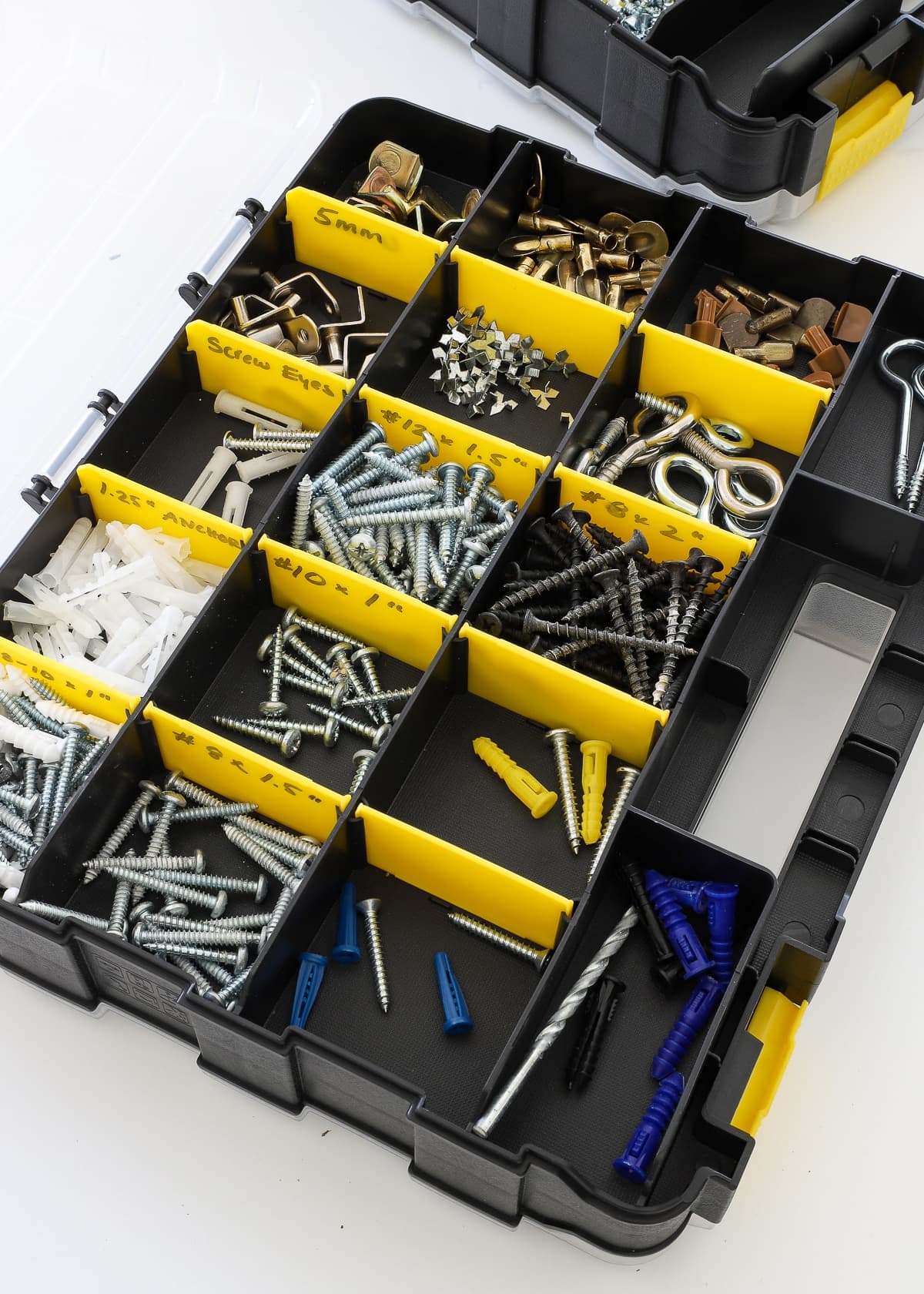
Stackable boxes are flexible. You can move them around or take them to a different location. Some boxes come with adjustable dividers so you can make custom spaces for different nuts and bolts. Stackable boxes are a good option for larger garages or mobile setups.
Magnetic Strips
Magnetic strips are useful for quick access. Mount a strip on your wall and stick nuts and bolts directly to it. This works best for temporary storage during a project, not for long-term storage.
Glass Jars
Many people use glass jars to store nuts and bolts. Jars let you see the contents easily. You can screw the lids to the underside of a shelf, so the jars hang down. This saves space and keeps items visible.
Comparison Of Popular Storage Types
Here’s a quick look at how the most common storage solutions compare:
| Storage Type | Visibility | Portability | Cost | Space Efficiency |
|---|---|---|---|---|
| Drawer Cabinets | Medium | Low | $$$ | High |
| Wall-Mounted Bins | High | Medium | $$ | Medium |
| Stackable Boxes | Medium | High | $ | Medium |
| Glass Jars | High | Low | $ | Low |
| Magnetic Strips | Medium | High | $ | Low |
Sorting Methods That Work
Sorting nuts and bolts is not just about putting them in bins. You need a system that makes sense for your projects.
By Size
Sorting by size is the most common method. Use a caliper or ruler to measure the diameter and length. Label containers with both numbers. For example, “M8 x 20mm bolts” or “1/4-inch nuts.”
By Type
Sort by type: bolts, nuts, washers, screws, etc. This helps when you need a specific part quickly.
By Material
Some nuts and bolts are made of steel, others of brass, aluminum, or plastic. Sorting by material is important if you have projects that require certain metals.
By Project
If you work on different projects, keep nuts and bolts for each project in separate containers. Label them with the project name. This stops mixing and makes cleanup easier.
Sorting Example Table
Here’s an example of how you might organize a mixed collection:
| Container Label | Contents | Project/Use |
|---|---|---|
| M6 Stainless Bolts | 50 bolts, 20 nuts | Bike repairs |
| Wood Screws 1.5″ | 100 screws | Furniture assembly |
| Brass Washers | 30 washers | Electrical work |
| Hex Nuts 1/4″ | 80 nuts | General use |
Credit: thehomesihavemade.com
Labeling: A Small Step With Big Benefits
Labels prevent confusion. Use clear labels for each container. Write the size, type, and material. You can print labels or write them by hand. Some people use color-coded stickers: blue for steel, yellow for brass, green for plastic.
For best results, place labels in a visible spot. If you use drawer cabinets, put the label on the drawer front. For jars, label the lid. For bins, label both the front and side.
Tips For Maintaining Order
Organizing nuts and bolts is not a one-time job. You need habits to keep things tidy.
- Return items after use. Always put nuts and bolts back in their containers after finishing a project.
- Regular checks. Every few months, look through your collection and remove damaged or rusty items.
- Buy only what you need. Avoid buying large packs if you will only use a few pieces.
- Update labels. If you change what is in a container, update the label right away.
- Separate rarely used items. Keep seldom-used nuts and bolts in a separate area so your main collection stays organized.
Mistakes To Avoid
Some common mistakes can ruin your system:
- Mixing sizes: Never put different sizes in the same container. This leads to confusion and wasted time.
- Overfilling bins: If a bin is too full, it’s hard to see what’s inside. Use more bins for large quantities.
- Ignoring rust: Rusty nuts and bolts can damage others. Remove rusted items as soon as you notice them.
- Poor labeling: Vague labels like “misc nuts” do not help. Be specific.
- Storing in damp places: Moisture causes rust. Keep storage in a dry area.
Using Technology For Better Organization
Smart solutions can make your garage even better. There are apps for tracking hardware inventory. You can create a simple spreadsheet with columns for size, type, quantity, and storage location. This helps when you need to reorder or check what you have.
Some people use QR codes on bins. Scan the code with your phone to see details about what is inside. This is useful for big collections.

Credit: www.bladeforums.com
Protecting Nuts And Bolts From Damage
Hardware lasts longer if you protect it. Store items in dry containers. Use silica gel packets to absorb moisture in bins. For expensive items, choose airtight boxes. Clean nuts and bolts before storing to remove oil or dirt.
If you live in a humid climate, consider a dehumidifier in your garage. This keeps moisture low and prevents rust. You can also use plastic containers with tight lids.
Making Your System Easy To Use
The best system is one you will use every day. Keep bins at eye level for easy access. Store the most-used items near your workbench. Rarely used items can go higher or lower.
If you share your garage, make sure your family or team understands the system. Give a quick tour and explain how to find and return items.
How Much Space Do You Need?
Estimate space before buying storage. For most home garages, one medium cabinet or 12-16 bins is enough for common sizes. If you have a big collection, you may need a full wall system.
A typical drawer cabinet holds 500-800 pieces. Stackable boxes hold 100-200 pieces each. Glass jars hold 30-50 pieces. Plan according to your needs.
Cost Analysis: What To Expect
Organizing nuts and bolts does not have to be expensive. Drawer cabinets cost $40-$100 each, stackable bins are $5-$15 per bin, and glass jars are free if you reuse old food jars. Labels cost a few dollars. For less than $100, most people can organize a small garage collection.
Here’s a cost breakdown:
| Storage Type | Average Cost | Capacity |
|---|---|---|
| Drawer Cabinet | $60 | 600 pieces |
| Stackable Bin | $10 | 150 pieces |
| Glass Jar | $0 (reused) | 40 pieces |
| Wall Bin Set | $35 | 250 pieces |

Credit: thehomesihavemade.com
Non-obvious Insights For Beginners
Many beginners miss two important points:
- Sorting by project saves time: Instead of sorting only by size or type, keep a small kit for each project you do often. For example, if you repair bikes often, keep a separate bin for bike hardware.
- Storing extras separately avoids clutter: Keep your main bins for regular use, and store extra or backup nuts and bolts in a box elsewhere. This prevents overfilling and makes your daily work smoother.
Practical Example: Setting Up Your System
Let’s say you have 1,000 nuts and bolts, mixed sizes and types. You buy a drawer cabinet with 24 drawers, a set of 8 stackable bins, and reuse 10 glass jars.
- First, sort everything on a table.
- Group by size and type. For example, M8 bolts, 1/4-inch nuts, wood screws.
- Place common sizes in drawer cabinet drawers and label each.
- Use stackable bins for special projects, like “car repairs” or “furniture assembly.”
- Put rare or odd pieces in glass jars and label them “miscellaneous.”
- Place silica gel packets in each bin.
- Mount the cabinet near your workbench and stack the bins on a shelf.
- Set a reminder every three months to check and tidy your collection.
Benefits You Will Notice
When your nuts and bolts are organized, you will:
- Find items faster.
- Save money by avoiding duplicate purchases.
- Protect hardware from damage.
- Enjoy a cleaner, safer garage.
- Work with more confidence and less stress.
For more ideas and research on hardware storage, check Wikipedia.
Frequently Asked Questions
How Can I Prevent Rust On Nuts And Bolts?
Store hardware in dry containers. Add silica gel packets to bins. Keep items off damp floors and avoid humid areas. If you notice rust, remove affected pieces right away.
What Is The Best Storage For Small Spaces?
Drawer cabinets and glass jars work well in small garages. They use vertical space and fit many items in a compact area. Mounting jars under shelves saves even more space.
How Do I Label Hardware Containers?
Use clear labels that show size, type, and material. You can print labels or write them by hand. Color coding works for quick identification.
How Often Should I Check My Collection?
Check your nuts and bolts every 3-6 months. Look for damaged or rusty items, update labels, and make sure everything is in the right container.
Can I Use Technology To Track My Hardware?
Yes. Many people use spreadsheets or inventory apps. You can even use QR codes on bins for fast lookup. This helps you see what you have and avoid buying duplicates.
Organizing nuts and bolts in your garage may take a few hours, but the results last for years. With the right storage, sorting, and habits, your garage will be cleaner and your projects easier. Remember, the best system is the one you will use every day.
Start small, keep it simple, and enjoy the benefits of a well-organized space.