
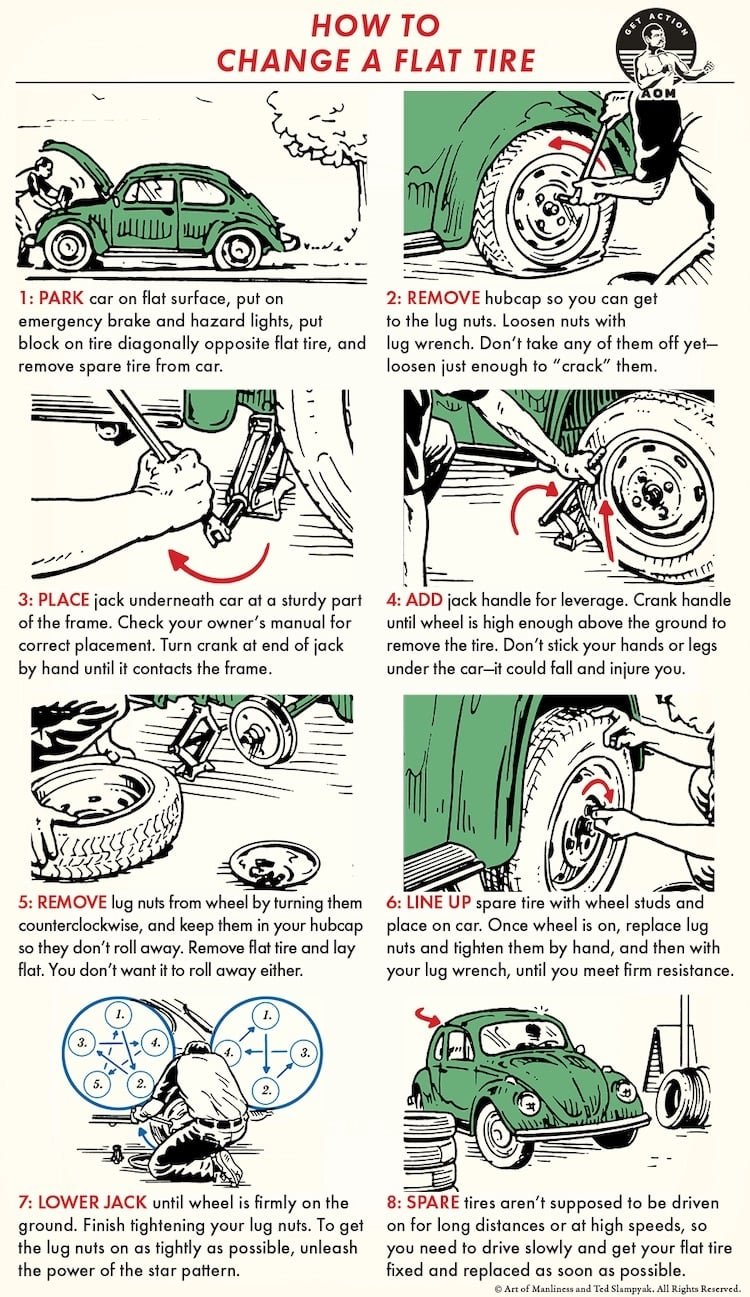
To change a flat tire safely, move away from traffic, turn on hazard lights, set the parking brake, chock a wheel if you can, loosen the lug nuts before lifting, place the jack only at the vehicle’s approved jack point, install the spare, tighten the lug nuts in a star pattern, and drive cautiously to tire service. Do not continue if the ground is soft or sloped, traffic is too close, the jack point is damaged, the spare is flat, or you feel unsure.
- Use the owner manual for the jack point, spare tire pressure, lug-nut torque, and compact-spare limits.
- Never put any part of your body under a vehicle supported only by the emergency jack.
- A compact spare is temporary; follow the speed and distance limit printed on the spare or in the manual.
- After the flat is repaired, review your tire rotation pattern so tire wear stays even.
Understanding The Basics: What You Need To Know
A flat tire means the tire has lost enough air that normal driving can damage the wheel, destroy the tire, or make the vehicle hard to control. The roadside goal is not a perfect repair; it is to install the correct spare safely and get the damaged tire inspected.
Changing a tire involves lifting the vehicle, removing the flat, installing the spare, and tightening the wheel fasteners correctly. Your owner manual controls the jack point, spare location, spare pressure, and tightening method.
Key items needed:
- Spare tire (usually in the trunk)
- Jack (to lift the car)
- Lug wrench (to remove bolts)
- Owner’s manual (for special instructions)
- Flashlight (for low light)
- Gloves (to keep hands clean)
- Wheel wedges (to stop rolling)
Check these items before a trip, not for the first time on the shoulder of a road. Also confirm the spare is present, inflated, and not visibly cracked or damaged.
Find a Safe Spot First
Safety comes first. Slow down gradually, turn on your hazard lights, and stop only where the vehicle can sit on firm, level ground away from traffic. Avoid curves, hills, soft shoulders, narrow roads, and any spot where other drivers may not see you.
Shift to Park or the proper gear, set the parking brake, and place wheel wedges or sturdy blocks against the wheels that stay on the ground. Ask passengers to wait in a protected location when road conditions make that safer.
Getting Ready: Preparing Tools And Yourself
Before you lift the car, get your tools and spare tire out. Place them within easy reach. If you have a reflective vest or triangles, put them behind your car to be seen by others.
Check your spare tire’s air pressure. A flat spare will not help. If you don’t know how to check, most spare tires have a small air gauge. Compare the pressure to the number written on the tire.
Put on gloves if you have them. Remove hubcaps or wheel covers before loosening the nuts. Most covers come off with a flat part of the lug wrench.
Loosening The Lug Nuts
Use the lug wrench to loosen the wheel fasteners while the tire is still on the ground. Turn in the loosening direction specified for the vehicle and apply controlled, steady force. Do not jump on the wrench or use improvised extensions that can slip, break the tool, or damage the fastener. If a fastener will not loosen with the supplied tool, roadside assistance is safer than forcing it.
Most cars have four or five lug nuts. They can be very tight. If one won’t budge, try applying steady pressure. Avoid quick, jerky pulls, as this can damage the wrench or nuts.
Beginners often try to remove all the nuts before lifting the car. This is a mistake because the wheel could turn. Always loosen while the tire is still on the ground.
Lifting The Car With The Jack
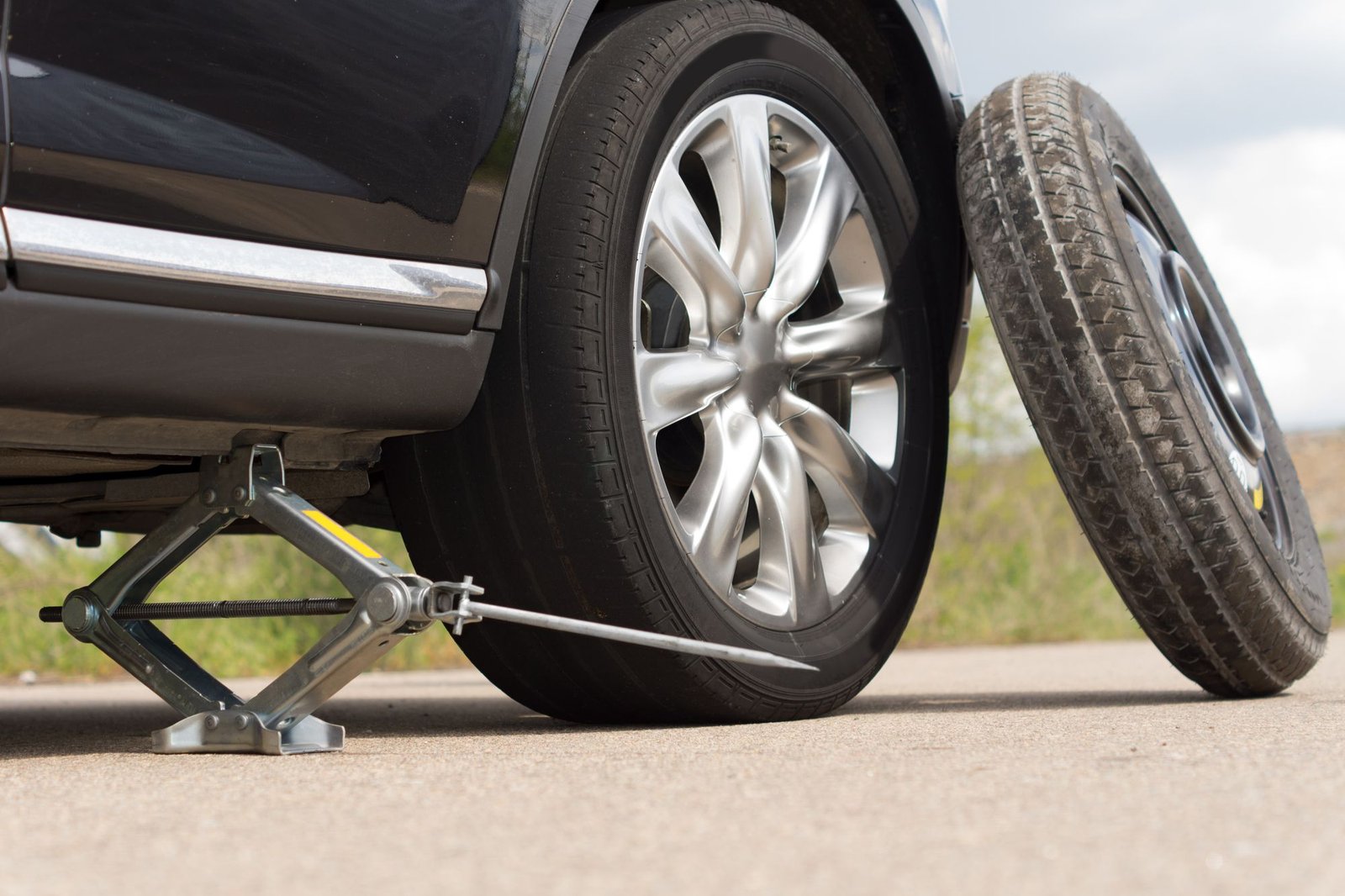
Find the jack point under your car. This is a strong metal part, often marked in the manual. Placing the jack in the wrong spot can damage your car.
Place the jack at the approved jack point from the owner manual, then raise the vehicle only high enough for the inflated spare to fit. Keep the jack straight and stop if the vehicle shifts, the jack leans, or the ground starts to sink.
Never put any part of your body under a vehicle supported only by the emergency jack. A roadside tire change should not require crawling under the vehicle.
Removing The Flat Tire
Now remove the loosened lug nuts completely. Put them in a safe spot—these are easy to lose on the ground.
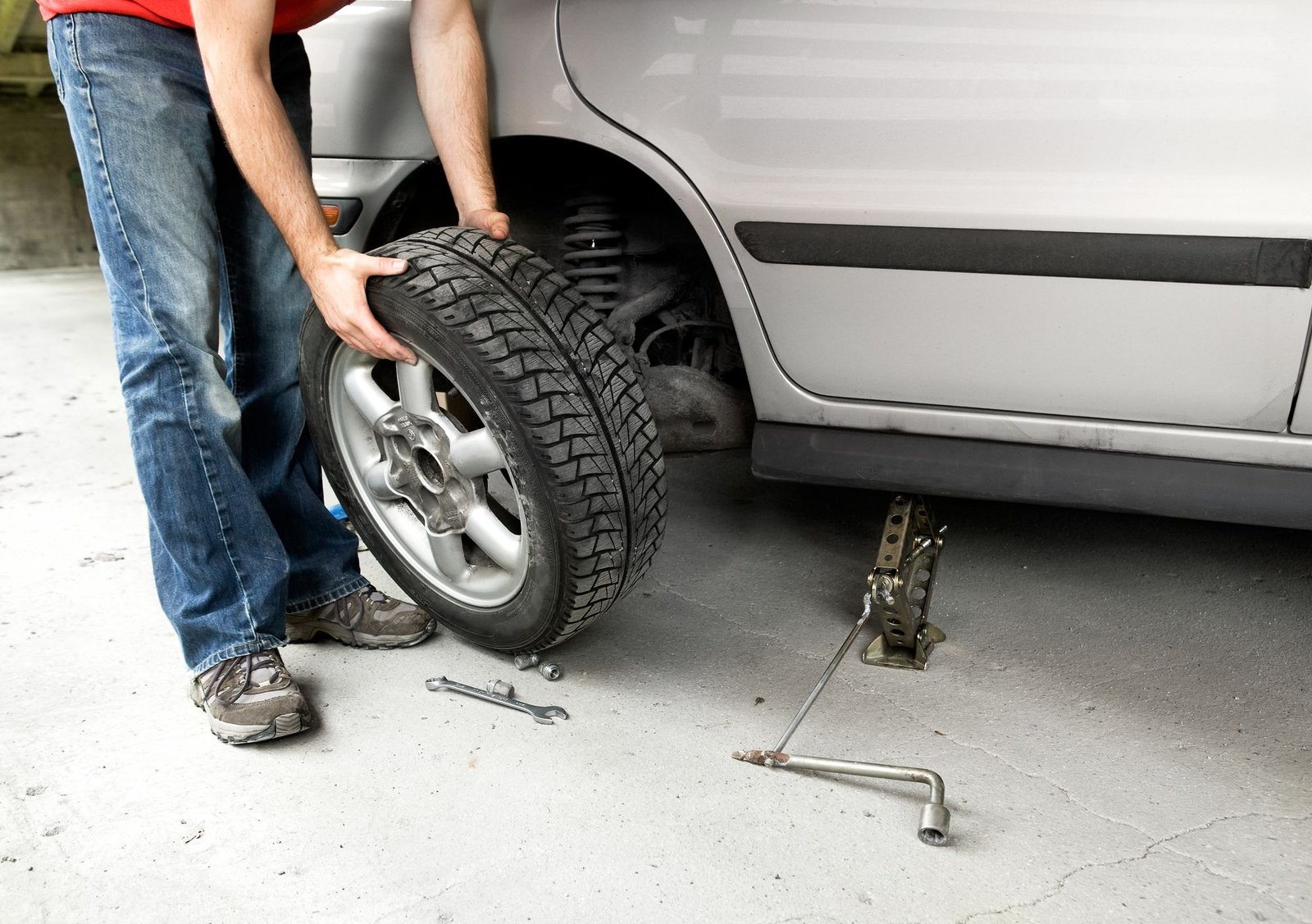
Carefully pull the flat tire straight toward you. It might feel heavy, but most compact car tires can be lifted by one person. Set the flat tire flat on the ground so it does not roll away.
If the tire seems stuck, try wiggling it gently. Sometimes rust or dirt holds the tire in place. Never kick the tire while the car is on the jack.
Mounting The Spare Tire
Lift the spare tire and line up the holes with the bolts. Push it onto the wheel base. Put the nuts back on by hand, turning them clockwise. Tighten them as much as you can with your fingers.
This step is key. If the spare is not straight or secure, your car will not drive safely. Beginners sometimes forget to line up the holes, which can damage the bolts.
Lowering The Car And Tightening The Lug Nuts
Use the jack to slowly lower your car back to the ground. Once the tire touches, remove the jack.
Now tighten the lug nuts in the star pattern or sequence listed in your owner manual. If you have a torque wrench, tighten to the vehicle-specific torque specification; otherwise drive slowly to a safe place where the lug nuts can be torqued correctly.
A loose or unevenly tightened lug nut is dangerous. Recheck the wheel after a short distance as the owner manual recommends, and stop if you feel vibration, pulling, wobble, or new noise.
Cleaning Up And Checking The Spare Tire
Put the flat tire and tools back in the vehicle. If the spare is a compact or temporary spare, follow the speed, distance, pressure, and vehicle-system limits printed on the spare and listed in the owner manual. NHTSA notes that even full-size spare tires age and should be used for emergencies such as replacing a flat tire, not as a permanent replacement for worn tires. NHTSA TireWise.
Check your tire pressure again at the next gas station. Some spares lose air if not used for a long time.
Always get your flat tire fixed or replaced as soon as possible. Driving long distances on a spare is risky.
Common Mistakes Beginners Make
- Not finding a safe spot: Stopping in dangerous places puts you and others at risk.
- Forgetting the parking brake: This can cause the car to roll during the change.
- Placing the jack incorrectly: Lifting the car in the wrong spot can damage it or make it unstable.
- Losing lug nuts: Always keep them in a safe place.
- Not tightening nuts enough: Loose nuts can make the wheel fall off.
- Ignoring spare tire limits: Donuts are not for long trips.
- Not checking spare tire air pressure: A flat spare wastes your effort.
Understanding these mistakes helps you avoid them. If you’re ever unsure, it’s better to call for help than risk safety.
Practical Tips For A Smooth Tire Change
- Practice at home: Try changing a tire in your driveway before it’s an emergency.
- Use firm, level ground: Do not rely on wood or improvised supports to make soft ground safe for an emergency jack. Move to a stable location or call roadside assistance.
- Carry a headlamp: This keeps your hands free at night.
- Check tools twice a year: Make sure everything is in the car and in good condition.
- Watch online videos: Seeing the process once can make it less scary. The National Highway Traffic Safety Administration has helpful guides.
Many drivers wait until they have a flat to learn these tips. Practicing now gives you confidence when you need it most.
How Long Does It Take To Change A Tire?
The time needed depends on traffic, weather, vehicle design, corrosion, wheel weight, tool condition, and experience. Do not rush a roadside tire change; if the location is unsafe or a fastener will not move normally, call for assistance.
If you are in a hurry or don’t feel safe, it’s always okay to call for help instead.
When Should You Not Change A Tire Yourself?
Sometimes, it’s best not to change a tire on your own. Here are some examples:
| Situation | What to Do |
|---|---|
| Heavy traffic or highway shoulder | Call roadside assistance |
| Nighttime with poor lighting | Wait for sunrise or help |
| Missing tools or spare tire | Do not attempt the change |
| Physical limitations | Ask for help or call service |
Your safety is more important than changing the tire quickly.
How To Check If Your Spare Tire Is Safe
A spare tire is only helpful if it’s in good shape. Check it every few months. Look for these signs:
- Cracks or dry rubber
- Low air pressure (use a tire gauge)
- Missing tread or bald spots
- Loose or damaged bolts
If you find any problems, replace the spare right away.
Useful Tools To Keep In Your Car
Besides the basics, some extra items can make tire changes easier:
- Portable tire inflator: Small pumps that plug into your car’s power outlet.
- Tire pressure gauge: Easy way to check air.
- Reflective triangles: Increase your visibility.
- Rain poncho: Stay dry during bad weather.
- Hand wipes: Clean your hands after the job.
Having these items can turn a stressful situation into a simple task.
The Difference Between Full-size And Donut Spare Tires
Not all spare tires are the same. Here’s a quick comparison:
| Type | Size | Speed Limit | Distance Limit |
|---|---|---|---|
| Full-size spare | Same as regular tire | Follow the owner manual | Emergency use until inspected |
| Donut spare | Smaller and lighter | Follow the spare-tire label | Follow the spare-tire label |
Always check your owner manual and the spare-tire sidewall label to know what type of spare you have and what limits apply.
Frequently Asked Questions
How Do I Know If My Tire Is Flat Or Just Low On Air?
A flat tire feels “wobbly” and makes the car pull to one side. You may hear a thumping sound. If unsure, check the tire visually. A flat will look much lower than the others. Use a tire pressure gauge if you have one.
Is It Safe To Drive On A Spare Tire For A Long Distance?
No. Most donut spares are for short-term use only. They are not as strong as regular tires. Use them only until you can fix or replace your flat tire.
What Should I Do If I Can’t Loosen The Lug Nuts?
Keep the vehicle on the ground and apply controlled force with the correct lug wrench. If the fastener will not loosen, do not jump on the wrench, use makeshift extensions, or apply lubricant at the roadside. Call for assistance rather than risking tool failure or vehicle movement.
Can I Change A Tire If It’s Raining Or Snowing?
Yes, but be extra careful. Make sure you are in a safe spot, use your hazard lights, and keep tools dry. Wear gloves and a rain poncho if you have them. If conditions are very bad, wait for help.
How Often Should I Check My Spare Tire?
Check your spare tire pressure and condition during routine maintenance and before long trips. Replace or inspect it if it is flat, cracked, badly aged, or different from what the owner manual requires.
Knowing how to change a flat tire is useful, but roadside safety comes first. If the location, weather, traffic, jack, spare, or wheel fasteners do not feel safe, call roadside assistance instead of forcing the job.