
Mixing different types of coolant may seem harmless to many drivers. Maybe you’re topping up in a rush, or you grab whatever is on sale at your local auto shop. But what happens inside your car’s cooling system is much more complicated.
Modern engines are engineered to tight tolerances, and coolants have special chemicals to protect every part. When you mix the wrong types, you risk hidden damage that can end up costing you thousands. Let’s explore why mixing coolants is dangerous, how it affects your car, and what every vehicle owner should know.
Why Coolant Types Matter
Engine coolant, also known as antifreeze, is not just colored water. It’s a blend of chemicals that:
- Transfers heat away from the engine
- Prevents freezing in winter
- Stops boiling in hot weather
- Protects metal parts from corrosion
Manufacturers create different types of coolants for different engines and materials. The main types include:
- Inorganic Additive Technology (IAT): Usually green, used in older cars
- Organic Acid Technology (OAT): Often orange, red, or dark green, used in many modern cars
- Hybrid Organic Acid Technology (HOAT): Typically yellow or turquoise, combines IAT and OAT benefits
- Phosphate Organic Acid Technology (POAT) and Silicated OAT (Si-OAT): Used in some Asian and European cars
Each coolant type uses unique additives. These chemicals are designed to work together. When you mix them, you disrupt their balance.
What Happens When Coolants Are Mixed
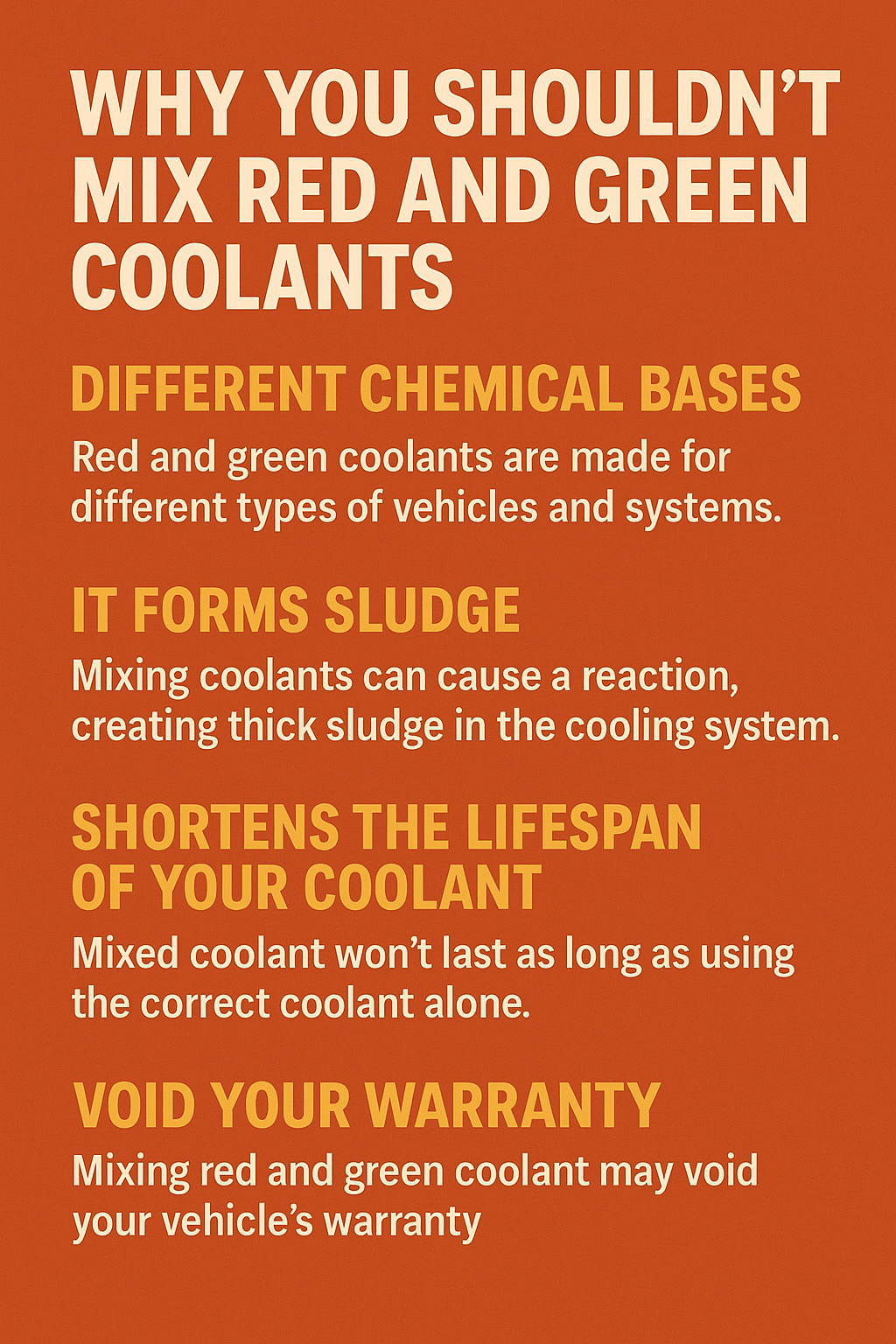
Mixing coolants isn’t just a color problem. It causes real chemical reactions. Here’s what can happen:
- Additive Precipitation: The different chemicals can react and form solid particles.
- Corrosion Increase: Protective abilities drop, so metal parts start to corrode.
- Sludge Formation: Mixed coolants can gel or create thick sludge, blocking cooling passages.
- Shorter Coolant Life: The mixture loses its effectiveness much faster than a single type.
These problems don’t usually show up right away. Damage builds over weeks or months. By the time you notice overheating or leaks, the repair bill can be huge.
Risks To Your Engine And Cooling System
Let’s look closer at the dangers that come from mixing different coolants.
Corrosion Of Metal Parts
Engines and radiators are made from aluminum, iron, and sometimes copper or brass. Each metal reacts differently to coolant chemicals. When the wrong additives combine, the protective film on metal vanishes. Corrosion starts, and you may get:
- Rust inside the engine block or radiator
- Pinholes in aluminum parts
- Water pump bearing failure
Clogged Passages And Overheating
When coolants form sludge, it often settles in narrow engine passages or the heater core. This blocks coolant flow, leading to:
- High engine temperature readings
- Weak or no heat from cabin vents
- Boiling or steam under the hood
A clogged cooling system can cause engine overheating in as little as 20 minutes of driving.
Gasket And Seal Damage
Coolant additives also protect rubber and plastic parts. Mixed coolants can break down these materials, leading to:
- Head gasket leaks
- Hose softening and bursting
- Coolant leaks at pipe seals
These failures often happen suddenly and without warning.
Reduced Freeze And Boil Protection
Each coolant type is formulated for a specific freeze and boil point. Mixing reduces these limits, so:
- Coolant can freeze in winter, cracking the engine block
- Boiling can occur at lower temperatures, causing engine damage
Loss Of Warranty Coverage
Most vehicle makers specify which coolant to use. If you mix coolants and damage occurs, your warranty claim may be denied. This can turn a small mistake into a big expense.
Common Scenarios Where Mixing Happens
Mixing coolants can happen in several ways:
- Topping up with the wrong color: For example, adding green IAT to orange OAT.
- Flushing system with water only: Then adding a different type of coolant.
- Quick fixes at roadside shops: Where mechanics use whatever is available.
Many drivers think color is a perfect guide. But, color is not a reliable indicator. Some OAT and HOAT coolants are both yellow, for example. Always check the label and your vehicle manual.
What The Science Says
Studies show coolant mixing causes real problems. For example, a 2020 research paper in the *Journal of Automotive Engineering* found that mixing OAT and IAT increased corrosion in aluminum radiators by over 60% in just six months. The study also found that mixed coolants had a 20% shorter service life.
Car manufacturers like Ford, Toyota, and Volkswagen all warn against mixing coolant types in their owner’s manuals. They specify the exact coolant standard for each engine.
Recognizing Signs Of Mixed Coolant Problems
Most issues start small and get worse over time. Look for these warning signs:
- Discolored coolant: Murky, brown, or thick liquid in the reservoir
- Sediment or particles: Bits floating in the coolant or stuck to the cap
- Temperature spikes: Unexplained overheating, even in mild weather
- Strange smells: Sweet or burnt odor under the hood
If you see any of these, have your system inspected immediately.
How To Fix Mixed Coolant Issues
If you realize you have mixed different coolants, don’t wait. Here’s what to do:
- Stop driving if overheating: Continuing can cause engine failure.
- Flush the cooling system: This means removing all old coolant, cleaning the system, and adding the correct type.
- Check for leaks or damage: Look at hoses, radiator, water pump, and heater core.
- Replace damaged parts: If corrosion or sludge has caused problems, replace affected components.
A proper flush usually takes about 1–2 hours in a professional shop. In severe cases, multiple flushes or part replacement may be needed.
Coolant Types Compared
Here’s a look at the main coolant types, their colors, and typical uses:
| Coolant Type | Typical Color | Main Application | Recommended Change Interval |
|---|---|---|---|
| IAT | Green | Older US cars (pre-2000) | 2 years or 30,000 miles |
| OAT | Orange, Red, Dark Green | Modern GM, VW, many imports | 5 years or 150,000 miles |
| HOAT | Yellow, Turquoise, Orange | Ford, Chrysler, some European | 5 years or 150,000 miles |
| POAT | Blue, Pink | Toyota, Honda, Subaru | Long-life, varies by maker |
| Si-OAT | Purple, Pink | Mercedes, BMW, VW | Long-life, varies by maker |
Credit: americanmfgco.com
Long-term Costs Of Mixing Coolants
The financial impact of mixing coolants can be high. Here’s a typical cost comparison:
| Problem Caused by Mixing | Estimated Repair Cost (USD) |
|---|---|
| Radiator replacement | $400 – $900 |
| Heater core replacement | $600 – $1,200 |
| Water pump failure | $350 – $700 |
| Engine rebuild (due to overheating) | $2,500 – $5,000+ |
| Cooling system flush | $90 – $200 |
Preventing these costs is as simple as using the correct coolant and never mixing types.
Practical Tips For Avoiding Coolant Mixing
- Check your owner’s manual: This is the best source for your engine’s coolant requirements.
- Keep extra coolant in your car: Buy the right type and keep it in the trunk for emergencies.
- Never trust color alone: Always read the label and verify the chemical type.
- Ask before topping up: At shops, make sure they use the correct coolant.
- Flush old coolant: If you’re unsure what’s in your system, do a full flush before adding new coolant.
- Label your coolant reservoir cap: A simple sticker can remind you and mechanics of the correct type.
A practical detail many drivers miss: Even “universal” or “all makes, all models” coolants are not always compatible with every system. These coolants may work as a short-term emergency measure, but for best protection, stick with the manufacturer’s recommended product.
Credit: dfwkwikkar.com
Are There Any Safe Mixes?
Some coolants are designed to be compatible with others, but this is rare. For example, some HOAT coolants can mix with OAT in an emergency. But this is not true for all brands. When in doubt, flush and refill with the correct fluid.
Mixing is especially dangerous in cars with complex cooling systems, such as modern turbocharged engines, hybrids, and vehicles with aluminum radiators. In these cases, even small chemical imbalances can lead to big problems.
The Role Of Water In Coolant
The type of water mixed with coolant matters too. Always use distilled water when diluting concentrated coolant. Tap water contains minerals that can react with coolant additives, causing additional sludge and corrosion. This is an extra step many people forget, but it makes a big difference in system life.
Credit: www.prestoneuk.com
What The Experts Say
Automotive experts and mechanics agree: “Never mix coolants unless you are completely sure they are compatible.” Even then, it’s best to avoid mixing. The small cost of a proper flush and refill is nothing compared to the risk of engine damage.
For more technical details about coolant chemistry, you can visit the Wikipedia Antifreeze page.
Frequently Asked Questions
Can I Mix Different Colors Of Coolant If They Look Similar?
No, color is not a reliable guide. Two coolants can be the same color but use different chemical formulas. Always check the label for the chemical type (IAT, OAT, HOAT) and follow your car’s manual.
What Should I Do If I Accidentally Mixed Coolants?
If you realize you’ve mixed coolants, get a professional cooling system flush as soon as possible. The longer you wait, the higher the risk of damage. Don’t rely on draining just the radiator; a full flush is needed.
Are “universal” Coolants Safe To Use?
Universal or “all makes, all models” coolants are designed to be compatible with many systems. However, they may not offer the best long-term protection for every engine. Use them only if specified by your car’s manufacturer or in emergencies.
How Can I Tell If My Coolant Is Mixed Or Contaminated?
Signs include murky or brown coolant, particles or sludge in the reservoir, or an unusual odor. If you’re unsure, a mechanic can test the coolant with special strips or meters.
Will Mixing Coolants Affect My Car’s Warranty?
Yes, most manufacturers require a specific coolant type. Using the wrong coolant or mixing types can void your warranty if it causes damage. Always keep records of the coolant used and any maintenance performed.
Taking care with your coolant is a simple step that can prevent expensive repairs. When in doubt, use the right coolant, avoid mixing, and flush your system if mistakes happen. Your engine—and your wallet—will thank you.