
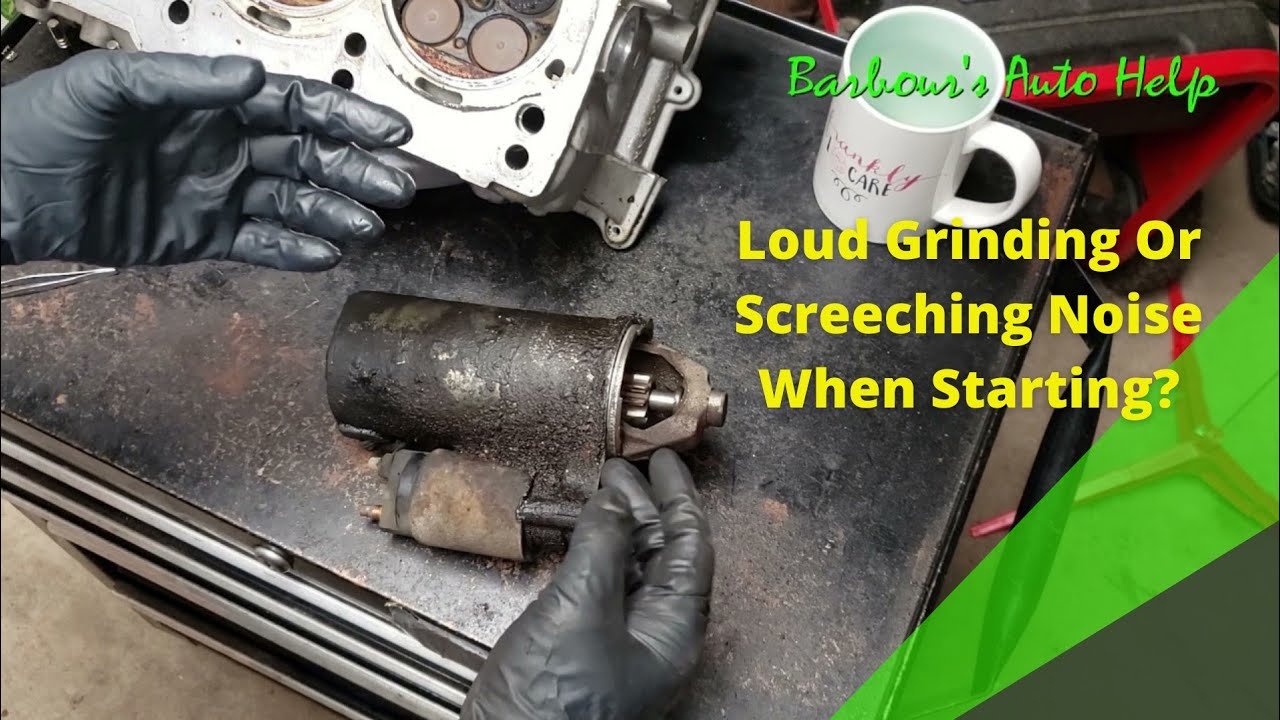
A grinding noise from your car can be scary. It often means something is wrong and needs attention soon. Ignoring these sounds can turn a small problem into a big repair bill. The good news is, you don’t have to be a professional mechanic to understand what’s happening and what to do next.
This guide explains why your car might make a grinding noise, how to find the cause, and the best steps to fix it. Whether the sound happens when braking, turning, or starting the engine, you’ll find practical advice here to help you diagnose and solve the problem.
Let’s get started and make your car quiet and safe again.
Understanding Grinding Noises In Cars
A grinding sound is usually a harsh, rough noise. It can happen at different times: while braking, turning, accelerating, or even when starting the car. The location and timing of the sound can give you important clues. For example, a grinding noise when braking often points to the brakes, while a noise during turns might mean an issue with the wheel bearings or CV joints.
Ignoring grinding sounds is risky. They often mean parts are wearing out or damaged. Continuing to drive can make things worse, leading to expensive repairs or even a breakdown.
Main Causes Of Grinding Noise In Cars
Here are the most common reasons your car might make a grinding noise:
- Worn brake pads
- Damaged rotors
- Bad wheel bearings
- Failing CV joints
- Low or old transmission fluid
- Worn clutch (manual transmission)
- Problems with the differential
- Loose or damaged belts
- Engine problems (rare but possible)
Let’s look at each cause in detail and learn how to check for them.
1. Worn Brake Pads
Brake pads are designed to wear out over time. When they get too thin, the metal backing can rub against the rotor, making a grinding noise. This usually happens when you press the brake pedal.
Signs:
- Grinding or scraping when braking
- The car takes longer to stop
- Warning light on the dashboard
Tip: Some brake pads have a small metal tab that makes a squealing noise before the grinding starts. If you hear squealing, replace the pads soon.
2. Damaged Rotors
If you ignore worn brake pads, the metal-on-metal contact can damage the brake rotors. Deep grooves or warping can cause grinding and even vibration when braking.
Signs:
- Grinding noise that doesn’t go away after changing pads
- Pulsation or vibration when braking
- Visible grooves or scoring on the rotor
Replacing rotors as soon as they are damaged is safer and often cheaper than waiting.
3. Bad Wheel Bearings
Wheel bearings let your wheels spin smoothly. When they wear out or get damaged, they can cause a grinding noise, especially when turning or at certain speeds.
Signs:
- Grinding or growling noise that gets louder with speed
- The sound changes when turning
- Vibration in the steering wheel
Insight: Many beginners think wheel bearing noises always come from the front, but rear bearings can fail too.
4. Failing Cv Joints
Constant velocity (CV) joints are part of the axle. They help transfer power to the wheels, especially when turning. If the rubber boot tears, grease leaks out, and the joint can wear out, causing a grinding or clicking noise.
Signs:
- Grinding or clicking when turning, especially sharp turns
- Grease on the inside of the wheels
- Vibration during acceleration
Non-obvious tip: A torn CV boot is much cheaper to fix than a whole CV joint. Check for grease leaks early.
5. Low Or Old Transmission Fluid
Your car’s transmission needs fluid to lubricate moving parts. If the fluid is low or old, it can cause a grinding noise, especially when shifting gears.
Signs:
- Grinding when changing gears (automatic or manual)
- Delayed shifting
- Burning smell
Check your transmission fluid regularly and change it as recommended by the manufacturer.
6. Worn Clutch (manual Transmission)
If you drive a manual car, a worn clutch can make grinding noises when you try to shift gears.
Signs:
- Grinding or crunching when shifting
- Hard to get into gear
- Slipping clutch (engine revs increase but speed doesn’t)
Sometimes, adjusting the clutch cable can help, but a worn clutch usually needs to be replaced.
7. Differential Problems
The differential lets your wheels spin at different speeds when turning. If it runs low on fluid or the gears are worn, it can make grinding noises, especially when turning or accelerating.
Signs:
- Grinding or whirring from the rear or center of the car
- Noise increases with speed or when turning
- Fluid leaks near the differential
Insight: Differential issues are often missed because the noise can sound like it’s coming from the wheels.
8. Loose Or Damaged Belts
Belts control many parts, like the alternator or AC. If a belt is loose, worn, or misaligned, it can make a grinding or squealing sound, usually from the engine area.
Signs:
- Grinding, squealing, or chirping from the front of the car
- Belt looks cracked, shiny, or frayed
- Accessories (like AC or power steering) not working properly
Replacing belts is usually simple and cheap.
9. Engine Problems
Although less common, some engine problems (like worn bearings inside the engine) can cause grinding noises. This is serious and usually comes with other symptoms, like loss of power, oil pressure warning, or smoke.
Signs:
- Deep grinding or knocking from the engine
- Loss of power
- Warning lights
If you suspect engine problems, stop driving and call a mechanic right away.
Credit: www.youtube.com
How To Diagnose The Source Of The Grinding Noise
Finding the exact cause of the grinding noise saves time and money. Here’s how to diagnose it:
- Listen carefully: Note when the noise happens (braking, turning, accelerating).
- Check the wheels and brakes: Look for thin brake pads, grooves on rotors, or grease leaks.
- Inspect fluid levels: Check brake, transmission, and differential fluid.
- Look for leaks: Grease near wheels or under the car can point to CV joint or differential problems.
- Test drive: Safely drive at low speed and try braking, turning, and accelerating to see when the noise appears.
Here’s a quick comparison of common grinding noise causes and when they usually happen:
| Noise Source | When It Happens | Location |
|---|---|---|
| Worn brake pads | Braking | Front/rear wheels |
| Bad wheel bearing | Turning or at speed | Wheels (front/rear) |
| CV joints | Turning | Front wheels (usually) |
| Transmission | Shifting gears | Under car/center |
Step-by-step Guide: How To Fix Grinding Noise In Your Car
Once you know the cause, you can take action. Here’s how to fix the most common grinding noise issues:
Fixing Worn Brake Pads And Rotors
- Park safely and let the brakes cool.
- Remove the wheel to see the brake pads and rotor.
- If the pads are thin (less than 1/4 inch), replace them.
- If the rotor has deep grooves or is warped, replace or resurface it.
- Reassemble and test drive.
Changing brake pads at home is possible with basic tools. If you’re unsure, a professional can do it quickly.
Replacing Bad Wheel Bearings
- Lift the car and secure it on jack stands.
- Spin the wheel by hand and listen for grinding.
- Check for play by shaking the wheel side to side.
- Replace the wheel bearing if you hear noise or feel looseness.
Bearings often require special tools to press in and out. For most people, it’s best left to a mechanic.
Repairing Cv Joints
- Look for torn boots and grease leaks.
- If only the boot is damaged, replace it and refill with grease.
- If the joint is noisy, replace the CV axle.
Replacing a CV axle can be a moderate DIY job if you have some experience.
Refilling Transmission Or Differential Fluid
- Locate the fill plug (see your owner’s manual).
- Remove the plug and check fluid level and color.
- Top up or replace fluid as needed.
For many cars, this is a simple job, but some need special tools or fluid.
Changing Belts
- Inspect belts for cracks or shine.
- Use a wrench to release tension and remove the old belt.
- Fit the new belt, following the correct path.
- Adjust tension as needed.
Belts are cheap and can be changed at home in under an hour.
Credit: thelandautorepair.com
When To Call A Mechanic
Some grinding noises are easy to fix at home, but others are better left to a professional. If you notice:
- Grinding from inside the engine
- Major leaks or smoke
- Grinding that doesn’t stop after simple repairs
Don’t risk further damage. Call a qualified mechanic.
Preventing Grinding Noises In The Future
Prevention is always better than repair. Here are some tips:
- Check brake pads every 10,000 miles (16,000 km)
- Change fluids (brake, transmission, differential) as recommended
- Inspect belts every oil change
- Listen for new noises and fix problems early
- Don’t ignore warning lights or dashboard alerts
Here’s a quick maintenance schedule for key components:
| Component | Check Interval | Replace Interval |
|---|---|---|
| Brake pads | 10,000 miles | 20,000–50,000 miles |
| Brake fluid | Every oil change | 2 years |
| Transmission fluid | 15,000 miles | 30,000–60,000 miles |
| Belts | Every oil change | 60,000 miles |
Non-obvious tip: Many drivers forget to check the rear brakes and differential. These can wear out just like the front.
Cost Of Ignoring Grinding Noises
Ignoring a grinding noise can be expensive. For example, changing brake pads might cost $100–$300, but waiting until the rotors are damaged can raise the bill to $400–$800. Wheel bearings and CV joints are also much cheaper to fix early.
According to the Consumer Reports, catching car noises early can save hundreds or even thousands of dollars.
Frequently Asked Questions
What Should I Do First When I Hear A Grinding Noise From My Car?
First, try to identify when the noise happens (braking, turning, or accelerating). Stop driving if the noise is loud or constant. Check the brakes, wheels, and fluid levels. If you’re unsure, have a mechanic inspect the car as soon as possible.
Is It Safe To Drive With A Grinding Noise?
No, it’s not safe. Grinding sounds mean parts are rubbing or damaged. Driving can make the problem worse and may cause a breakdown or accident.
Can Low Brake Fluid Cause A Grinding Noise?
Low brake fluid usually causes a soft or spongy brake pedal, not a grinding noise. Grinding usually comes from worn brake pads or damaged rotors. However, low fluid is still dangerous and should be fixed immediately.
How Much Does It Cost To Fix A Grinding Noise In A Car?
Costs depend on the cause. Simple fixes like brake pads can be $100–$300. More serious issues like bearings or CV joints can cost $300–$800. Engine or transmission problems may be much more expensive.
Can I Fix A Grinding Noise Myself, Or Do I Need A Mechanic?
Some problems, like changing brake pads or belts, can be done at home with basic tools. More complex jobs, like replacing wheel bearings or CV joints, are better left to a mechanic unless you have experience.
A grinding noise from your car should never be ignored. By understanding the causes and knowing how to check and fix the problem, you can keep your car running safely and avoid costly repairs. Stay alert for new sounds, do regular maintenance, and act quickly when something feels or sounds wrong.
Your car—and your wallet—will thank you.
Credit: www.youtube.com