
Storing bikes in your garage can feel like solving a puzzle. They take up floor space, block walkways, and can even get damaged if not handled well. But a clever storage solution can give you back your space, keep your bikes safe, and make grabbing your ride for a spin much simpler. Learning how to hang bikes in garage to save space is a smart move for any cyclist, whether you own one bike or a whole family collection.
This guide will walk you through the main methods, tools you’ll need, and practical tips that make a real difference. You’ll also discover common mistakes and lesser-known insights that help you avoid frustration. No matter your garage size or bike type, there’s a smart storage solution that fits.
Why Hanging Bikes In The Garage Makes Sense
Hanging your bikes is not only about making space. It also protects your bikes from scratches, keeps tires in good shape, and reduces tripping hazards. If you park your car in the garage, freeing up floor space is even more valuable.
Many bike owners also find that hanging bikes helps them stay organized and reduces clutter.
But not all hanging solutions are equal. The right choice depends on your garage layout, wall strength, number of bikes, and how often you use them.
Main Ways To Hang Bikes In Garage
There are several proven methods for hanging bikes. Each has its pros and cons, and the right option depends on your needs.
1. Wall-mounted Hooks
Wall hooks are one of the most popular and affordable ways to hang bikes. You screw a sturdy hook into a wall stud and hang your bike by the front wheel.
Pros:
- Cheap and easy to install
- Works for most bike types
- Saves floor space
Cons:
- Lifting required (can be tough for heavy bikes)
- May leave tire marks on the wall
Real tip: Use a small piece of wood or rubber behind the tire to prevent wall marks. For families, install hooks at different heights for adults and children.
2. Vertical Bike Racks
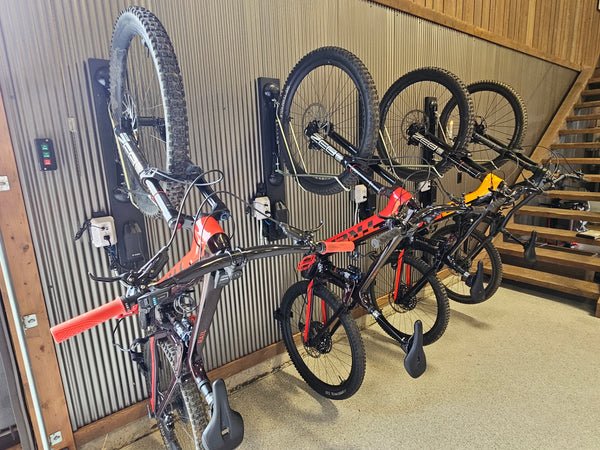
Vertical racks support bikes by the front wheel, holding them upright against the wall. Some designs allow you to hang several bikes side-by-side.
Pros:
- Efficient for multiple bikes
- Keeps bikes separated (less risk of scratching)
Cons:
- Requires strong wall anchors
- Lifting needed for heavy frames
Many racks have arms that adjust for different wheel sizes. Always check your garage wall material before installation.
3. Horizontal Wall Mounts
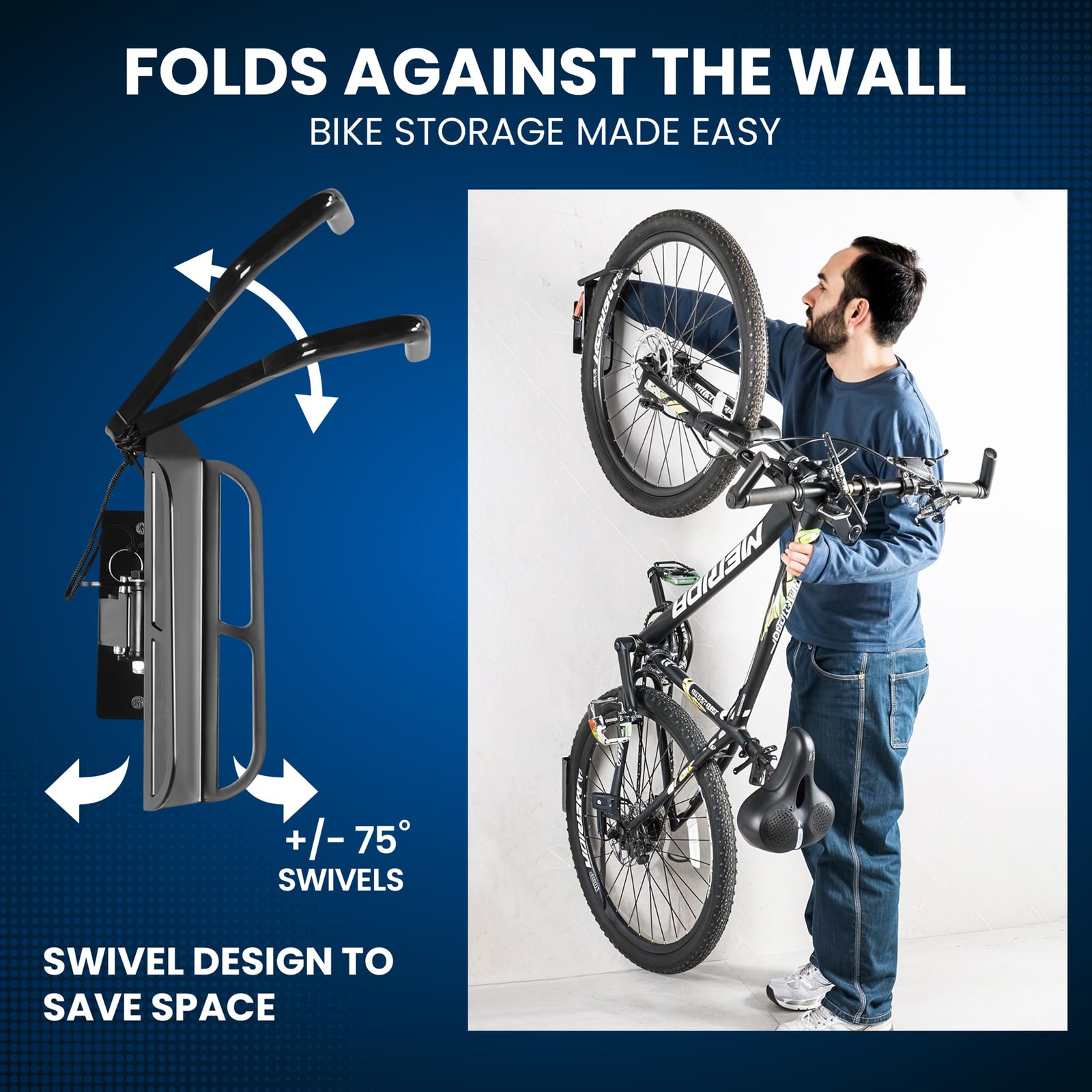
Horizontal mounts hold bikes parallel to the wall by the frame. These are often foldable arms or brackets.
Pros:
- Easy to lift (less height required)
- Good for displaying nice bikes
- Less strain on wheels
Cons:
- Takes up more wall width
- Not ideal for tight spaces
Horizontal mounts work best for lighter bikes or those you use often.
4. Ceiling-mounted Hooks Or Pulleys
Ceiling storage is excellent for rarely used bikes or when wall space is limited. You can use simple hooks or pulley systems to lift bikes overhead.
Pros:
- Clears floor and wall space
- Great for long-term storage
Cons:
- Not suitable for daily use
- Hard to install without a ladder
- Weight limits apply
Practical insight: Always check ceiling joist strength. Never hang bikes from drywall alone.
5. Freestanding Bike Racks
Freestanding racks don’t require wall or ceiling installation. You set them on the floor, and they hold multiple bikes vertically or horizontally.
Pros:
- No drilling or mounting
- Portable and adjustable
- Ideal for renters
Cons:
- Takes up some floor space
- Can be pricey for high-quality models
Great for those who want flexibility or who can’t modify garage walls.
6. Diy Storage Solutions
If you love hands-on projects, you can build custom racks using wood, metal pipes, or even recycled materials. For example, a wooden rail with hooks or a wall-mounted shelf with bike slots.
Pros:
- Custom fit for your space
- Can be cost-effective
Cons:
- Requires tools and time
- Not always as strong as commercial options
Always prioritize safety and test your DIY rack before full use.
Credit: www.steadyrack.com
Choosing The Right Bike Hanging Solution
Not sure which method is best? Consider these key factors:
| Method | Best For | Space Savings | Installation Difficulty |
|---|---|---|---|
| Wall Hooks | 1-2 bikes, quick access | High | Low |
| Vertical Racks | Families, multiple bikes | Very High | Medium |
| Horizontal Mounts | Display, easy lifting | Medium | Medium |
| Ceiling Storage | Rarely used bikes | Maximum | High |
| Freestanding Racks | Renters, no drilling | Medium | Low |
Extra tip: Measure your bikes and garage space before buying any racks or hooks. Handlebar width and bike length can affect how many bikes you can fit.
Tools And Materials Needed
Depending on the method you choose, you may need:
- Stud finder (essential for wall/ceiling mounts)
- Drill and drill bits
- Screws or wall anchors (rated for the bike’s weight)
- Measuring tape
- Level
- Pencil for marking
Some racks come with all needed hardware, but always check weight ratings.
:max_bytes(150000):strip_icc()/GettyImages-1129467715-692c594ddcde45129d63685afc05675d.jpg)
Credit: www.thespruce.com
Step-by-step: Hanging A Bike Using Wall Hooks
Here’s a practical example for the most common method—wall hooks.
- Choose the wall location. Avoid blocking doors or car doors.
- Find a wall stud. Use a stud finder for safety.
- Mark the hook height. Make sure the rear wheel is off the ground, but not too high to lift.
- Drill a pilot hole. This prevents wood splitting.
- Screw in the hook. Tighten firmly, but don’t overtighten.
- Hang the bike. Test with gentle pressure.
- Protect the wall. Place a rubber mat or small board where the tire touches.
Real-world mistake: Many people skip finding a stud and only use drywall. This can lead to accidents, especially with heavier bikes.
How Many Bikes Can You Hang?
The answer depends on garage size, rack design, and bike type.
- For a standard 20-foot garage wall, you can fit 5-6 adult bikes vertically with careful spacing.
- Kids’ bikes or slim road bikes may allow more.
- For ceiling racks, limit to 2-3 bikes per joist to avoid overloading.
Non-obvious insight: Staggering hook heights allows handlebars to clear each other, fitting more bikes in less space.
Safety Considerations
Never compromise on safety. Hanging a bike means trusting the wall or ceiling to hold it securely.
- Always use hardware rated for at least 50% more than the bike’s weight.
- For heavy electric bikes (e-bikes), some wall mounts are not strong enough. Double-check manufacturer limits.
- Avoid hanging bikes where children can pull them down.
- If you live in an area with earthquakes or vibration, consider straps to secure bikes in place.
Protecting Your Bike And Garage
Hanging can sometimes scratch rims, bend wheels, or leave tire marks on walls.
- Use rubber-coated hooks to protect wheels.
- Add a small strip of carpet or foam on the wall where wheels rest.
- For high-end bikes, avoid hanging by carbon rims—use frame-supporting mounts instead.
Tip you may not know: Hanging a bike by one wheel for long periods does not harm modern bikes. However, if you have vintage bikes with soft rims, alternate which wheel is hung.
Organizing Accessories
A tidy garage isn’t just about bikes. Helmets, pumps, shoes, and tools need a home too.
- Add shelves above bike racks for helmets or gloves.
- Install pegboards for tools and spare parts.
- Use labeled bins for small items.
Pro insight: Keep a small “ride-out” basket near your bikes for essentials. This saves time and reduces lost gear.
Maximizing Garage Space: Layout Tips
The way you arrange your bikes can make or break your garage’s usability.
| Layout | Best For | Drawback |
|---|---|---|
| Single Wall | Easy access, 2-4 bikes | Uses one wall only |
| Corner Vertical | Tight spaces, 1-2 bikes | Awkward for daily use |
| Staggered Heights | Max bikes, family use | Lifting required |
| Ceiling Row | Long-term storage | Inconvenient access |
Unexpected benefit: A well-organized bike wall can inspire you to ride more often. Quick, visible access beats digging bikes out from a pile.
Mistakes To Avoid
Many people make the same errors when hanging bikes in the garage:
- Ignoring wall strength. Drywall alone cannot hold a bike. Always mount into studs or use heavy-duty anchors.
- Installing hooks too close. Handlebars and pedals need space—leave at least 16 inches between hooks.
- Mounting bikes too high. If it’s hard to lift, you won’t use it.
- Forgetting about cars. Make sure bikes don’t block car doors.
- Skipping protection. Wall marks and rim scratches are preventable.
Bonus insight: Always plan for future bikes. A little extra space now saves re-installation later.
When Not To Hang Your Bike
While hanging is great, it’s not always the best choice:
- If you ride daily and dislike lifting, a floor rack may be easier.
- For very heavy e-bikes, check rack limits carefully.
- Garages with low ceilings or exposed pipes may have limited hanging space.
Choose what works for your usage style and physical ability.
Credit: ueo-workshop.com
Environmental And Security Factors
Garages are not always climate-controlled. Consider:
- Humidity can rust chains and bolts—wipe bikes before storage.
- Extreme heat or cold can affect tires and seals.
- If your garage door is often open, use a bike lock for extra security.
For advanced setups, consider wall-mounted locking racks for added theft protection.
Real-world Example
A family of four with two adults and two kids can save over 30 square feet by using a vertical wall rack. Bikes are hung at staggered heights, with kids’ bikes lower. Helmets and shoes are stored in bins below. This clears a parking spot for the car and keeps gear easy to reach.
For more inspiration and layout ideas, check resources like this Popular Mechanics guide.
Frequently Asked Questions
How High Should I Hang My Bike In The Garage?
Aim for the front wheel to be about 6-8 inches off the ground for easy lifting. For kids’ bikes, go lower so they can reach. If space allows, stagger heights to fit more bikes.
Will Hanging My Bike Damage The Wheels Or Frame?
Modern bikes can safely be hung by the wheel or frame. Use rubber-coated hooks or padded racks to prevent scratches. For heavy e-bikes or carbon wheels, use mounts that support the frame.
What’s The Safest Way To Hang Multiple Bikes In A Small Garage?
Use vertical wall racks with staggered heights. Leave at least 16 inches between hooks for handlebars. Always anchor into wall studs or use heavy-duty wall anchors.
Can I Hang My Bike From The Ceiling If I Use It Often?
Ceiling storage is best for bikes you use rarely. Daily lifting down from the ceiling is tiring and can cause accidents. For daily use, choose wall racks at a comfortable height.
What Tools Do I Need To Hang A Bike In The Garage?
Basic tools include a stud finder, drill, screws or anchors, level, and measuring tape. Some racks come with all hardware included, but always check weight ratings and instructions.
Hanging your bikes in the garage the right way changes everything—more space, less clutter, and longer bike life. Choose the method that matches your garage and riding style, and enjoy a tidier, safer home for your cycling adventures.