
Checking your car’s suspension at home might seem tricky, but with some guidance, it’s possible for anyone to spot early problems. A good suspension system is not just about comfort; it’s essential for your safety and your car’s handling. If the suspension is worn out, you may lose control, especially in bad weather or on rough roads.
Knowing how to inspect your car’s suspension at home can save you money and help you avoid unexpected breakdowns.
You don’t need to be a mechanic to do a basic inspection. With some simple tools and a careful approach, you can check for common issues before they become serious. This guide will help you understand what to look for, how to test different suspension parts, and what signs mean you should visit a professional.
Let’s get started on making sure your car’s suspension stays in top shape.
What Is Car Suspension And Why Does It Matter?
The car suspension is a group of parts connecting your wheels to the car’s main body. These parts include shocks, struts, springs, bushings, and control arms. Their main job is to absorb bumps, keep your tires touching the road, and make driving comfortable and safe.
A bad suspension can cause:
- Poor handling
- Uneven tire wear
- Noisy or bumpy rides
- Longer stopping distances
Most people only notice suspension problems when they get worse. Regular checks can help you find issues early, which usually costs less to fix.
Tools You’ll Need For A Home Suspension Check
Before you begin, gather these tools:
- Flashlight: For seeing under the car.
- Gloves: To protect your hands.
- Jack and jack stands: To safely lift and support the car.
- Tire pressure gauge
- Tire iron or wrench
- Pry bar (optional): For testing loose parts.
- Notebook/phone: To write down anything strange.
Having these tools ready makes the inspection process smoother and safer.
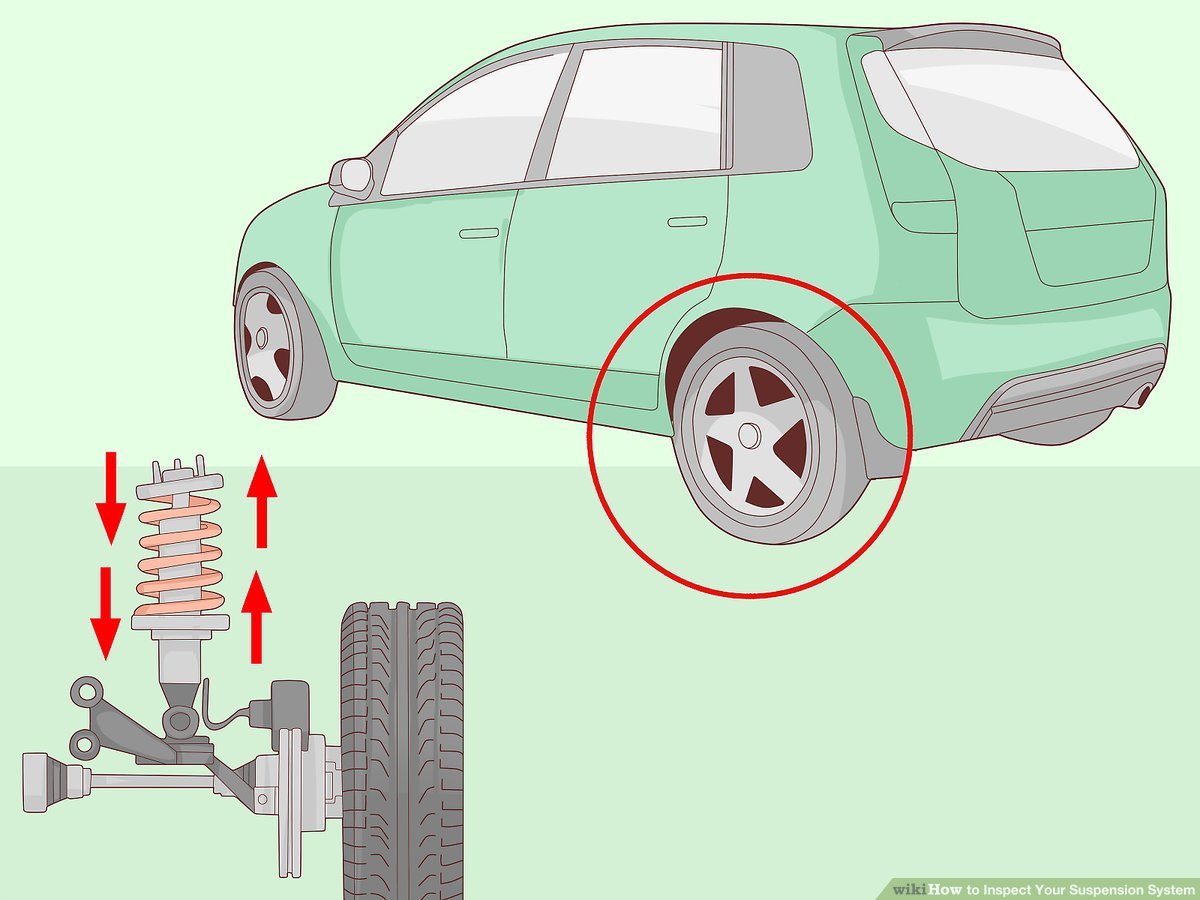
Credit: www.wikihow.com
Safety First: Prepare For Your Inspection
Safety should always come first. Here’s how to prepare:
- Park on a flat surface. Use the parking brake.
- Turn off the engine. Remove the key.
- Let the car cool down if you’ve just driven.
- Wear gloves and safety glasses if you have them.
- Loosen lug nuts a little before lifting the car.
- Lift only one corner at a time if you’re new to this.
Never get under a car supported only by a jack. Always use jack stands.
Step-by-step Guide To Inspecting Car Suspension At Home
1. Visual Inspection Of Suspension Components
Start with what you can see.
- Look for leaks around the shocks or struts. Oil stains mean they may be worn out.
- Check for rust or cracks on springs and control arms.
- Inspect rubber bushings for cracks or missing pieces.
- See if any bolts or nuts are loose.
Shocks and struts should be clean and dry. Springs should not look broken or bent.
2. Check For Unusual Tire Wear
Your tires can tell you a lot about your suspension.
Types of unusual tire wear:
| Tire Wear Pattern | Possible Cause |
|---|---|
| Inner/outer edge wear | Bad alignment or worn suspension parts |
| Cupping or scalloping | Faulty shocks/struts |
| Feathering | Loose suspension or steering components |
If you see uneven wear, your suspension may need attention.
3. Bounce Test
This is a classic test for shocks and struts.
- Push down hard on one corner of the car.
- Let go and watch how the car moves.
If the car bounces more than 2 times before stopping, the shocks or struts may be worn.
4. Listen For Noises
Drive your car slowly over bumps or rough roads with the windows down.
- Clunking: Often means worn ball joints or bushings.
- Squeaking: Can be dry or old bushings.
- Rattling: May be loose parts or mounts.
Write down where and when you hear noises. They can help a mechanic find the problem faster if you need help.
5. Inspect Ball Joints And Tie Rods
Ball joints and tie rods help steer and support your car.
With the wheel lifted:
- Grab the tire at the 12 and 6 o’clock positions.
- Try to rock it in and out.
- Now grab it at 3 and 9 o’clock and do the same.
If you feel a lot of play, the ball joints or tie rods may be worn. Some movement is normal, but it should not be loose or clunky.
6. Check Springs And Control Arms
Springs support your car’s weight. Control arms connect the wheels to the car’s frame.
- Look for broken, cracked, or sagging springs.
- Check if control arms are bent or rusted.
If you notice that one corner of your car sits lower than the others, the spring may be weak or broken.
7. Examine Bushings
Bushings are small rubber parts that cushion metal joints.
- Look for cracks, tears, or missing pieces.
- Use a pry bar to gently move the control arm. If the bushing moves too much, it may be worn out.
Worn bushings can cause vibration and noise.
8. Inspect Sway Bar Links
Sway bars help keep your car stable in turns.
- Check if the sway bar links are loose or broken.
- Listen for clunking noises when turning or going over bumps.
Broken links can make your car feel unstable when you steer.
9. Measure Ride Height
A sagging car may have worn springs or shocks.
- Park on a flat surface.
- Measure the distance from the ground to the top of each wheel arch.
- Compare all sides.
A difference of more than 1 inch (2.5 cm) means something is wrong.
10. Test Steering Response
While parked, turn the steering wheel back and forth.
- The wheel should turn smoothly.
- If you hear knocks or feel resistance, parts of the suspension may be worn.
Loose steering is a sign of trouble.
11. Check For Leaks And Corrosion
Use your flashlight to look for:
- Oil or grease leaks: Often from shocks, struts, or CV boots.
- Rust or corrosion: Especially on mounting points and bolts.
Leaks can damage other parts and cause more problems.
12. Examine Cv Joints (front-wheel Drive Cars)
CV joints let your wheels turn and move up and down.
- Check CV rubber boots for cracks or leaks.
- If you see grease on the inside of the wheel, the boot may be torn.
Damaged CV joints can make clicking noises when you turn.

Credit: motronix.net
Table: Common Suspension Problems And What They Mean
Here’s a quick reference for what different signs might mean:
| Symptom | Possible Problem | Action Needed |
|---|---|---|
| Bouncy ride | Worn shocks/struts | Replace shocks/struts |
| Clunking over bumps | Loose ball joints/bushings | Check and tighten/replace |
| Car leans to one side | Sagging spring or broken part | Inspect and replace parts |
| Uneven tire wear | Bad alignment or suspension | Check suspension, get alignment |
Two Non-obvious Insights Most Beginners Miss
1. Check Your Car After Heavy Loads
Carrying heavy items, like moving boxes or towing a trailer, can strain your suspension. After such trips, do a quick check. Sometimes, problems only appear after extra weight stresses the parts.
2. Don’t Ignore Small Changes In Ride Comfort
Many people get used to a slowly worsening ride. If you start feeling more bumps or the car feels “floaty,” it’s often a sign of early suspension wear. Fixing these early can prevent bigger, more costly issues later.
When To Call A Professional
If you find leaks, broken parts, or feel unsafe, visit a mechanic soon. Suspension work often needs special tools and experience. Regular home checks help you catch problems early, but some repairs are best left to experts.
If you want to learn more about how suspension systems work, the Wikipedia page on suspension is a great resource.
Faq: Frequently Asked Questions
How Often Should I Check My Car’s Suspension?
It’s a good idea to inspect your suspension every 6 months or before long trips. If you drive on rough roads, check more often.
What Are The Main Signs Of Suspension Problems?
Look for bouncy rides, strange noises, uneven tire wear, and if the car leans or feels unstable.
Can I Drive With A Bad Suspension?
It’s unsafe. Bad suspension affects braking and handling. Get it fixed as soon as possible.
Do I Need Any Special Tools To Inspect Suspension?
Most checks need only basic tools like a flashlight, jack, tire iron, and possibly a pry bar. For deep repairs, mechanics use special equipment.
How Much Does It Cost To Fix Suspension Issues?
Costs vary. Replacing shocks or struts can range from $200 to $800 per pair, while bushings or ball joints may be less. Early fixes are usually cheaper than waiting until parts break.
—
Regularly inspecting your car’s suspension at home keeps you safer and can save you money. Even if you’re not a car expert, these simple checks can help you spot issues before they become serious. Stay alert for changes in how your car handles, and don’t hesitate to ask for professional help when you need it.
With a little care, your car’s suspension will keep you comfortable and safe for many miles to come.
Credit: smartbuy.alibaba.com