
Removing sticky adhesive residue from car paint can be frustrating. Maybe you peeled off an old bumper sticker, or removed a dealership decal and now there’s a stubborn, sticky patch left behind. You want your car to look clean and shiny, but you’re also worried about damaging the paint. If you rush or use the wrong method, you could scratch, dull, or even strip the finish. But with the right knowledge and tools, you can safely restore your car’s smooth surface.
This guide will show you how to remove adhesive residue from car paint without risk. You’ll learn about different types of adhesives, which products and tools work best, and step-by-step methods for both fresh and old glue spots. Along the way, you’ll discover tips that most beginners miss, so you can avoid common mistakes and save time.
Understanding Adhesive Residue On Car Paint
Adhesive residue comes from stickers, tape, decals, vinyl wraps, or badges. It can be:
- Fresh and soft (just removed)
- Old and hardened (sticky for months or years)
- Thick or thin (depends on the glue type)
Fresh residue is usually easier to remove. Old adhesive can be baked on by the sun, making it tough and sometimes yellow. Some glues have chemicals that bond with clear coat, so gentle techniques are important.
Why The Right Removal Method Matters
Using kitchen scrapers, harsh chemicals, or even your fingernails can scratch the paint or dull the finish. Many people use strong solvents that dissolve glue fast, but these can eat into the clear coat. Others try to rub the spot with a towel, only to spread the sticky mess wider.
The goal is to break down the adhesive without harming the paint. The right method will:
- Leave no scratches or marks
- Keep paint color and shine intact
- Remove all stickiness, so dirt doesn’t collect
Tools And Products You’ll Need
You don’t need expensive equipment. Most items are easy to find in auto stores or at home:
| Tool/Product | Purpose | Where to Find |
|---|---|---|
| Microfiber towels | Gentle wiping, no scratches | Auto store, supermarket |
| Plastic scraper or old credit card | Lifts residue gently | Home, wallet |
| Adhesive remover (e.g., Goo Gone, 3M) | Dissolves sticky glue | Auto supply, online |
| Isopropyl alcohol (70% or 90%) | Removes last traces, safe for paint | Pharmacy, store |
| Car wash soap and water | Cleans and rinses area | Home, auto store |
| Soft sponge | For gentle cleaning | Home, store |
Some people use home products like peanut butter, cooking oil, or vinegar. These sometimes work, but can leave oily stains or take more effort to clean up.
Step-by-step Process To Remove Adhesive Residue
Let’s break the job into clear, safe steps. This method works for most car paints.
1. Wash The Area First
Clean the sticky spot with car wash soap and water. Dirt or dust can scratch the paint if you rub them around. Use a soft sponge and rinse well.
2. Soften The Adhesive
If the glue is old or hard, warm it up to make it soft. Use a hair dryer (not a heat gun) on low heat. Hold it a few inches away and move in circles for 1-2 minutes. The warmth helps loosen the bond.
Tip: Never use boiling water or a high-heat gun on car paint. You could blister or crack the finish.
3. Try Gentle Removal First
Use a plastic scraper or an old credit card to lift off as much as possible. Work slowly at an angle, so you don’t dig into the paint. Never use metal tools—they scratch easily.
Wipe with a clean microfiber towel as you go.
4. Apply An Adhesive Remover
Put a few drops of adhesive remover (like Goo Gone or 3M Adhesive Cleaner) on a soft towel. Dab it onto the sticky area. Let it sit for 1-2 minutes so it can break down the glue.
Gently rub in a circular motion. Reapply if needed, but don’t scrub hard. The chemical does the work, not your muscles.
Non-obvious insight: Many people use too much remover or let it sit too long. This can stain or dull the paint. Always follow the product label.
5. Remove The Remaining Residue
For small, stubborn spots, try isopropyl alcohol on a clean cloth. This evaporates fast and is safe for most car paints. Rub gently, never press hard.
If you see oily or shiny marks left from the adhesive remover, wash with car soap again.
6. Rinse And Dry
Rinse the area with clean water and dry with a microfiber towel. This removes all traces of chemicals.
7. Inspect And Repeat If Needed
Check under good light. If you see or feel stickiness, repeat the softening and removal steps. Don’t rush—patience avoids scratches.
8. Finish With Wax Or Sealant
Adhesive removers can strip off wax or sealant layers. Apply a good quality car wax or paint sealant to protect the paint and restore shine.
Comparing Popular Adhesive Removers
Here’s a quick look at common products for car paint:
| Product | Strength | Paint Safety | Residue Risk |
|---|---|---|---|
| Goo Gone | Moderate | Safe for most paints | Oily if not washed off |
| 3M Adhesive Remover | Strong | Very safe | Low |
| Isopropyl Alcohol | Light | Safe | None |
| WD-40 | Moderate | Safe if washed off quickly | Oily if left on paint |
Alternatives For Stubborn Residue
Sometimes, adhesives are extra tough—especially after sun exposure or years on the car. Here are options if regular methods fail:
- Clay Bar: Auto detailing clay can pull out sticky residue without scratching. Lubricate the area with a clay lube or soapy water. Move the clay gently in straight lines. This is a detailer’s secret weapon.
- Automotive Tar Remover: Designed for tar, but also works on hard adhesives. Use with care; always test on a small spot first.
- Peanut Butter or Vegetable Oil: These break down sticker glue, but must be washed off fully to avoid oil stains.
- Vinegar: Mild acid helps, but is slow and not always effective on strong adhesives.
Non-obvious insight: After using oils or peanut butter, always rewash and re-wax the area. Oils can attract dust and degrade paint over time.
Mistakes To Avoid
Many car owners damage their paint by making simple mistakes. Watch out for these:
- Using sharp metal tools: Even a small scratch can lead to rust.
- Scrubbing hard: Pressure can wear down the clear coat and make the spot dull.
- Using nail polish remover (acetone): This removes glue fast but can strip car paint.
- Leaving chemical removers too long: They can stain or fade the paint.
- Not rewaxing after cleaning: The area will be unprotected and can fade or rust.
Tips For Large Areas Or Badges
Removing adhesive after badges or large decals can take more time. Here’s how to handle them:
- Use dental floss or fishing line to “saw” behind large emblems. This cuts the foam and glue without scratching.
- Work in small sections. Don’t try to remove everything at once.
- For old, thick glue, combine heat (hair dryer), adhesive remover, and a plastic scraper in slow steps.
- For vinyl wraps, always pull at a 45-degree angle and use heat to reduce glue left behind.
How Weather And Sun Exposure Affect Removal
If the adhesive has been in the sun for years, it will be harder and more yellow. In hot weather, glues melt deeper into the paint. In cold weather, they get brittle and chip off—but can take paint with them.
Best practice: Do the removal in shade and moderate temperature. Direct sun can cause removers to evaporate too fast, leaving you with streaks or stains.
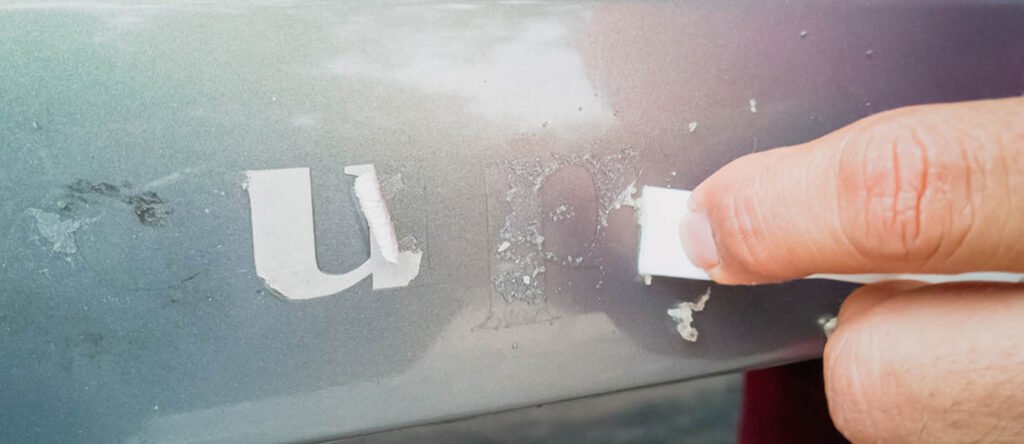
How To Tell If The Paint Is Damaged
After cleaning, look at the spot from different angles under sunlight. Signs of paint damage include:
- Dull or hazy finish
- Color change (lighter or darker)
- Visible scratches or lines
- Sticky or rough texture
If you see these, polish and wax the area. For deep scratches, consult a professional detailer.
Credit: idealimageautosalonmd.com
When To Seek Professional Help
If you have a valuable car, custom paint, or a large area to clean, consider a professional detailer. They have special tools and experience to remove glue safely. If you try and see paint coming off on your towel, stop immediately.
Preventing Future Adhesive Problems
To avoid sticky messes in the future:
- Use removable decals or magnets instead of permanent stickers.
- Remove stickers when they’re new—old glue is always harder to clean.
- Wax your car regularly. Adhesives stick less to a waxed surface.
- Avoid parking long-term stickers in direct sun.
Credit: www.youtube.com
Common Questions About Adhesive Removal
Here are some quick answers to questions car owners often ask.
Frequently Asked Questions
What Is The Safest Adhesive Remover For Car Paint?
3M Adhesive Remover and isopropyl alcohol are both safe for most car paints when used as directed. Always test a small area first, and never let the remover sit too long.
Can I Use Wd-40 To Remove Sticker Residue?
Yes, WD-40 works well for most sticker residue. Spray it, let it soak for a minute, then wipe with a microfiber towel. Wash the area with soap after, since WD-40 is oily.
How Do I Remove Old Sticker Glue That Won’t Come Off?
Try a clay bar or automotive tar remover. Use heat to soften the glue, and work slowly with a plastic scraper. For thick, old glue, you may need to repeat the process several times.
Will Adhesive Remover Damage My Car’s Paint?
If you use an automotive adhesive remover and follow instructions, it is safe for modern clear-coat paint. Avoid harsh chemicals like acetone or paint thinner, as these can cause damage.
Do I Need To Wax My Car After Removing Adhesive?
Yes, always wax or seal the cleaned area. Adhesive removers strip wax, leaving paint unprotected. Waxing restores shine and protects the finish.
For more in-depth science on car paint and adhesives, you can visit the Wikipedia Automotive Paint page.
Getting rid of adhesive residue doesn’t have to be stressful. With the right products, gentle technique, and a little patience, you can restore your car’s smooth, clean shine—without risk or regret.
Credit: www.loctiteproducts.com