
To soundproof a garage workshop, start by finding the loudest paths: the garage door, side door, windows, wall gaps, ceiling, vents, and vibrating tools such as compressors, grinders, saws, and impact wrenches. Seal air gaps first, add mass or insulation to weak surfaces, isolate noisy equipment from the floor, treat echoes inside the room, and keep safe ventilation for fumes, dust, heat, and moisture.
- Use hearing protection when tool noise is loud enough that you need to raise your voice nearby. OSHA and NIOSH both treat high noise exposure as a hearing-risk issue.
- Do not block required combustion air, exhaust paths, dryer vents, paint fumes, battery charging ventilation, or garage-door safety hardware.
- For shared walls, ceilings below living space, structural changes, or electrical/ventilation changes, check local code or hire a qualified contractor.
- Soundproofing and moisture control overlap. If your garage is damp, fix leaks and condensation first; see this guide on preventing moisture in a garage workshop.
Understand How Garage Workshop Noise Escapes
Garage noise usually escapes in three ways. Airborne sound travels through gaps around doors, windows, vents, and unfinished wall cavities. Impact noise comes from vibration through the floor, bench, wall framing, or ceiling. Reflected sound bounces off concrete, drywall, metal doors, and bare tools, making the room feel louder than it needs to be.
A garage is harder to quiet than a normal room because it often has a large thin door, hard concrete, unfinished edges, and open pathways to the outside. The goal is practical noise reduction, not total silence.
Plan Around Tools, Neighbors, Airflow, And Moisture
Before buying materials, list the tools and jobs that create the most noise: air compressors, impact tools, grinders, saws, hammering, dust collectors, radios, or long idle time from equipment. Then walk outside while the loudest tool is running and mark where the sound is strongest.
- For leaks: weatherstripping, door sweeps, caulk, and outlet gaskets usually come first.
- For thin surfaces: add mass with heavier door treatment, extra drywall, dense insulation, or mass-loaded vinyl where appropriate.
- For vibration: use rubber isolation pads under compressors, benches, cabinets, and machines.
- For echo: use acoustic panels, moving blankets, mats, or soft storage surfaces inside the room.
- For safety: keep fresh air, dust control, heat control, and moisture control in the plan.
Start With The Garage Door
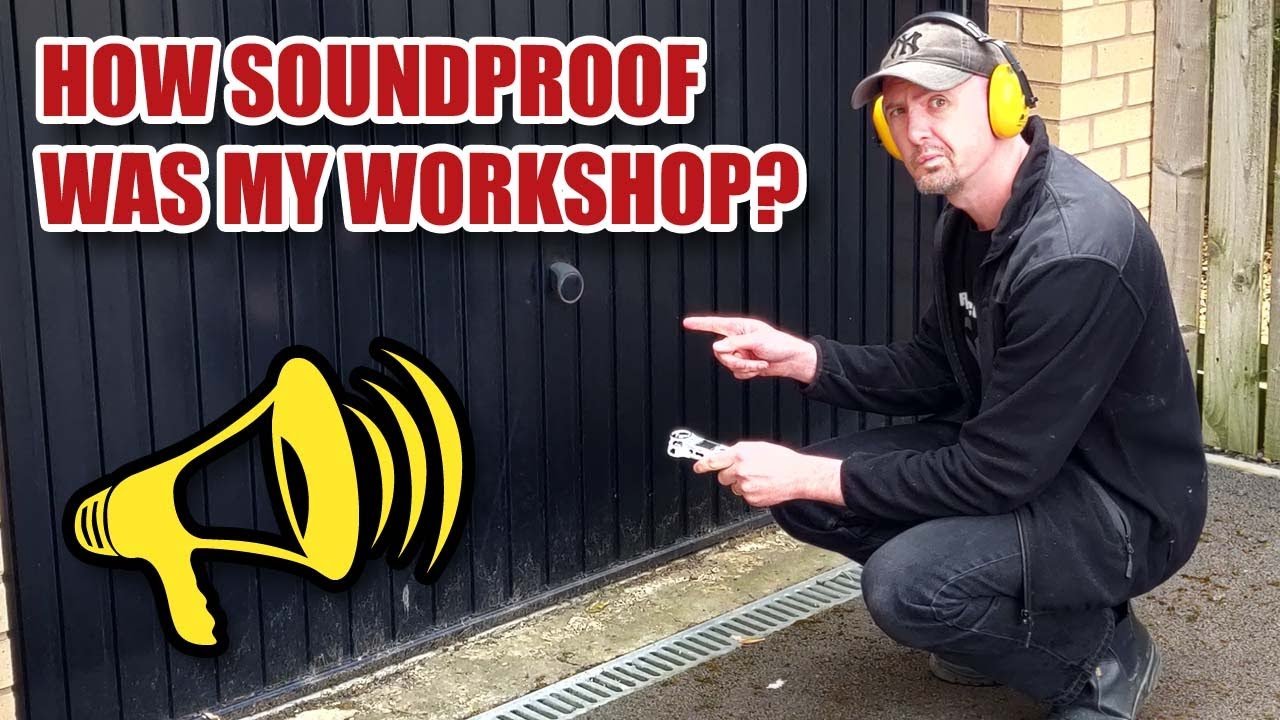
The garage door is usually the biggest weak spot because it is wide, light, and full of edges. A small gap at the top, sides, bottom, or panel joints can leak more noise than a wall section.
- Replace worn perimeter weatherstripping: seal the sides and top without interfering with door travel.
- Install a fresh bottom seal: choose a seal that matches the door track and floor condition.
- Add safe door insulation: use a product that fits your door type and does not overload the springs or opener.
- Use a removable curtain when parked: a heavy moving blanket or acoustic curtain can help during work sessions, but it should be clear of tracks, sensors, and moving parts.
If the door is poorly balanced or the opener struggles after adding material, stop and have the door serviced. Garage-door springs and cables can be dangerous.
Seal Doors, Windows, And Small Gaps
Sound follows air. Seal the obvious gaps before spending money on panels or wall upgrades. Check the side entry door, the door between the garage and house, window frames, conduit holes, outlets on shared walls, trim gaps, and cracks around sill plates.
- Use exterior-grade weatherstripping on doors.
- Add a door sweep where light or drafts show under the door.
- Use acoustic sealant or appropriate caulk on stationary gaps.
- Use removable window plugs only when they do not trap moisture or block needed emergency egress.
- Keep vents open when they are required for appliances, fumes, or code.
Upgrade Walls And Ceiling Where Noise Still Escapes
If sealing does not do enough, the next step is adding mass, insulation, or isolation. For unfinished walls, mineral wool or fiberglass batts can reduce cavity resonance. For finished walls, extra drywall with acoustic sealant at the edges can improve blocking. Mass-loaded vinyl can help in some assemblies, but it works best as part of a complete wall or door system rather than as a loose decorative layer.
| Area | Useful upgrade | Safety check |
|---|---|---|
| Shared wall | Seal edges, add insulation or extra drywall | Do not cover electrical problems or fire-rated assemblies incorrectly |
| Ceiling below living space | Dense insulation, sealed drywall, vibration control | Confirm load, access, and code requirements before heavy changes |
| Garage door | Weatherstripping, bottom seal, safe insulation kit | Do not overload springs, opener, tracks, or sensors |
| Windows | Seal gaps, heavy curtain, removable plug | Avoid trapped moisture and blocked required egress |
For a ceiling under bedrooms or living space, do not rely on foam panels alone. Foam can reduce room echo, but it does not add much sound-blocking mass.
Control Ventilation Without Creating A Noise Tunnel
Ventilation matters in a garage workshop because sanding dust, paint fumes, solvent vapor, heat, battery charging, fuel odors, and exhaust can become safety problems. Instead of blocking vents, use baffled paths, lined duct sections rated for the job, or a dedicated exhaust setup that moves air while reducing direct sound paths.
The EPA notes that moisture control is central to controlling mold growth, so avoid soundproofing choices that trap damp air inside walls, window plugs, mats, or stored materials. Fix leaks and condensation before sealing the garage tightly. EPA mold and moisture guidance.

Reduce Tool Vibration And Echo Inside The Workshop
After the main leaks are handled, reduce the noise you create inside the garage. Place compressors and heavy machines on rubber isolation pads. Tighten rattling shelves, pegboards, ducting, and loose panels. Keep metal storage from buzzing against walls. Add rubber floor mats in work zones where they are safe and not a trip hazard.
- Acoustic panels: reduce echo near benches and hard walls, but do not block much outdoor noise by themselves.
- Moving blankets: useful as temporary absorption around work areas or parked projects.
- Rubber pads: reduce vibration transfer from compressors, cabinets, tool chests, and benches.
- Better layout: move the loudest tools away from shared walls, windows, and the garage door when possible.
Noise reduction does not replace hearing protection. OSHA explains that workplace noise exposure can damage hearing, and NIOSH notes that power tools commonly fall into hazardous noise ranges. Use properly fitted hearing protection during loud work. OSHA noise guidance; NIOSH noise information.
Budget By Priority, Not Big Claims
Costs vary by garage size, door condition, wall construction, local labor, and material choice, so avoid planning around a universal price range. A low-risk order is usually: seal gaps, reduce vibration, treat the garage door, add absorption for echo, then consider wall or ceiling upgrades if the remaining noise justifies the work.
| Priority | Best first move | Why it helps |
|---|---|---|
| 1 | Seal obvious air gaps | Sound leaks through the same openings as drafts |
| 2 | Isolate vibrating tools | Stops vibration from traveling through concrete, benches, and framing |
| 3 | Treat garage door weak points | The largest thin surface often leaks the most sound |
| 4 | Add absorption inside | Makes the room less harsh while you work |
| 5 | Upgrade walls or ceiling | Useful when a shared wall or room above still receives noise |
Common Mistakes To Avoid
- Using foam as the only solution: foam reduces echo, but it does not seal gaps or add much blocking mass.
- Blocking ventilation: a quieter garage is not worth unsafe fumes, heat, dust, moisture, or appliance backdraft risk.
- Adding too much weight to the garage door: extra weight can affect springs, opener load, sensors, and safe operation.
- Ignoring moisture: tight seals and window plugs can trap damp air if leaks or condensation are already present.
- Expecting total silence: DIY soundproofing can reduce practical noise, but some sound will still pass through structure, vents, and openings.
When To Call A Professional
Call a professional if the garage shares a wall or ceiling with bedrooms or living space, if you plan to alter framing, drywall fire separation, electrical wiring, HVAC, vents, garage-door springs, or exterior openings, or if noise complaints continue after basic sealing and tool isolation.
A contractor can evaluate wall assemblies, door balance, code requirements, and ventilation needs. That is especially important when a workshop uses paint, solvents, welding, fuel-powered equipment, or tools that produce heavy dust.
Final Thoughts
A quieter garage workshop comes from stacking practical improvements: seal the leaks, quiet the door, add mass where it matters, isolate vibrating tools, treat echo inside, and keep air moving safely. Start with the loudest path you can prove from outside the garage, then upgrade only the areas that still cause a real problem.
Frequently Asked Questions
What Is The First Step To Soundproof A Garage Workshop?
Find the loudest leak path first. Run the noisiest tool, listen from outside, and check the garage door, side door, windows, vents, wall gaps, and ceiling before buying materials.
Can Foam Panels Soundproof A Garage?
Foam panels can reduce echo inside the workshop, but they do not seal air gaps or add much mass. Use them after door, wall, window, and vibration problems are handled.
Should I Block Garage Vents To Reduce Noise?
No. Do not block vents that are needed for fumes, dust, heat, moisture, combustion air, or code. Use baffled or lined ventilation paths instead.
Will Soundproofing Help With Garage Moisture?
Some sealing and insulation work can reduce drafts, but it can also trap moisture if leaks or condensation are present. Fix moisture problems before making the garage tighter.
When Is DIY Soundproofing Not Enough?
DIY work may not be enough for shared living-space walls, ceiling noise, code-sensitive ventilation, structural changes, garage-door balance problems, or ongoing neighbor complaints. Those cases deserve professional evaluation.