
Replacing a car timing belt is a task many car owners try to tackle to save money. It sounds simple: remove the old belt, put on a new one, and you’re done. However, this job is more complex than it seems. A single mistake can lead to engine damage, poor performance, or even total failure. Many people, even experienced mechanics, make common errors during this process. If you are planning to replace your timing belt, understanding these mistakes can help you avoid expensive repairs later.
This article explains the most frequent mistakes made when changing a timing belt. You’ll learn what to watch for, why these errors happen, and how you can do the job right. Whether you’re a DIY car owner or just want to know what your mechanic should be doing, this guide will give you the clarity and confidence you need.
Not Checking The Manufacturer’s Instructions
Every car engine is different. Some engines are interference engines, which means a mistimed belt can cause the pistons to hit the valves and destroy the engine. Others are non-interference engines, which are more forgiving. The manufacturer’s manual contains the exact timing marks, torque specs, and belt routing for your car.
Skipping the manual is a big mistake. Even similar engines can have differences in timing marks or belt tension settings. Using the wrong procedure can result in poor engine timing, rough running, or no-start problems. Always read the manual first and follow the steps exactly, including any special tools recommended.
Forgetting To Replace Related Components
A timing belt is not the only part that wears out. Most timing belt kits include tensioners, idler pulleys, and sometimes the water pump. These components keep the belt tight and running smoothly. If you replace only the belt, but ignore the old tensioner or water pump, you risk early failure.
Many people skip these parts to save money, but this often leads to another costly repair soon after. For example, a worn-out tensioner can cause the new belt to slip or jump teeth. It’s smart to replace all related components during a timing belt job.
This is a key reason why professional shops include these parts in their estimates.
Setting The Timing Incorrectly
Proper engine timing is critical. The crankshaft and camshaft must be aligned perfectly with the timing marks. Even being one tooth off can cause the engine to run badly or not at all. Worse, in interference engines, incorrect timing can bend valves or ruin pistons.
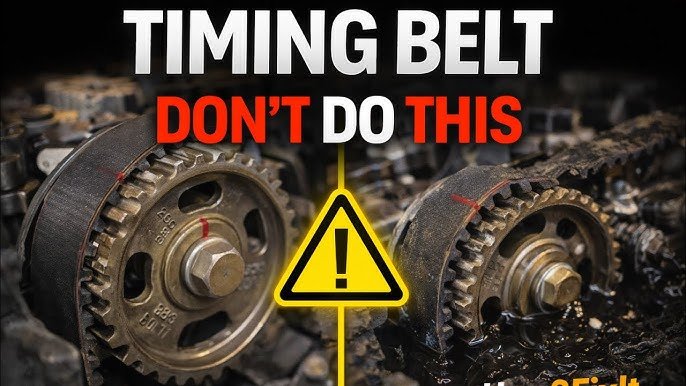
Mistakes often happen because timing marks are hard to see, or because the crankshaft moves during the process. Always double-check the alignment before removing the old belt, and again after installing the new one. Take photos if needed, and mark the gears with paint for extra confidence.
Failing To Use The Correct Tools
Timing belt jobs often need special tools. These can include camshaft locking pins, crankshaft holding tools, or special belt tension gauges. Trying to improvise with the wrong tool can damage engine parts or result in poor alignment.
For example, using a screwdriver to hold the camshaft instead of the proper pin can bend or break sensitive parts. Some engines require a specific torque setting for the tensioner, which you cannot guess by feel. Invest in the right tools, or borrow them from an auto parts store, to make sure the job is done safely.

Credit: www.youtube.com
Not Checking Belt Tension
A timing belt must be tightened to a specific tension. Too loose, and it can skip teeth or come off. Too tight, and it can wear out bearings or the belt itself. Many people guess the tension or use old methods that don’t work with modern belts.
Manufacturers provide exact tension specs, sometimes measured with a special gauge. Ignoring this step is a common reason for early belt failure. After installing the belt, rotate the engine by hand and recheck the tension. Some engines require the tension to be adjusted again after a short period of running.
Overlooking Engine Oil Or Coolant Leaks
Oil or coolant leaking onto the timing belt is a hidden danger. These fluids can weaken the belt and cause it to break long before its normal lifespan. Leaks often come from the camshaft seal, crankshaft seal, or the water pump.
When replacing the timing belt, inspect these areas closely. If you see any signs of leaking, replace the seals at the same time. Ignoring leaks can ruin your new belt and force you to redo the job much sooner than expected.
Not Cleaning Timing Belt Area
Dirt, old gasket material, or debris can damage a new timing belt. Some people install the new belt without cleaning the area first. This can lead to early belt wear, noise, or the belt jumping teeth.
Before putting on the new belt, wipe down the pulleys and covers. Remove any old gasket material from the water pump or tensioners. A clean surface helps the belt run smoothly and last longer.
Forgetting To Hand-rotate The Engine
After installing the new belt, always rotate the engine by hand several times. This checks that the timing marks stay lined up and that there is no interference inside the engine. Some people skip this step and find out only after starting the engine that the timing is off or parts are hitting.
To do this, use a wrench on the crankshaft pulley and turn the engine at least two full cycles. Watch the timing marks closely. If they do not line up, correct the mistake before starting the engine. This step can save you from serious damage.
Ignoring Belt Direction
Some timing belts have an arrow or writing that shows which way they should turn. Installing the belt backwards can cause uneven wear or noise. While not every belt is directional, it is a safe practice to install it in the same direction as the old one.
If you have to remove and reinstall the belt, always put it back in the same direction it was running. Check the belt for arrows or instructions before installing.
Not Tightening Bolts To Specification
Timing belt components are held by bolts with specific torque settings. Too loose, and parts may work free. Too tight, and you can strip threads or break bolts. Many people use “tight enough” by hand, which is risky.
Use a torque wrench and set each bolt to the number listed in the manual. This includes the tensioner, idler pulleys, and water pump. Double-check each bolt, since a loose tensioner can cause the belt to fail quickly.
Rushing The Job
Replacing a timing belt takes time and patience. Rushing leads to missed steps, poor alignment, or forgotten parts. Many people underestimate how long the job will take, especially if they run into stuck bolts or need to clean gasket surfaces.
Plan for at least a half-day, even if you are experienced. Take breaks, check each step, and never skip the final checks. It is better to finish slowly and correctly than to redo the job because of a rushed mistake.
Failing To Check Engine Timing After Reassembly
Once everything is back together, some people skip the final check of engine timing. They assume everything is right and start the engine. This can lead to instant engine damage if the timing is off.
Always use a timing light, scan tool, or manual check to verify the timing after reassembly. Listen for strange noises and watch for warning lights. If anything seems wrong, stop and recheck your work before driving.
Using Low-quality Parts
Cheap timing belts and components may not last as long or fit as well as original parts. Saving money on parts can cost you much more in the long run. Some low-quality belts stretch quickly or have weak teeth that break off.
Whenever possible, use OEM (original equipment manufacturer) parts or reputable aftermarket brands. Read reviews and make sure the kit includes all needed items. A few dollars saved now can lead to expensive repairs later.
Not Resetting The Timing Belt Service Interval
Most cars have a service interval for the timing belt, often between 60,000 and 100,000 miles. After replacing the belt, reset the maintenance reminder in your car’s system or write down the date and mileage.
Forgetting to track this can lead to missing the next replacement. Some cars have a sticker under the hood for this purpose. Accurate records help you avoid surprises and keep your engine safe.

Credit: www.autotrainingcentre.com
Skipping A Road Test
After finishing the timing belt job, always do a careful road test. Listen for unusual noises, check for warning lights, and feel how the engine runs. Some people skip this step, only to find out later that the belt is loose, the timing is off, or a leak was missed.
Start with a short drive at low speed. If everything feels good, gradually increase speed and load. If you notice anything strange, stop and check your work before driving more.
Real-world Example: Timing Belt Failure After Common Mistakes
Consider this example: A car owner replaced his timing belt but did not change the old water pump. Two months later, the pump started leaking coolant onto the new belt. The belt failed, and the engine was badly damaged. The repair cost was over $2,000, much more than the price of a new water pump.
This shows how small shortcuts can lead to major problems. Taking the time to do the full job, with all related parts, is always the best strategy.
Data Table: Timing Belt Lifespan By Car Make
Different car brands have different timing belt replacement intervals. Here’s a quick comparison:
| Car Make | Recommended Interval (miles) | Engine Type |
|---|---|---|
| Toyota | 60,000 – 90,000 | Interference/Non-Interference |
| Honda | 60,000 – 105,000 | Interference |
| Volkswagen | 60,000 – 100,000 | Interference |
| Ford | 60,000 – 100,000 | Non-Interference |
Always check your car’s manual for the exact timing belt replacement interval.
Table: Common Tools Needed For Timing Belt Replacement
| Tool | Purpose | Notes |
|---|---|---|
| Torque Wrench | Accurate bolt tightening | Essential for tensioner and water pump |
| Camshaft Locking Tool | Hold camshaft in place | Engine specific |
| Belt Tension Gauge | Set correct belt tension | Some engines require this |
| Screwdrivers/Sockets | Remove covers and bolts | Basic hand tools |
Non-obvious Insights For Beginners
- Temperature matters: Timing belt tension can change with temperature. Some engines require setting the belt when the engine is cold, others when warm. Read the manual for your car’s specific requirement.
- Belt “memory”: If a timing belt is bent or forced during installation, it can develop a “memory” and not fit the pulleys correctly. Always handle the belt gently and never kink or twist it during installation.
Frequently Asked Questions
What Happens If I Make A Mistake When Replacing The Timing Belt?
A mistake can cause the engine to run badly, not start, or suffer serious damage like bent valves or destroyed pistons. In interference engines, the risk is much higher. If unsure, consult a professional or double-check each step.
How Often Should I Replace My Car’s Timing Belt?
Most timing belts need replacement every 60,000 to 100,000 miles, but always check your car’s manual for the exact interval. Some modern engines use timing chains, which last longer but may also need service.
Can I Reuse The Old Timing Belt If It Looks Good?
No. Even if a belt looks fine, its internal fibers may be weakened. Timing belts are not designed for reuse. Always install a new belt and related components.
What’s The Difference Between A Timing Belt And A Timing Chain?
A timing belt is made of rubber and needs regular replacement. A timing chain is made of metal and usually lasts longer, but can be noisy or stretch over time. Replacement procedures are different for each.
Where Can I Find Official Instructions For My Car’s Timing Belt Replacement?
The best source is your car’s official service manual. Some online resources, such as Haynes Manuals, provide step-by-step guides for most makes and models.
Taking the time to avoid these mistakes will help your engine run smoothly and save you money. If you’re unsure at any step, it’s always better to ask a professional for help. A careful, complete timing belt job gives you peace of mind on the road.
Credit: www.youtube.com