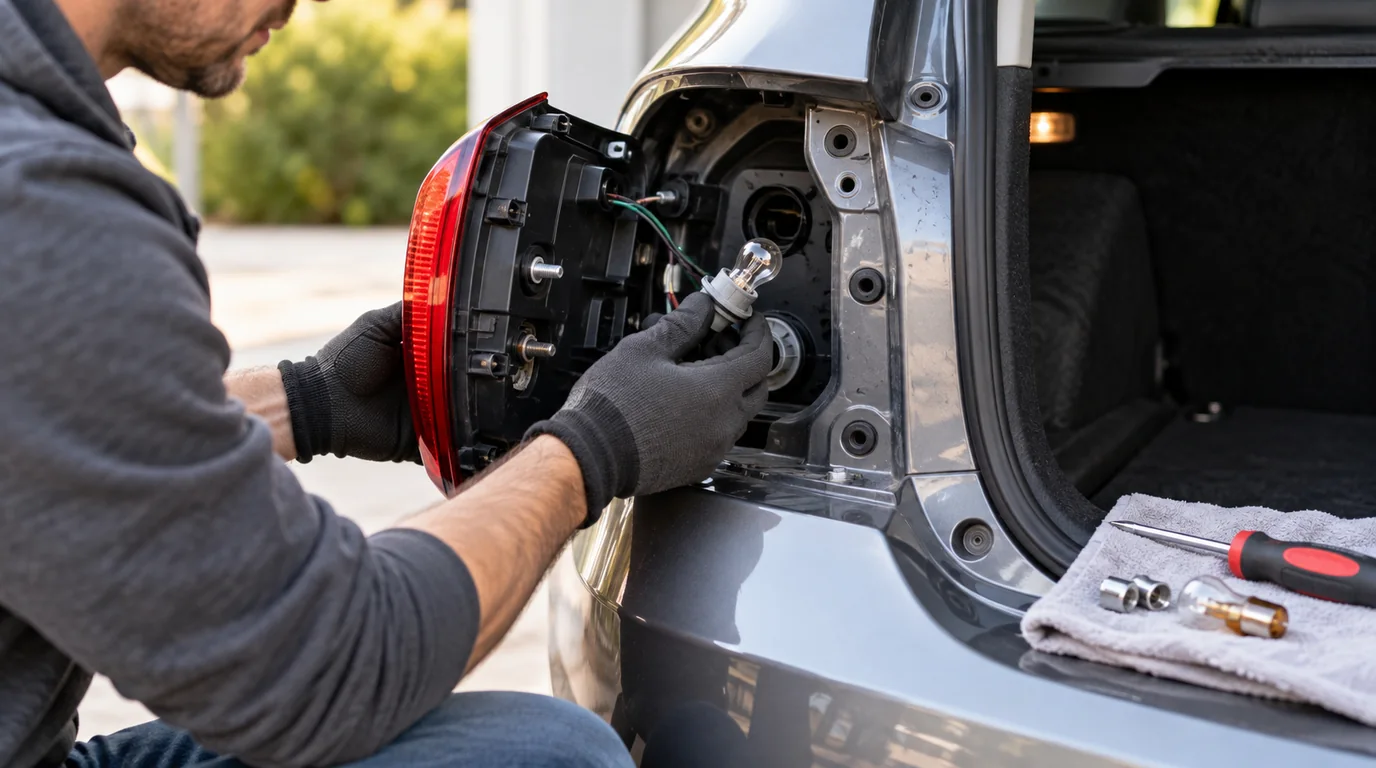
How to Replace a Tail Light Bulb: Tools, Steps & Test
Learn how to replace a tail light bulb safely with the right bulb type, basic tools, trunk access steps, socket removal, bulb installation, and final light testing.
Related Articles Tire Rotation Pattern for Beginners: Your Essential Guide to Tire Longevity Uneven Tire Wear Causes DIY: A Comprehensive Guide to Diagnosis and Fixes How to Visually Inspect Brakes at Home: A Comprehensive DIY Guide How To Check Tire Tread Depth With Coin
Changing engine oil at home involves draining the old, contaminated oil from your vehicle’s engine, replacing the oil filter, and then refilling the engine with fresh, new oil. This routine maintenance task is crucial for engine longevity and performance, and it can be performed by most DIY enthusiasts with the right tools and precautions. Essential …
Related Articles Mixing Wrong Coolant vs Warranty Issues: Guide How to Read Oil Dipstick Correctly: Step-by-Step How to Change Engine Oil at Home: Step-by-Step How Often Should I Change Engine Oil? Complete Guide
Most manufacturers recommend rotating tires every 5,000 to 7,500 miles, or roughly every six months. This practice promotes even wear, extends tire lifespan, and maintains vehicle performance. For home mechanics, aligning this task with regular oil changes offers a practical and easy-to-remember schedule. Rotate tires every 5,000-7,500 miles or 6 months for optimal performance. Even …
To check tyre pressure at home, ensure your tyres are cold, remove the valve cap, and firmly press a reliable tyre pressure gauge onto the valve stem. Read the displayed PSI (pounds per square inch) and compare it to your vehicle’s recommended pressure, typically found on the driver’s door jamb or in the owner’s manual. …
Learn how to read an oil dipstick correctly: when to check, how to read ADD and FULL marks, what low oil means, and how to top up safely.
The correct tire pressure for your car is found on a specific sticker, typically located on the driver’s side door jamb, inside the glove compartment, or within your vehicle’s owner’s manual. This recommended pressure, measured in pounds per square inch (PSI), is crucial for cold tires and directly impacts your car’s safety, handling, and fuel …