
Checking if your car’s wheels are correctly aligned at home might sound complicated, but it’s an important skill every car owner should know. Proper wheel alignment keeps your vehicle stable, improves fuel efficiency, and extends the life of your tires.
Misaligned wheels can cause your car to pull to one side, make your steering wheel shake, or wear out your tires unevenly. Professional alignment machines use lasers and computers, but you can still check for warning signs and do basic tests in your garage or driveway.
You do not need special tools, just careful attention, some simple equipment, and a bit of patience.
This guide will walk you through everything you need to know to check your car’s wheel alignment at home. You’ll learn how to spot symptoms, use simple measuring methods, and understand when it’s time to get professional help. Whether you’re a new driver or a seasoned car owner, these steps will help you keep your car running safely and smoothly.
Why Wheel Alignment Matters
Driving with misaligned wheels can cause several problems. Your car might use more fuel as the tires drag, and you could even lose control in extreme cases. Tires will also wear down faster on one edge, leading to expensive replacements. According to the National Highway Traffic Safety Administration (NHTSA), poor alignment can reduce tire life by up to 30%. Proper alignment also protects your vehicle’s suspension and steering systems.
Common Signs Of Wheel Misalignment
Before you start checking alignment, it’s important to recognize the warning signs. Here are the most common symptoms:
- Vehicle pulls to one side: If your car drifts left or right when you let go of the steering wheel on a straight road, alignment is probably off.
- Steering wheel not centered: The steering wheel should sit straight when driving on a flat road. If it’s at an angle, this is a clear sign.
- Uneven tire wear: Check your tires. If one side is more worn than the other, alignment may be the cause.
- Vibration in steering wheel: Misalignment can make the steering wheel shake, especially at higher speeds.
- Noisy steering: Strange squealing or rubbing noises when turning can also signal problems.
Many beginners overlook tire wear patterns. Always check both the inside and outside edges of your tires. Sometimes, the problem is only visible on one side.
Tools And Materials You’ll Need
You don’t need expensive equipment to check basic alignment at home. Here’s what you’ll need:
- Tape measure (preferably metric, for accuracy)
- String or fishing line (several meters)
- Two straight boards or pieces of wood (about a meter long)
- Chalk or masking tape
- Level (bubble or digital)
- Jack and jack stands (if you need to lift the car)
- A friend to help (optional, but useful)
Having a clean, flat surface like your driveway or garage is important for accurate results.
Steps To Check Car Wheel Alignment At Home
Let’s break down the main methods you can use. Each one checks for different alignment problems. Remember, these tests can find obvious issues but don’t replace a professional alignment.
1. Visual Inspection Of Tires
Start with the simplest check: looking at your tires.
- Park your car on a flat surface.
- Turn the steering wheel straight.
- Get down and closely examine the tread on each tire.
- Look for uneven wear, especially on the inner or outer edges.
Uneven wear often means the wheels are angled in or out (toe or camber problem). Use a flashlight for better visibility.
2. Steering Wheel Center Test
This quick test can reveal alignment problems.
- Find a straight, empty road or large parking lot.
- Drive straight at a low speed (about 30 km/h or 20 mph).
- Loosen your grip on the steering wheel slightly (keep your hands ready).
- See if the car pulls to one side or if the steering wheel sits off-center.
If your car drifts or the wheel isn’t centered, alignment should be checked further.
3. String Method For Toe Alignment
This is one of the most accurate DIY methods for checking toe alignment (if the wheels point inwards or outwards).
Setting Up
- Park the car on a flat, level surface.
- Make sure the steering wheel is straight.
- Place a board or wood block against each tire’s sidewall, front and back.
- Run a string or fishing line tightly along the length of the car, touching both boards on one side.
Measuring
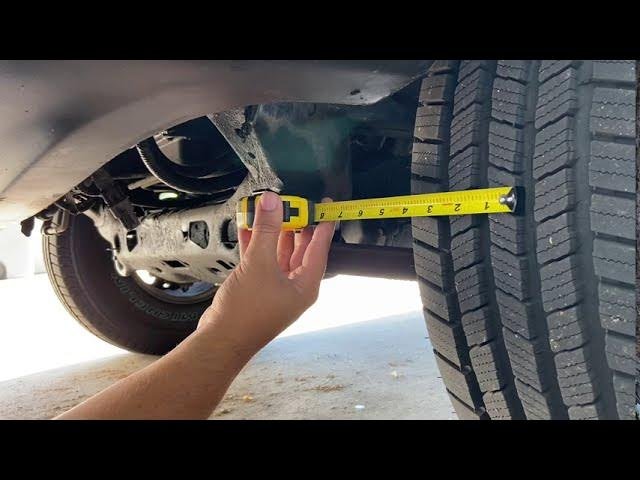
- Use a tape measure to check the distance from the string to the wheel rim at the front and rear of each tire.
- Repeat for both sides.
If the front measurement is smaller than the rear, your wheels are “toed in. ” If the rear is smaller, they are “toed out. ” Ideally, the distances should be nearly equal or match your car manufacturer’s specs.
Example Table: Reading Your Toe Measurements
| Side of Car | Front Distance (mm) | Rear Distance (mm) | Alignment Type |
|---|---|---|---|
| Left | 5 | 7 | Toe Out |
| Right | 6 | 6 | Straight |
If you see more than 2-3mm difference, it’s time for a professional adjustment.
4. Measuring Camber With A Level
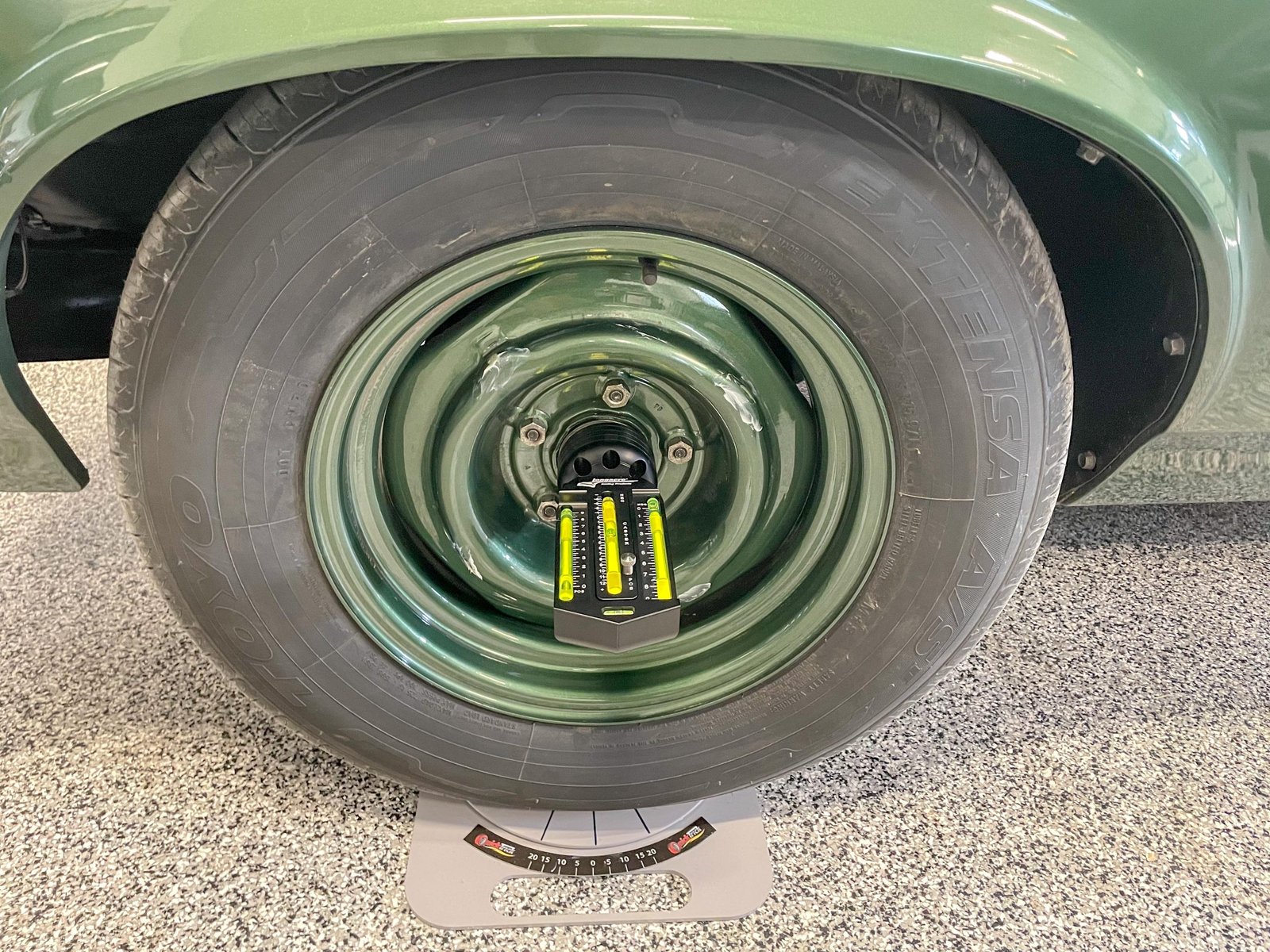
Camber is the tilt of the wheel inward or outward from the top.
- Hold a level vertically against the center of the tire sidewall.
- Check if the bubble is centered.
- If it’s not, use a ruler to measure the gap between the level and the rim at the top and bottom.
A small difference (1-2 degrees) may be normal, but larger gaps mean a problem. Some vehicles allow camber adjustment, but most modern cars require a mechanic.
5. Wheelbase And Track Width Comparison
Unusual wheelbase or track width can also mean alignment issues, especially after hitting a curb or pothole.
How To Measure
- Find the distance between the center of the front wheels (track width) and the rear wheels. Both sides should be the same.
- Measure the distance from the front left wheel center to the rear left, and do the same on the right.
Example Table: Checking Wheelbase And Track
| Measurement | Left Side (cm) | Right Side (cm) | Difference |
|---|---|---|---|
| Wheelbase | 256 | 257 | 1 |
| Track width | 158 | 158 | 0 |
If the difference is more than 2cm, have your suspension checked by a professional.
6. Chalk Line Method For Toe And Tracking
This method helps check if tires are moving straight.
- Mark a line on each tire with chalk (or masking tape) as the car is rolled forward.
- Measure the distance between chalk marks at the front and back of the tires.
- Compare the results.
A big difference means your wheels are out of alignment.
7. Checking Alignment After Hitting A Curb
Many drivers forget to check alignment after minor accidents like hitting a curb or large pothole. These impacts can knock wheels out of position. If you recently hit something, always do a quick alignment check using the methods above.
Credit: www.youtube.com
Understanding Alignment Angles
There are three main angles in wheel alignment:
- Toe: The direction tires point compared to the car’s centerline.
- Camber: The tilt of the tire inward or outward.
- Caster: The angle of the steering axis (hard to check at home).
Most home methods can only check for obvious toe and camber problems. Caster usually needs a professional shop.
When To See A Professional
Home checks can catch major problems, but exact adjustments need professional tools. Visit a mechanic if:
- You see uneven tire wear but can’t find the cause
- The car still pulls to one side after checking tire pressure and rotating tires
- You notice large differences in your measurements (more than 2-3mm or 2 degrees)
- There’s vibration or noise you can’t fix
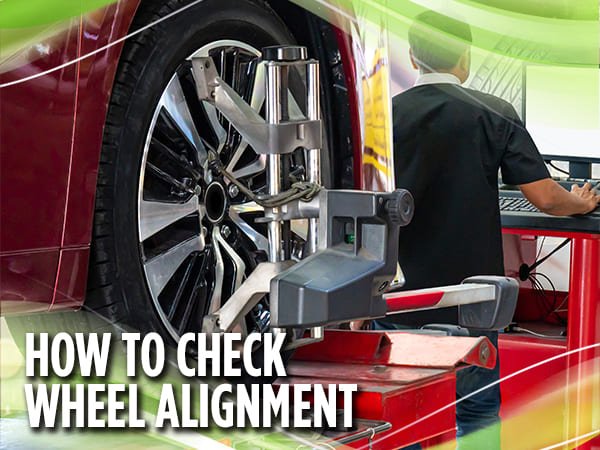
Professional shops use laser-guided machines for precise results. Some garages publish your alignment data before and after the service.
Tips For Accurate Home Alignment Checks
- Always check tire pressure first. Low pressure can mimic alignment problems.
- Do all measurements with the car unloaded (no passengers or heavy cargo).
- Perform checks on a flat, level surface.
- Compare left and right sides, not just front to back.
- Record your measurements for future checks.
- Rotate tires regularly to help spot changes in wear patterns.
A common mistake is ignoring the surface. Even a slight slope can give false readings.
What If You Need To Adjust Alignment?
Some basic adjustments (like toe) are possible at home, but only if you’re confident and have the right tools. However, incorrect adjustments can make things worse. Most modern cars need a shop visit for safe, long-term alignment. DIY repairs are best left to classic cars or simple tie-rod adjustments.
Credit: ervines.com
Real-world Example
Let’s say you notice your car pulls to the right and the front left tire is worn on the outside edge. Using the string method, you find the left front wheel is toed out by 4mm compared to the rear.
This matches the wear pattern and steering pull. In this case, you should book a professional alignment. Fixing the problem now will save money and make your car safer.
Comparing Home Vs. Professional Alignment
Understanding the difference can help you decide when to check at home and when to visit a shop.
| Aspect | Home Check | Professional Shop |
|---|---|---|
| Tools Needed | Basic (tape, string, level) | Laser/computer machines |
| Accuracy | Good for major issues | Very precise |
| Time Needed | 30-60 minutes | 20-30 minutes |
| Cost | Free | $60–$120 |
| Can Adjust? | Limited | Full adjustment |
Home checks are best for spotting trouble early. For perfect alignment, a professional service is always the best choice.
Credit: www.onallcylinders.com
Frequently Asked Questions
How Often Should I Check My Car’s Wheel Alignment?
Most experts recommend checking alignment every 10,000 to 15,000 km, or once a year. Check more often if you hit a curb, drive on rough roads, or notice handling changes.
Can Bad Alignment Damage My Car?
Yes. Bad alignment wears out tires, stresses the suspension, and can even make the car unsafe in emergencies.
Is It Safe To Drive With Misaligned Wheels?
Short distances are usually safe, but long-term driving can cause tire blowouts or poor handling. Fix alignment as soon as you notice a problem.
What Causes Wheel Alignment To Go Bad?
Common causes include hitting curbs or potholes, worn suspension parts, and accidents. Even minor impacts can knock wheels out of line.
Where Can I Learn More About Wheel Alignment?
For more in-depth information, visit the Wikipedia page on Wheel Alignment.
Getting familiar with how to check your car’s wheel alignment at home is a valuable skill. It helps you spot problems early, save money, and drive more safely. Regular checks, careful observation, and knowing when to ask for expert help will keep your car in top shape for years to come.