
Fixing a car exhaust leak can feel intimidating, especially if you don’t have welding tools or experience. The good news: you don’t always need to weld to repair an exhaust leak. Many car owners solve this problem at home using simple tools and materials. With the right approach, you can stop exhaust leaks, improve your car’s performance, and avoid the noise and fumes that make driving unpleasant. This guide will show you step-by-step how to fix a car exhaust leak without welding, the products you’ll need, and key tips most beginners miss.
Understanding Exhaust Leaks
Before starting repairs, it’s important to know what an exhaust leak is and why it matters. Your car’s exhaust system carries gases from the engine out the back of the car. When there’s a leak, these gases escape before reaching the tailpipe. This can cause loud noises, bad smells, lower fuel efficiency, and even dangerous carbon monoxide entering the car’s cabin.
Most leaks happen due to rust, road damage, or loose connections. They often form at joints, bends, or where the pipe meets the muffler or catalytic converter.
Signs You Have An Exhaust Leak
If you think your car has an exhaust leak, watch for these signs:
- Loud rumbling or hissing noises, especially during acceleration
- Bad odor of exhaust fumes, sometimes inside the car
- Lower fuel efficiency
- Vibration in the gas pedal or floor
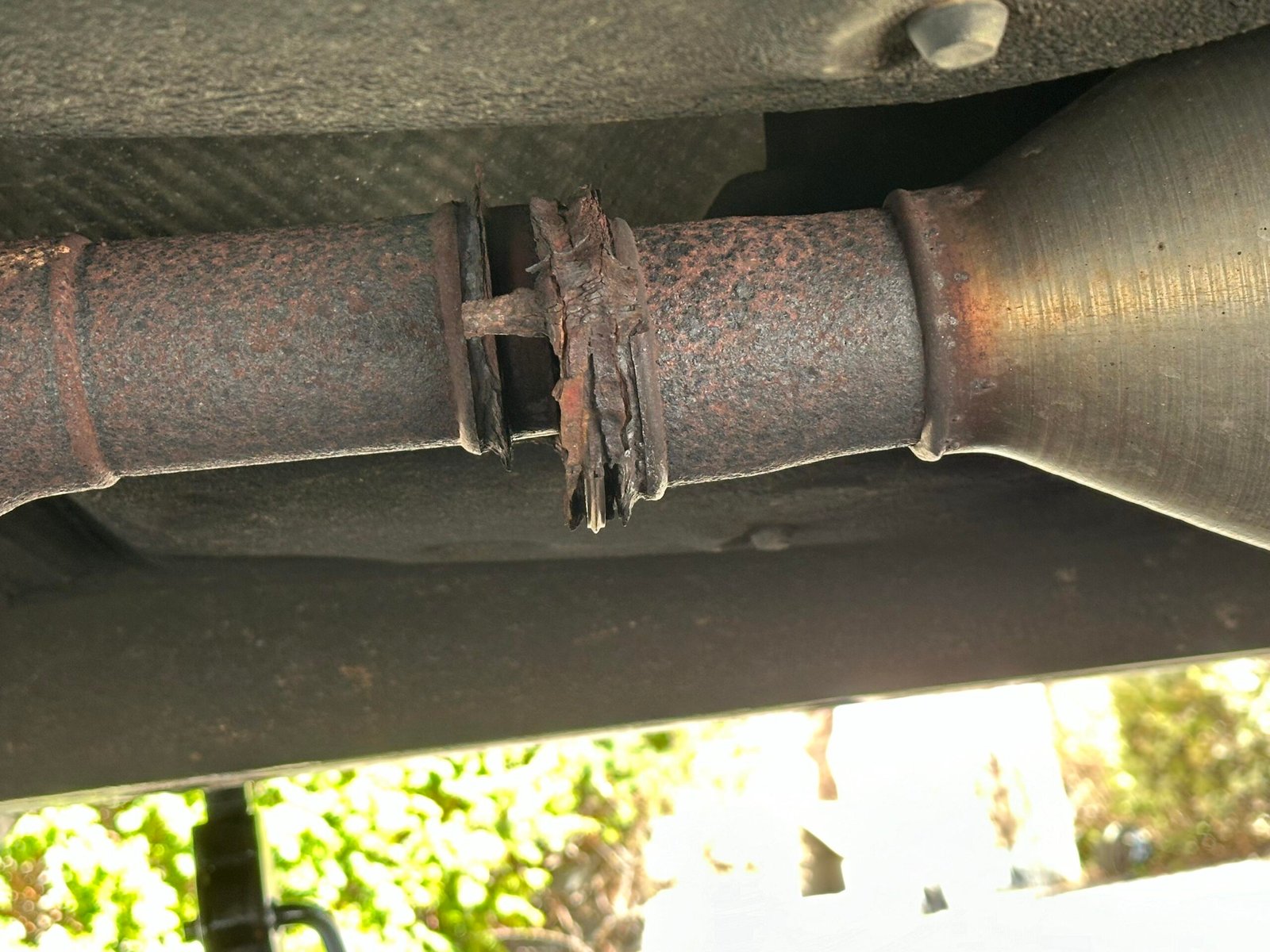
- Visible holes or rust on exhaust pipes or muffler
Catching leaks early makes repair easier and safer.
Can You Fix Exhaust Leaks Without Welding?
Yes, you can! There are several effective ways to fix small to medium-sized leaks without welding. Methods include using exhaust repair tape, putty or paste, clamps with patch kits, and even aluminum cans in emergencies. While these are not always permanent, they can last months or even years if done correctly.
Larger holes or heavily rusted pipes may eventually need professional welding or replacement, but most car owners can handle basic exhaust repairs at home.
Tools And Materials You’ll Need
Here’s what you’ll need for most non-welding exhaust repairs:
- Jack and jack stands (or ramps) for safe access underneath the car
- Wire brush for cleaning the pipe
- Sandpaper (medium grit)
- Exhaust repair tape or metal patch kit
- Exhaust putty/paste
- Exhaust clamps (different sizes)
- Work gloves and safety glasses
- Soapy water in a spray bottle (for leak detection)
- Rags for cleaning
Optional but helpful:
- Aluminum can (for emergency patching)
- Heat shield tape
- Rust inhibitor spray
Safety First: Preparing Your Car
Always put safety first. Make sure the car is parked on a level surface, in a well-ventilated area. Let the exhaust system cool completely before touching it—exhaust parts can stay hot long after the engine is off.
Raise the car with a jack and secure it with jack stands or ramps. Never rely on a jack alone, as it can slip. Wear work gloves and safety glasses to protect against rust, debris, and sharp edges.
Locating The Exhaust Leak
Finding the exact spot of the leak is key. Here’s how to do it:
- Start the car and listen for hissing, popping, or rumbling sounds under the car.
- Spray soapy water along the exhaust system. Look for bubbles forming—these reveal escaping gases.
- Pay attention to joints, bends, and areas with visible rust or damage.
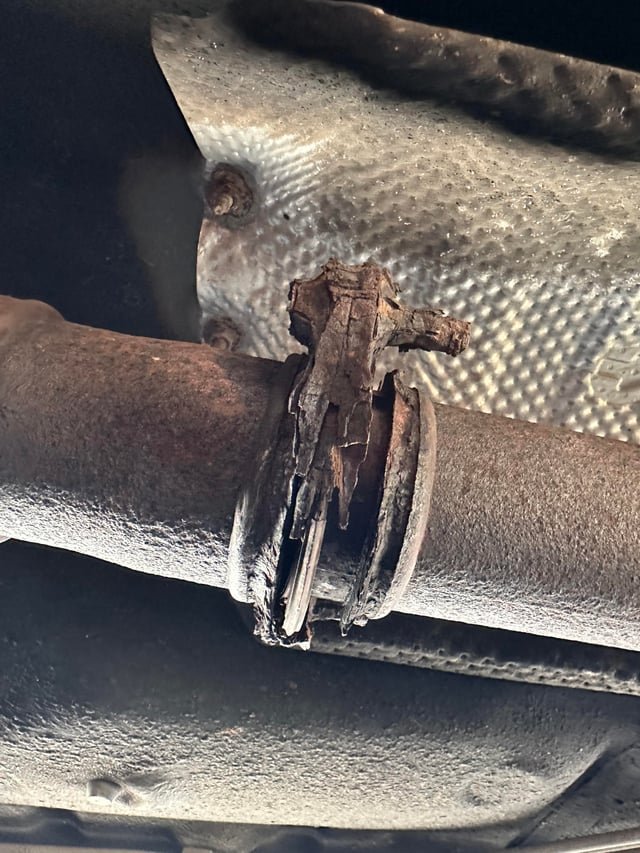
Some leaks are small and hard to see. Use a flashlight to check the whole system. Mark the damaged area with chalk or a marker.
Credit: www.reddit.com
Cleaning And Preparing The Surface
Repairs won’t stick to dirty or rusty surfaces. Clean the area around the leak using a wire brush and sandpaper. Remove rust, dirt, and any loose material. Wipe with a clean rag until the metal is smooth.
For the best results, clean at least 2 inches around the leak. This gives tapes and putty more area to bond.
Method 1: Using Exhaust Repair Tape
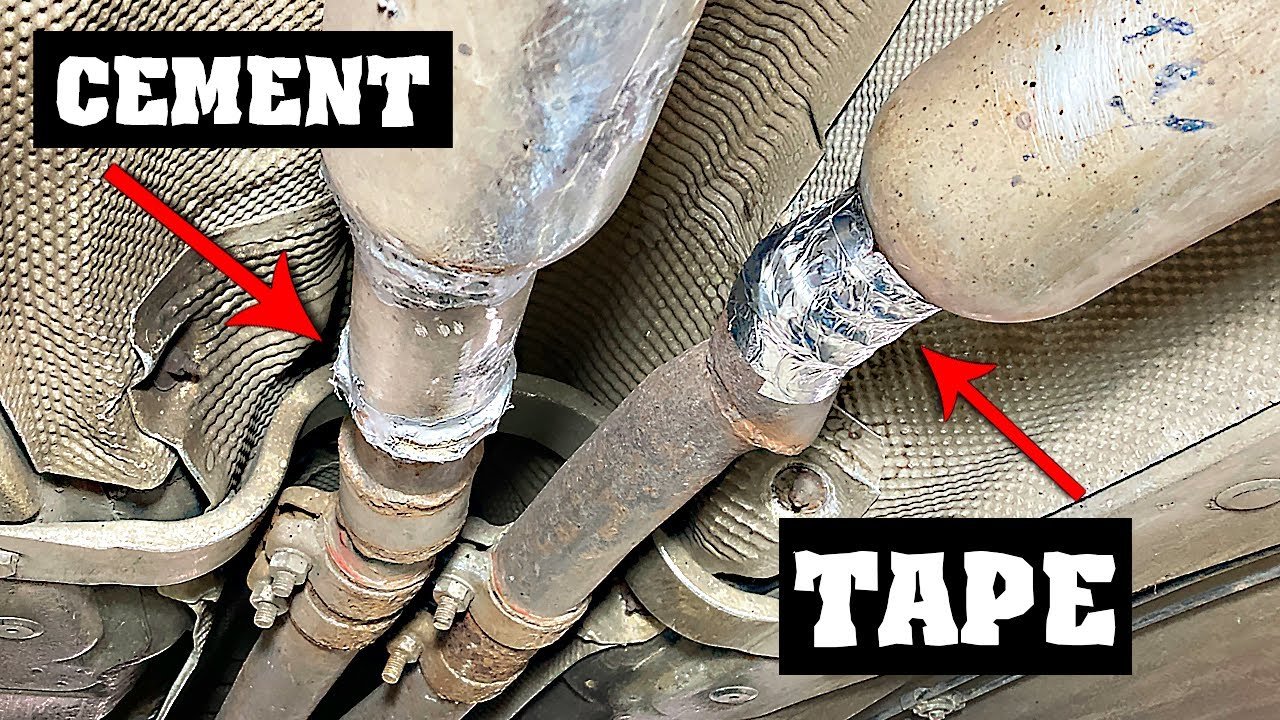
Exhaust repair tape is one of the easiest ways to seal small cracks and pinholes. It’s heat-resistant and designed to bond with metal pipes.
How To Apply Exhaust Tape
- Clean the area as described above.
- Wet the tape (if the brand requires it; check package instructions).
- Wrap the tape tightly around the leak, overlapping each layer by half the width of the tape.
- Stretch the tape as you wrap to remove air bubbles.
- Cover at least 2 inches on each side of the leak.
- Let it cure for the time shown on the package, usually 30 minutes to 2 hours.
Tip: For best results, use two layers of tape.
Non-obvious insight: Many people forget to clean off oil or grease before applying tape. Even a thin layer of oil will keep tape from sticking well.
Credit: www.reddit.com
Method 2: Using Exhaust Putty Or Paste
Exhaust putty (or paste) is another simple, effective way to seal leaks. It’s great for small holes, cracks, or sealing seams.
How To Use Exhaust Putty
- Clean and dry the area.
- Knead the putty (if two-part) or stir the paste.
- Press putty firmly into the hole or crack, smoothing it out with a gloved finger or tool.
- Build up a patch about 1/8 inch thick, covering at least 1 inch past the edges.
- Let it cure as directed—usually from 30 minutes up to 24 hours.
Pro tip: Putty works best on cool pipes. Don’t drive the car until it’s fully cured.
Non-obvious insight: Some putties harden with heat. Drive gently for 10-15 minutes after curing to help the patch set.
Method 3: Patch Kit With Clamps
A metal patch kit uses a piece of steel or aluminum and clamps to cover larger holes. These kits are easy to find at auto stores.
How To Use A Patch Kit
- Clean the area well.
- Cut the patch to size, making sure it covers at least 1 inch beyond the leak on all sides.
- Place the patch over the hole.
- Attach the clamps tightly around the pipe, holding the patch in place.
- Check for leaks after starting the engine.
Tip: For big holes, use putty first, then the patch for extra strength.
Credit: www.youtube.com
Emergency Method: Aluminum Can Patch
If you’re stuck on the road and need a quick fix, an aluminum can can patch the leak until you get proper materials.
How To Patch With An Aluminum Can
- Cut a flat piece from a clean aluminum can, big enough to cover the leak with extra overlap.
- Wrap the metal around the pipe.
- Secure tightly with hose clamps or wire.
- This is only a temporary fix—replace with a proper patch soon.
Comparing Common Exhaust Leak Repair Methods
Choosing the right method depends on the size and location of the leak, as well as the tools you have.
| Method | Best For | Difficulty | Estimated Lifespan |
|---|---|---|---|
| Exhaust Tape | Small cracks, pinholes | Easy | 3-12 months |
| Exhaust Putty | Small to medium holes | Easy | 6-18 months |
| Patch Kit & Clamps | Medium to large holes | Medium | 12+ months |
| Aluminum Can | Emergency only | Very Easy | Days to weeks |
Step-by-step Example: Fixing A Small Leak With Putty
Let’s walk through a real-life example.
- Locate the leak: You find a 1/4-inch hole in the exhaust pipe under the car.
- Clean the area: Use a wire brush and sandpaper to remove rust and dirt.
- Prepare the putty: Break off enough putty, knead until mixed.
- Apply the putty: Press into the hole, smoothing it out to cover all edges.
- Let it cure: Wait 1 hour (or as directed).
- Test the repair: Start the engine and check for sound or leaks.
Most users report these repairs lasting over a year if done on a clean, solid pipe.
Cost Comparison: Diy Fix Vs. Professional Welding
Repairing an exhaust leak yourself is much cheaper than going to a shop.
| Repair Method | Material Cost | Labor Cost | Total |
|---|---|---|---|
| DIY Tape/Patch/Putty | $10 – $30 | $0 | $10 – $30 |
| Professional Welding | $20 – $50 | $80 – $200 | $100 – $250 |
Insight: For cars over 10 years old, many owners choose DIY repairs rather than spending hundreds on professional welding.
Common Mistakes To Avoid
- Not cleaning the surface: Tape and putty won’t stick to rust, oil, or dirt.
- Applying on a hot exhaust: Let the system cool fully before repair.
- Ignoring large holes: DIY methods work best on small to medium leaks. For large rusted areas, see a professional.
- Not checking for more leaks: Repairing one spot may reveal others.
- Using household tape or glue: Only use products made for high temperatures.
How Long Do These Repairs Last?
A well-done DIY repair can last from a few months to over a year. It depends on:
- Size of the leak
- Quality of cleaning and prep
- Driving conditions (salt, water, off-road use)
- The product used
Tip: Check your repair every few months. If noise or fumes return, it’s time for a new patch.
When To See A Mechanic
While DIY repairs are great for many leaks, you should see a mechanic if:
- The pipe is badly rusted or falling apart
- The leak is near the catalytic converter or oxygen sensors
- You smell exhaust inside the car after repair
- The patch keeps failing
Mechanics can weld, replace parts, and check for deeper problems.
Final Tips For Success
- Choose the right repair for the leak size.
- Clean and dry the area thoroughly.
- Follow all instructions for the product you use.
- Drive gently after repairs to help them set.
- Inspect your exhaust system twice a year—especially in wet or snowy climates.
DIY exhaust leak repair is a smart way to save money and learn more about your car. With a little care, you can stop leaks, reduce noise, and drive safely—no welding required.
Frequently Asked Questions
What Is The Safest Way To Fix An Exhaust Leak At Home?
The safest way is to use products made for exhaust repairs, like exhaust tape or putty, and to make sure the car is secure on jack stands before working underneath. Always work in a well-ventilated area and let the system cool before touching.
Can I Drive With An Exhaust Leak?
It’s not recommended. Exhaust leaks can let dangerous gases enter the car, cause noise violations, and reduce engine performance. Small leaks can be repaired temporarily, but driving for long with a leak can be risky.
Will Exhaust Tape Really Hold, Or Will It Fall Off?
If applied to a clean, dry, and rust-free area, exhaust tape can last several months or more. It’s important to follow the instructions and cover extra space around the leak for best results.
Are There Any Government Rules About Fixing Exhaust Leaks?
Some regions have laws about vehicle emissions and noise. DIY repairs may not pass inspection if they fail to seal the leak well. Always check your local laws or vehicle inspection rules.
Where Can I Find More Information About Exhaust Systems?
For a deeper look at automotive exhaust systems, you can visit the Wikipedia page on automobile exhaust systems.
With the right tools and knowledge, fixing a car exhaust leak without welding is within reach for most car owners. Take your time, use the right products, and you’ll keep your car running smoother for less money.