
When your car starts pulling to one side while driving, it’s more than just annoying—it’s a sign that something isn’t right. Left unfixed, this problem can make driving unsafe, cause faster tire wear, and even damage key parts of your vehicle.
Some drivers ignore it, hoping it will go away. But the longer you wait, the more serious (and expensive) the fix can become. In this article, you’ll learn the most common causes of a car pulling to one side and, step by step, how to fix each one.
I’ll also share some details most beginners miss, so you can confidently handle this issue or know exactly what to ask your mechanic.
What Does “pulling To One Side” Mean?
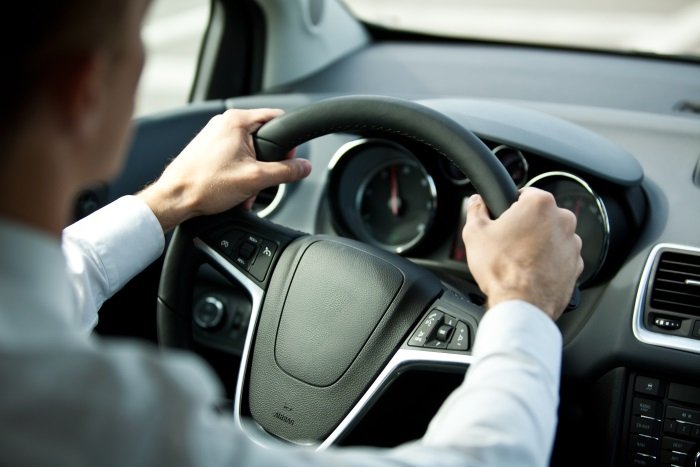
When a car pulls to one side, it means the steering wheel feels like it’s fighting you. If you briefly let go (on a safe, straight road), the vehicle quickly drifts left or right without you turning the wheel. Sometimes the pull is light, sometimes it’s strong.
The problem can appear suddenly or get worse over time.
Why Is Car Pulling Dangerous?
Ignoring a car that pulls can lead to:
- Uneven tire wear
- Poor fuel economy
- Increased stopping distance
- Harder steering control
- Accidents, especially in rain or snow
Many drivers overlook how much pulling can increase stopping distance in emergencies. Even a small pull means your tires aren’t gripping the road evenly.
Common Causes Of Car Pulling To One Side
Solving this problem starts with finding the cause. Here are the main reasons cars pull to one side, along with how to check and fix each one.
1. Uneven Tire Pressure
The most common (and easiest to fix) cause is uneven tire pressure. Even a small difference between left and right tires changes how the car drives. For example, if the front right tire is 5 PSI lower than the left, your car may pull right.
How to check:
- Get a good tire gauge.
- Check all four tires when they’re cold.
- Compare readings to the sticker inside your driver’s door or the owner’s manual.
How to fix:
- Inflate all tires to the recommended pressure.
- Re-check after a short drive.
Pro tip: Always check the spare tire too. Many cars now use the spare in rotation plans.
2. Wheel Alignment Issues
If your wheels aren’t aligned, your car can pull left or right. Alignment means adjusting the angles of the wheels so they point straight and sit flat on the road.
How to check:
- Look for uneven tire wear (inside or outside edges worn more).
- Does the steering wheel sit off-center when driving straight?
- Get a professional alignment check if you notice these signs.
How to fix:
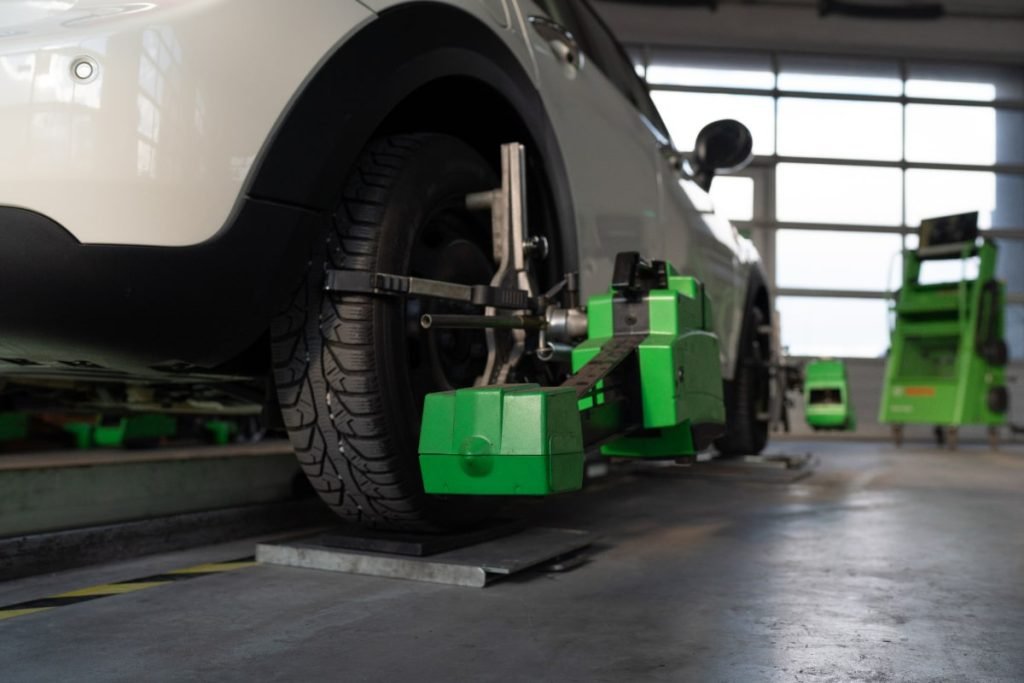
- Visit a tire shop or mechanic for a four-wheel alignment. This uses computer tools to adjust camber, caster, and toe.
Extra insight: Alignment specs are different for every car. Even new cars can need alignment after hitting a curb or pothole.
3. Uneven Or Worn Tires
Tire wear matters. If one tire is more worn, or the tires are different sizes or types, the car may drift.
How to check:
- Compare tread depth on all tires using a penny or tread gauge.
- Are the tires the same size and brand?
How to fix:
- Replace any tire with low tread or damage.
- Install tires in sets or pairs, not singles.
Non-obvious tip: Rotating your tires every 5,000-8,000 miles prevents this problem.
4. Brake Problems
If a brake caliper sticks or a brake pad drags, it can pull your car to one side—especially when braking.
How to check:
- Does the pull get worse when you brake?
- Smell burning near a wheel after driving?
- One wheel feels hotter than the others?
How to fix:
- Have a mechanic inspect the brakes.
- Replace or repair the sticking caliper, hose, or pad.
Beginner mistake: Many people only replace the bad part. It’s better to fix brakes in pairs (both front or both rear).
5. Suspension Issues
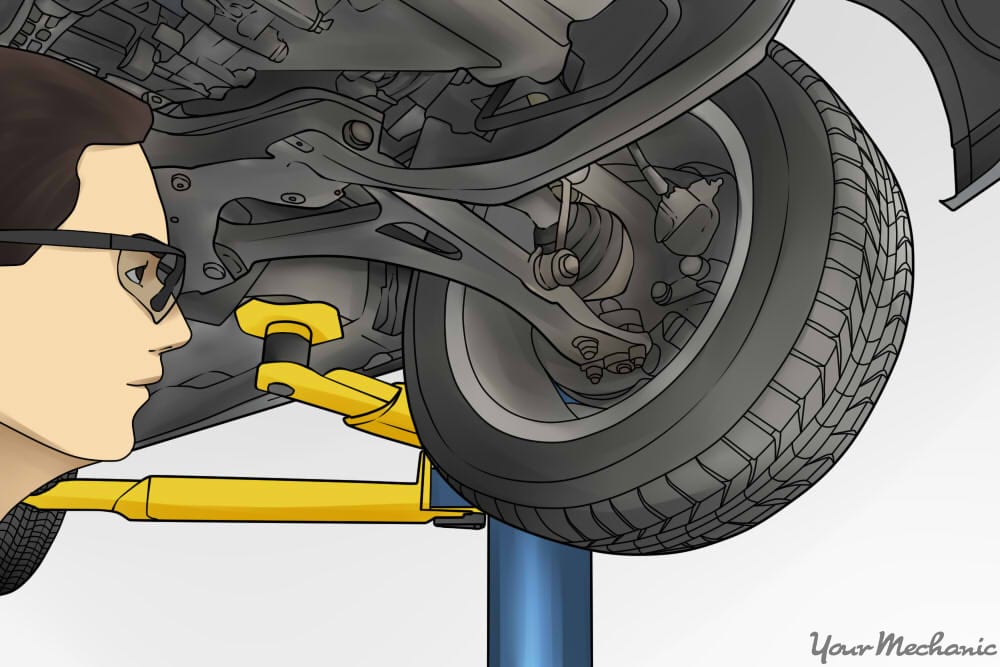
Worn or damaged suspension parts—like control arms, bushings, or struts—change how your wheels meet the road.
How to check:
- Listen for clunks or rattles over bumps.
- Does the car sit lower on one side?
- Uneven tire wear patterns.
How to fix:
- Replace any worn or broken suspension parts.
- Always get an alignment after suspension work.
Pro insight: Even a small suspension issue can make alignment impossible until fixed.
6. Faulty Steering Components
Steering tie rods and rack parts can wear out. If there’s play in the steering, the car may wander or pull.
How to check:
- Wiggle the steering wheel with the car parked. Is there a delay before the wheels move?
- Feel for looseness or clicking.
- Mechanic can check tie rods on a lift.
How to fix:
- Replace worn steering parts.
- Re-align the wheels after any steering work.
7. Torque Steer (front-wheel Drive Cars)
Some front-wheel drive cars experience torque steer—a pull when accelerating hard. It’s most common in powerful cars.
How to check:
- Does the car pull only when you accelerate quickly?
- Does it feel normal at steady speed?
How to fix:
- Check for worn engine or transmission mounts.
- Make sure drive axles are equal length (rare issue).
- If normal for your car, drive gently.
8. Road Conditions And Slopes
Sometimes, the road itself is the problem. Roads usually slope to the right for drainage (“road crown”). Your car will naturally drift slightly.
How to check:
- Try driving on a flat, empty parking lot.
- Does the car still pull?
How to fix:
- No fix needed for slight drift on crowned roads.
- If the pull is strong everywhere, check other causes.
9. Wheel Bearing Failure
A worn wheel bearing can cause a pull, along with noise.
How to check:
- Listen for a growling or humming sound that changes with speed.
- The sound may get louder when turning.
How to fix:
- Have the wheel bearing replaced by a mechanic.
10. Recent Repairs Or Modifications
If your car started pulling after new tires, suspension work, or collision repair, something may have been installed incorrectly.
How to check:
- Did the problem start right after a repair?
- Double-check all work was done to spec.
How to fix:
- Return to the shop for a re-check.
- Bring your service records.
Expert tip: Even reputable shops can make mistakes. Always test drive after major repairs.
Diagnosing The Problem: Step-by-step
Finding the cause can be tricky, but a methodical approach works best. Here’s a simple checklist:
- Inspect tire pressure (all four tires)
- Check tire condition (wear, damage, matching pairs)
- Test on different roads (see if pull changes)
- Notice if pull happens during braking
- Listen for noises (suspension, bearings)
- Check steering feel (looseness, vibration)
- Recall recent repairs or impacts
If you’re unsure, let a professional mechanic do a full inspection. They have tools for alignment, brakes, and more.
Credit: www.bemac.ca
How To Fix Car Pulling To One Side: Action Guide
Once you’ve found the likely cause, take these steps:
Fixing Uneven Tire Pressure
- Inflate all tires to the correct PSI.
- Re-check after a day or two.
- Monitor for slow leaks (may need tire repair).
Correcting Alignment
- Visit a reputable shop for a four-wheel alignment.
- Ask for a printout of before-and-after specs.
Replacing Or Rotating Tires
- Replace tires if tread is below 2/32” (using a tread gauge or penny test).
- Rotate tires front-to-back and side-to-side if possible.
Repairing Brakes
- Replace worn pads and rotors as a set.
- Fix sticky calipers or hoses.
- Bleed brake lines if needed.
Suspension And Steering Repairs
- Replace worn-out suspension or steering parts.
- Align wheels after any such repairs.
Addressing Wheel Bearings
- Have noisy or loose bearings replaced by a pro.
- Never drive long distances on a failing bearing.
Checking For Torque Steer
- If only under hard acceleration, check engine/trans mounts.
- If normal for your car, simply accelerate gently.
Handling Road Crowns
- Accept mild drift on crowned roads as normal.
- Only fix if pull is strong on all roads.
Data Table: Common Causes Vs. Symptoms
To help you quickly compare, here’s a summary of causes and how they show up:
| Cause | When It Pulls | Other Clues |
|---|---|---|
| Uneven tire pressure | All the time | Low tire, light pull |
| Bad alignment | All the time | Uneven tire wear, off-center wheel |
| Stuck brake | Mostly when braking | Burning smell, hot wheel |
| Worn suspension | All the time | Clunks, sagging, uneven tires |
| Torque steer | When accelerating | Front-wheel drive cars |
Table: Diy Vs. Mechanic – What Can You Fix Yourself?
Not sure if you should handle it or call a pro? Use this quick reference:
| Issue | DIY Possible? | Mechanic Needed? |
|---|---|---|
| Tire Pressure | Yes | No |
| Alignment | No | Yes |
| Tire Replacement | Maybe* | Yes |
| Brake Repair | Maybe* | Yes |
| Suspension/Steering | No | Yes |
| Wheel Bearing | No | Yes |
*If you have tools, experience, and safety knowledge, tire and brake work can be DIY. Otherwise, go to a professional.
How Much Does It Cost To Fix?
Costs depend on the cause:
- Tire inflation: Free (at home or gas station)
- Wheel alignment: $75–$150
- New tires: $100–$800 (for 2 or 4, depending on type)
- Brake repair: $150–$600 (per axle)
- Suspension work: $200–$1,000+
- Steering repair: $150–$1,000+
- Wheel bearing: $200–$400 per wheel
Prices vary by car and location. Always get a quote before authorizing repairs.
Long-term Tips To Prevent Pulling
- Check tire pressure every 2 weeks.
- Rotate tires every 6 months or 6,000 miles.
- Get an alignment check once a year.
- Avoid hitting curbs and potholes.
- Service brakes and suspension on schedule.
Most drivers forget regular tire rotation and alignment checks. These simple habits prevent most pulling issues before they start.
When To See A Professional
If you’ve checked the basics and your car still pulls, or if you hear noises, notice vibrations, or feel unsafe, see a trusted mechanic immediately. Delaying repairs can lead to bigger, more expensive problems.
Credit: www.yourmechanic.com
Useful External Resource
For more in-depth details about alignment and vehicle handling, see this Bridgestone guide to alignment.
Frequently Asked Questions
Why Does My Car Pull Only When Braking?
This usually means a stuck brake caliper, a collapsed brake hose, or uneven brake pads. Get your brakes checked right away, as this can be dangerous.
Is It Safe To Drive With A Car That Pulls?
It’s not safe to ignore. A pulling car can lose control more easily, especially in wet weather or during emergency stops. Fix the issue as soon as possible.
Can Bad Tires Cause My Car To Pull?
Yes. Worn, uneven, or mismatched tires are a common cause. Always use tires of the same size, type, and similar tread life on each axle.
How Often Should I Check Wheel Alignment?
Check alignment once a year or after hitting a big pothole, curb, or after replacing suspension/steering parts. Regular checks prevent uneven tire wear and pulling.
Will An Alignment Fix All Pulling Problems?
No. Alignment fixes issues caused by wheel angles, but not problems from bad tires, brakes, or suspension. Diagnose the real cause before spending on alignment.
A car that pulls to one side is more than a small annoyance—it’s a warning sign. By understanding the causes, checking the basics, and getting help when needed, you keep your car safer, your wallet happier, and your driving stress-free.
Don’t ignore that tug on the wheel; fix it right, and enjoy the road ahead with confidence.
Credit: www.bemac.ca