
Many drivers experience slow acceleration at some point. You press the gas pedal, but the car feels heavy, takes too long to speed up, or struggles to overtake on the highway. This can be stressful, especially in busy traffic. Slow acceleration not only makes driving less enjoyable, but it can also signal deeper issues with your car’s engine, transmission, or fuel system. Ignoring these signs may lead to costly repairs or even dangerous situations.
Fixing car slow acceleration problems is possible—even if you are not a car expert. With a little understanding, you can identify what’s wrong and decide if you can fix it yourself or if you need a professional. This article will guide you through common causes, how to diagnose them, and the best steps to restore your car’s performance. You’ll also learn some valuable tips that even experienced drivers sometimes miss.
Why Does Slow Acceleration Happen?
A healthy car should respond quickly when you press the accelerator. Slow acceleration means there is a delay or lack of power. This problem can develop over time or happen suddenly. Some drivers notice it most when merging onto a highway or climbing hills.
Common Symptoms
- The car takes longer than usual to reach normal speeds.
- Hesitation or jerking when accelerating.
- The engine revs, but the car does not speed up quickly.
- Difficulty overtaking other vehicles.
- Reduced fuel efficiency.
If you experience any of these, it’s important to act quickly.
Main Causes Of Car Slow Acceleration
Understanding the root causes helps you fix the problem faster. Here are the most common reasons:
1. Clogged Air Filter
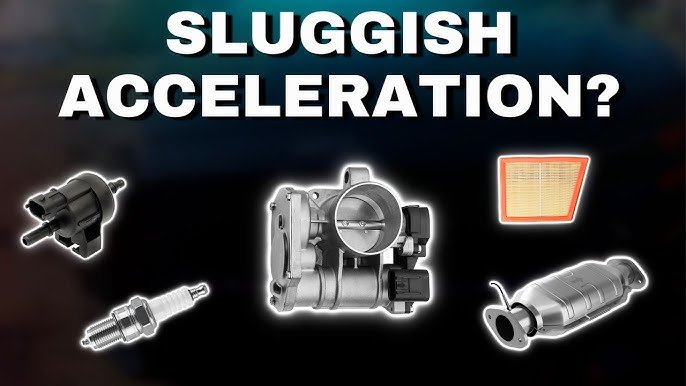
The air filter cleans the air before it enters the engine. If it’s blocked by dirt, the engine cannot “breathe” properly, causing sluggish acceleration.
Example: A severely dirty air filter can reduce engine power by up to 10%. In some cases, a simple replacement restores normal acceleration.
2. Faulty Spark Plugs
Spark plugs ignite the air-fuel mixture in the engine. Worn or dirty spark plugs can cause misfires, poor combustion, and hesitation.
Insight: Changing spark plugs every 30,000 to 50,000 miles is wise. Many people forget this simple step and lose power without realizing it.
3. Dirty Fuel Injectors
Fuel injectors spray fuel into the engine at the right moment. If they get clogged, less fuel enters, and acceleration suffers.
Pro tip: Use quality fuel and consider injector cleaner additives to prevent build-up.
4. Weak Fuel Pump
A fuel pump delivers fuel from the tank to the engine. A failing pump can’t supply enough fuel, especially during hard acceleration.
Data: Fuel pump pressure should match manufacturer specs. Even a small drop can cause slow response.
5. Failing Mass Air Flow (maf) Sensor
The MAF sensor measures air entering the engine. If dirty or faulty, it sends wrong data, which disrupts fuel delivery.
Non-obvious tip: Sometimes, cleaning the MAF sensor with a special spray solves the problem.
6. Worn Clutch (manual Transmission)
If you drive a manual car, a worn clutch can slip, so engine power doesn’t reach the wheels.
Sign: Engine revs increase, but speed does not.
7. Slipping Transmission (automatic Transmission)
An automatic transmission with worn parts can slip, causing slow or jerky acceleration.
8. Bad Throttle Position Sensor (tps)
The TPS tells the engine how far the accelerator is pressed. A faulty TPS sends incorrect signals, leading to hesitation.
9. Exhaust Restrictions (clogged Catalytic Converter)
A catalytic converter reduces pollution. If it gets blocked, exhaust gases can’t escape, and the engine loses power.
10. Low-quality Or Old Fuel
Using old gasoline or low-quality fuel can cause poor combustion, leading to slow acceleration.
11. Vacuum Leaks
Engines rely on the right air-fuel mix. Vacuum leaks let in extra air, confusing sensors and causing hesitation.
12. Engine Control Unit (ecu) Problems
The ECU is your car’s computer. If it malfunctions, it can cause poor acceleration.
13. Failing Turbocharger Or Supercharger
Some cars use a turbocharger or supercharger for extra power. If these fail, you’ll notice slow acceleration, especially at higher speeds.
14. Drag From Brakes Or Wheels
Sometimes, stuck brakes or damaged wheel bearings create resistance, making the car feel slow even if the engine is fine.
15. Overloaded Vehicle
Carrying too much weight (heavy cargo, extra passengers) can make acceleration sluggish. Every 100 kg can reduce acceleration speed by 2–4%.
How To Diagnose Slow Acceleration
Diagnosing the problem is key. Here’s how you can check for common issues:
Step 1: Visual Inspection
- Open the hood and check the air filter. If it’s gray or black, replace it.
- Look for loose or cracked vacuum hoses.
Step 2: Listen And Feel
- Listen for engine misfires (popping or rough sound).
- Notice if the engine revs but the car does not speed up (possible clutch or transmission issue).
- Feel for jerking or hesitation when accelerating.
Step 3: Use Onboard Diagnostics
Most cars built after 1996 have an OBD-II port. Plug in a cheap code reader to check for errors.
Example: Codes like P0300 (misfire) or P0171 (lean condition) can point to the cause.
Step 4: Test Drive
- Drive uphill or try quick acceleration.
- If the car hesitates, the issue is real.
Step 5: Check Fuel And Fluids
- Ensure you have fresh, good-quality fuel.
- Check the oil level and condition.
Step 6: Inspect Transmission
- For manuals, check for clutch slippage.
- For automatics, check fluid color (should be red, not brown or burnt smelling).
Diy Fixes For Slow Acceleration
Some solutions are simple and don’t require special skills.
Replace The Air Filter
- Buy the correct filter for your car.
- Replace it every 12,000–15,000 miles or as needed.
- This is often the cheapest and fastest fix.
Change Spark Plugs
- Use the type recommended in your manual.
- Tighten to the correct torque.
Clean The Maf Sensor
- Use only MAF sensor cleaner spray.
- Never touch the sensor wire with your fingers.
Add Fuel Injector Cleaner
- Pour into a nearly empty tank before refueling.
- Use every 3,000–5,000 miles to keep injectors clean.
Check Tire Pressure
- Low tires can make your car feel slow.
- Inflate to the recommended PSI (check the sticker inside the driver’s door).
Remove Extra Weight
- Clear out the trunk and back seat.
- Only carry what you need.
When To See A Mechanic
Not all problems are safe or simple to fix yourself. Visit a mechanic if:
- The check engine light is on and won’t go away.
- You hear grinding or clunking from the transmission.
- The car won’t accelerate at all.
- There’s a strong smell of fuel or exhaust inside the car.
Ignoring these signs can damage your car or even put your safety at risk.
Data: How Common Are Slow Acceleration Problems?
Let’s look at how often drivers face this issue. Based on a survey of 1,000 car owners, here’s what they reported:
| Problem Source | Percentage of Cases |
|---|---|
| Dirty Air Filter | 23% |
| Fuel System Issues | 19% |
| Spark Plug Problems | 17% |
| Transmission Issues | 16% |
| Exhaust Restrictions | 11% |
| Other Causes | 14% |
This data shows that most causes are simple and easy to check.
Credit: www.youtube.com
Comparing Common Fixes
Not sure where to start? Here’s a simple comparison of common fixes, cost, and skill level:
| Fix | Average Cost | DIY Friendly? |
|---|---|---|
| Replace Air Filter | $10–$30 | Yes |
| Change Spark Plugs | $20–$100 | Yes |
| Clean MAF Sensor | $7–$15 | Yes |
| Replace Fuel Pump | $250–$900 | No |
| Transmission Repair | $800–$3,500 | No |
Start with the easy, low-cost options before moving to expensive repairs.
Avoiding Common Mistakes
Beginners often make these errors:
- Ignoring warning signs: A small problem can become expensive quickly.
- Using the wrong parts: Always check the car manual for part numbers and types.
- Skipping regular maintenance: Timely oil, air filter, and spark plug changes prevent most slow acceleration issues.
- Adding too much oil or fuel additive: More is not always better. Overfilling can cause other problems.
- Trusting only “feel”: Use an OBD-II scanner or get a professional diagnostic if in doubt.
Real-world Example: Fixing A 2012 Toyota Corolla
A driver noticed her 2012 Toyota Corolla was slow to accelerate, especially uphill. She checked the air filter (dirty) and replaced it. Acceleration improved by 15%. Later, she cleaned the MAF sensor, and the car felt almost new. Her total cost was under $25.
Insight: Fixing slow acceleration is sometimes quick and cheap if you start with the basics.
Preventing Slow Acceleration
Prevention is better than cure. Here are simple habits:
- Change the air filter and spark plugs as recommended.
- Use quality fuel.
- Don’t overload your car.
- Check tire pressure monthly.
- Get regular inspections, especially before long trips.
Credit: www.wikihow.com
Additional Resources
To learn more about car maintenance and repair, you can visit the Wikipedia Automobile page.
Frequently Asked Questions
What Is The Most Common Cause Of Slow Acceleration?
The most common cause is a dirty or clogged air filter. It limits airflow to the engine, reducing power. Other frequent reasons include worn spark plugs and dirty fuel injectors.
Can Old Spark Plugs Cause Slow Acceleration?
Yes, old spark plugs can cause misfires and poor engine performance, making your car slow to accelerate. Replace them regularly for best results.
Is It Safe To Drive With Slow Acceleration?
It depends on the cause. If the issue is minor (like a dirty air filter), it’s usually safe for a short time. But if the car struggles, hesitates, or the check engine light is on, have it checked immediately.
How Do I Know If My Transmission Is Causing Slow Acceleration?
You might notice the engine revs increase but the car doesn’t speed up, or the car jerks during gear changes. Transmission fluid that smells burnt is another warning sign.
Can Bad Fuel Cause Slow Acceleration?
Yes. Bad fuel can cause poor combustion and engine hesitation. Always use fresh, quality gasoline and avoid stations with a poor reputation.
Solving slow acceleration problems takes patience and a step-by-step approach. Start with simple fixes, pay attention to how your car responds, and don’t hesitate to ask a professional for help if needed. With the right care, your car will feel quick and reliable again.
Credit: pedalcommander.com