
Many drivers love the comfort and fresh air a sunroof brings to their car. But when your car sunroof won’t close, it quickly becomes a headache. Rain, dust, and even theft become real worries. Fixing a stuck sunroof can feel confusing, but you don’t always need to rush to a mechanic right away. With the right approach, you can often solve the problem yourself and save money.
This article explains, step by step, how to fix a car sunroof that refuses to close. You’ll learn about the most common reasons, how to safely troubleshoot, and what tools you might need. Even if you’re new to car repairs, this guide will help you act with confidence.
Understanding Why Sunroofs Get Stuck
Before you grab your toolbox, it’s smart to know why your sunroof isn’t closing. Some problems are simple, while others need a trained hand.
Common Causes
- Electrical issues – The sunroof uses a motor powered by your car’s electrical system. If there’s a blown fuse, dead battery, or broken switch, the sunroof can stop moving.
- Mechanical jams – Dirt, small rocks, or worn-out parts can block the tracks, making the sunroof stuck.
- Misaligned glass or frame – Hard bumps or rough closing can move the sunroof out of place, causing it to jam.
- Damaged motor or cables – If the motor is weak or the cables are snapped, the sunroof won’t move at all.
- Weather-related swelling – After heavy rain or extreme heat, some sunroofs swell or contract, jamming the mechanism.
Signs To Watch For
- Grinding or clicking noises
- Sunroof starts to close, then stops
- Sunroof moves slowly or unevenly
- Complete silence when pressing the sunroof switch
Knowing these signs helps you find the real problem faster.
Safety First: Preparation Before You Begin
Working on a sunroof is usually safe, but you should always protect yourself and your car.
- Park on level ground and turn off the ignition.
- Disconnect the car battery if you’ll handle wiring.
- Wear gloves to protect your hands from sharp edges.
- Have a friend nearby if possible, in case you need help.
Never force the sunroof closed with sharp objects or strong pressure. This can break the glass or bend the frame, making repairs more expensive.
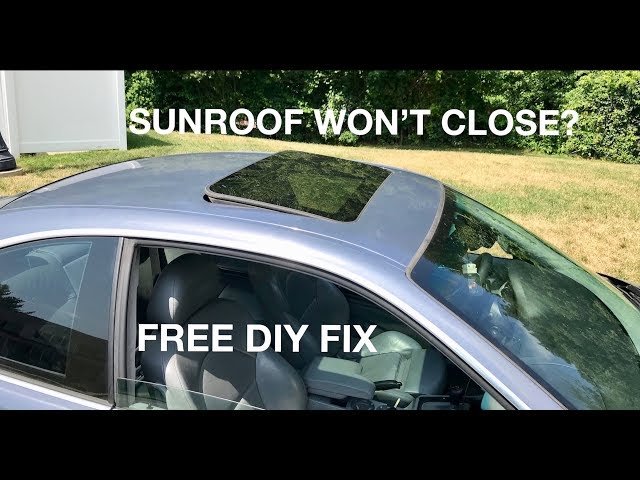
Credit: www.youtube.com
Quick Troubleshooting Steps
Here’s how to quickly check for the most common problems before you start deeper repairs.
- Check the car battery – A weak or dead battery can cause the sunroof to stop.
- Test the sunroof switch – Press and hold the close button for 10 seconds. Sometimes, the system resets itself.
- Inspect the fuse – Find your car’s fuse box. The owner’s manual shows which fuse is for the sunroof. Replace it if it’s blown.
- Listen for motor sounds – If you hear the motor trying, the problem is probably mechanical. If it’s silent, the issue is likely electrical.
- Look for visible obstructions – Shine a light along the sunroof tracks. Remove any dirt or objects gently.
If you find and fix the problem in these steps, you may not need further repair.
Step-by-step Guide To Fixing A Sunroof That Won’t Close
If the quick checks didn’t help, follow these steps for a deeper fix. Each step focuses on a different possible cause.
1. Clean And Lubricate The Sunroof Tracks
Dirt and debris are the most common reason for a stuck sunroof.
- Open the sunroof as much as possible.
- Use a soft brush or vacuum to remove dirt from the tracks.
- Wipe the tracks with a clean, dry cloth.
- Apply a small amount of silicone-based lubricant (not WD-40) to the tracks.
- Gently try to close the sunroof.
Pro tip: Avoid grease or oil-based lubricants. They attract more dirt and worsen the problem.
2. Manually Close The Sunroof
Most cars allow manual closing if the motor fails. This is especially useful in emergencies.
- Check your owner’s manual for the exact location of the manual override (usually under a small panel near the sunroof controls).
- Use the provided tool (often an Allen wrench) to slowly turn the sunroof closed.
- Do not force it. If it feels stuck, stop and check for jams.
3. Reset The Sunroof Motor
Some sunroofs get confused and need an electronic reset.
- Turn the ignition to the ON position.
- Press and hold the sunroof close button for 10-20 seconds.
- Wait until you hear a click or see the sunroof move.
- Release the button and try normal operation.
This step works for many modern cars with electric sunroofs.
4. Replace A Faulty Fuse
A blown fuse is cheap and easy to fix.
- Locate the fuse box (usually under the dashboard or in the engine bay).
- Find the sunroof fuse using your car manual.
- Pull out the fuse with a plastic tool.
- If the fuse metal is broken, replace it with one of the same rating.
Important: Never use a higher-rated fuse, as this can damage your car’s wiring.
5. Check The Sunroof Switch
Switches can wear out or break after years of use.
- Carefully remove the switch panel (usually held by clips or screws).
- Inspect the wiring for loose connections.
- Test with a multimeter if you have one.
- Replace the switch if it’s faulty.
If you’re uncomfortable with wiring, ask a professional for help.
6. Inspect And Repair Motor Or Cables
If the sunroof is silent or only moves a little, the motor or cables might be at fault.
- Remove the headliner carefully to access the sunroof motor.
- Check for disconnected wires or loose plugs.
- If the motor is warm or makes noise but doesn’t move, it may be burned out.
- Inspect cables for signs of breakage or tangling.
Replacing a motor or cables is a big job. Consider a mechanic if you’re unsure.
7. Fix Glass Or Frame Misalignment
A hard slam or accident can shift the sunroof out of place.
- Open the sunroof partway.
- Loosen the mounting screws slightly (not fully! ).
- Adjust the glass so it sits evenly in the frame.
- Tighten screws carefully.
- Test the sunroof operation.
Non-obvious tip: Check the sunroof seal for folds or pinches, as these can also block movement.
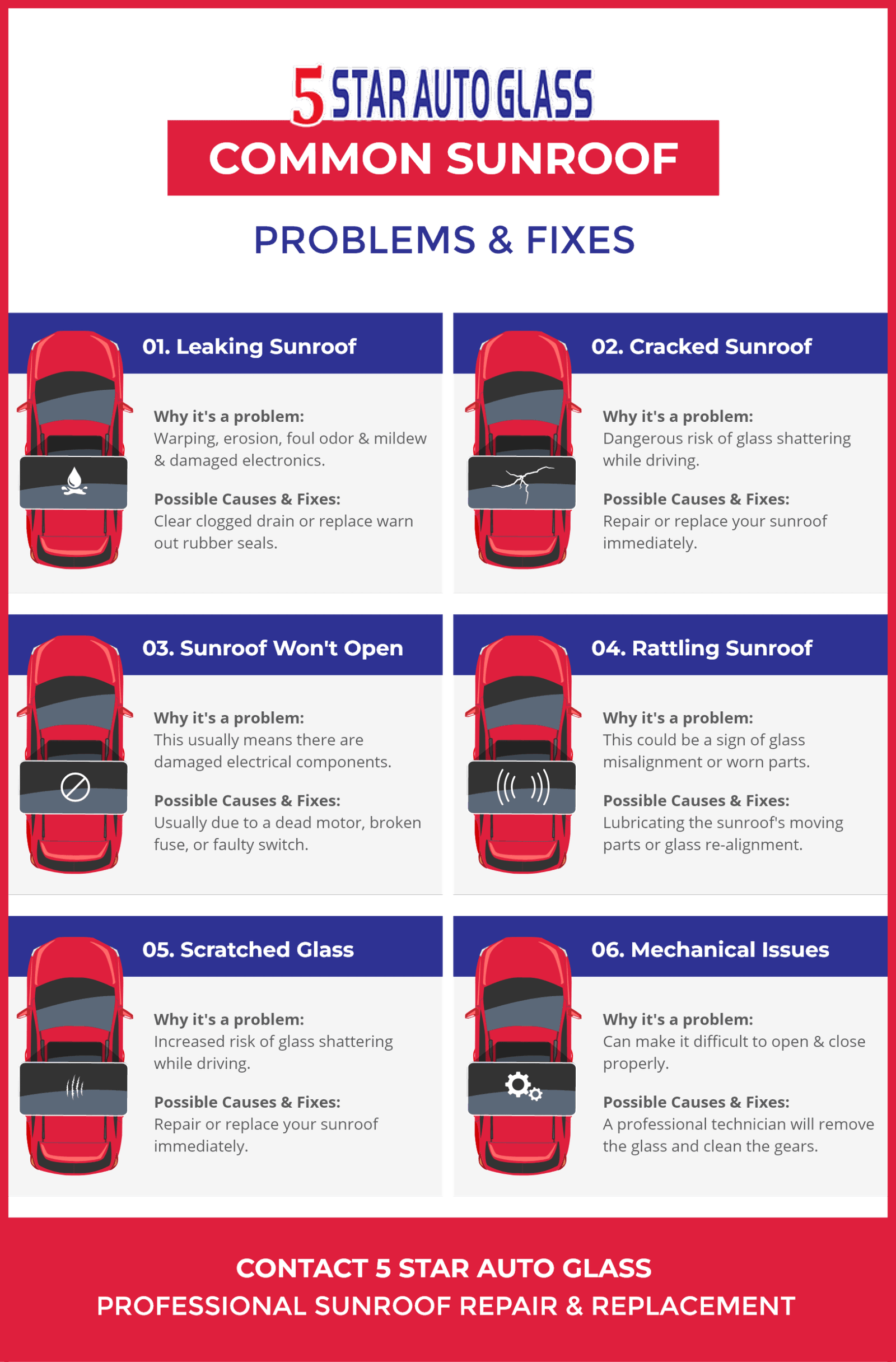
Credit: 5starautoglass.ca
Comparing Diy Vs. Professional Repair
Not sure if you can handle the fix, or should you call a pro? Here’s a quick comparison.
| Factor | DIY Repair | Professional Service |
|---|---|---|
| Cost | Low (usually $0–$50) | High ($100–$500+) |
| Time Required | 1–2 hours for basics | 1–2 days (may need appointment) |
| Skill Needed | Basic to moderate | Expert |
| Warranty | No | Often yes |
DIY is great for simple issues like cleaning, lubricating, or resetting. For motor, cable, or glass replacement, professional help is safer.
Tools And Materials You May Need
To fix a sunroof at home, gather these:
- Screwdrivers (flat and Phillips)
- Allen wrench (for manual override)
- Plastic trim removal tool
- Silicone-based lubricant
- Clean rags
- Multimeter (for electrical checks)
- Replacement fuses
Most fixes need only basic tools. For deeper repairs, specialized tools might be required.
Common Mistakes To Avoid
Even simple repairs can go wrong. Beginners often make these errors:
- Using force – Forcing the sunroof can break glass or bend the frame.
- Wrong lubricant – Using oil-based sprays attracts dust and blocks the tracks.
- Skipping the battery disconnect – Not disconnecting the battery before electrical work risks shock or short circuits.
- Ignoring the owner’s manual – Each car model has unique sunroof designs and procedures.
- Replacing with incorrect parts – Always use the right size fuse or motor for your vehicle.
Pay attention to these points to avoid making the problem worse.
How To Prevent Sunroof Problems
Once your sunroof is working again, regular care keeps it that way.
- Clean the tracks every few months.
- Lubricate with silicone spray once or twice a year.
- Check seals for cracks or wear.
- Don’t slam the sunroof shut.
- Close the sunroof in bad weather or before washing your car.
Prevention is cheaper and easier than repair.
Sunroof Problems By Car Type
Sunroof designs vary between cars. Here’s how they differ:
| Car Type | Common Sunroof Design | Typical Issues |
|---|---|---|
| Sedan | Sliding glass | Track jams, motor failure |
| SUV | Panoramic | Seal leaks, misalignment |
| Hatchback | Pop-up/manual | Latch wear, water leaks |
| Luxury | Advanced electric | Sensor faults, expensive motors |
Non-obvious insight: Panoramic sunroofs often have more parts and are harder to repair than small, manual ones.
When To Call A Professional
There are times when a DIY fix is not enough:
- Glass is cracked or shattered
- Motor or cables are damaged
- Water leaks into the car when sunroof is closed
- The sunroof is stuck open and you can’t close it at all
Professional repair may cost more but will protect your car from bigger problems, like water damage or theft.
Credit: parksidemotors.ca
Frequently Asked Questions
What Is The Most Common Reason A Sunroof Won’t Close?
The most common reason is dirt or debris in the tracks. Clean and lubricate the tracks first before trying more complicated repairs.
Is It Safe To Drive With A Sunroof Stuck Open?
It is not safe. Rain, dust, or even theft can become a risk. Try to manually close it, or cover the opening with waterproof material until you reach a mechanic.
Can I Use Wd-40 To Lubricate My Sunroof?
No. WD-40 is not recommended for sunroof tracks. Use only a silicone-based lubricant, which won’t attract dirt or gum up the mechanism.
How Much Does It Cost To Fix A Sunroof That Won’t Close?
Simple fixes (cleaning, fuse replacement) may cost under $50. Motor or glass repair can cost $200–$500 or more at a professional shop.
Where Can I Find More Details About My Specific Car’s Sunroof?
Check your owner’s manual or the official website for your car brand. You can also find helpful guides and diagrams on sites like WikiHow.
A stuck sunroof can be stressful, but many problems are simple to fix if you follow the right steps. With good tools, patience, and regular care, your sunroof will give you years of trouble-free use. If in doubt, don’t hesitate to ask a professional.
Protecting your car from leaks and damage is always worth the effort.