
If you want your car’s engine to stay healthy for a long time, installing a catch can PCV system is a smart move. Many car owners and tuners recommend this upgrade, but most guides skip important details or use confusing terms. This article will walk you through the whole process, step by step, and explain everything in simple words. By the end, you will know how to pick the right catch can, install it safely, and avoid common mistakes that could damage your car.
What Is A Catch Can Pcv System?
A catch can is a small tank that connects to your engine’s PCV (Positive Crankcase Ventilation) system. The PCV system removes gases and oil vapors from inside the engine and sends them back to be burned. However, these vapors can leave sticky oil in your engine intake, which can cause problems over time. A catch can traps these oil droplets before they reach the engine, keeping it cleaner and running better.
Why Is This Important?
Modern engines, especially those with direct injection, are more likely to have carbon buildup because oil vapors are not washed away as in older designs. Installing a catch can helps avoid:
- Loss of engine power
- Rough idling
- Higher emissions
- Expensive repairs
Many car manufacturers do not include catch cans from the factory. So, adding one yourself can prevent problems and may save you money in the future.
Tools And Parts You Will Need
Before starting, gather all the right tools and equipment. Missing tools can make the process much harder.
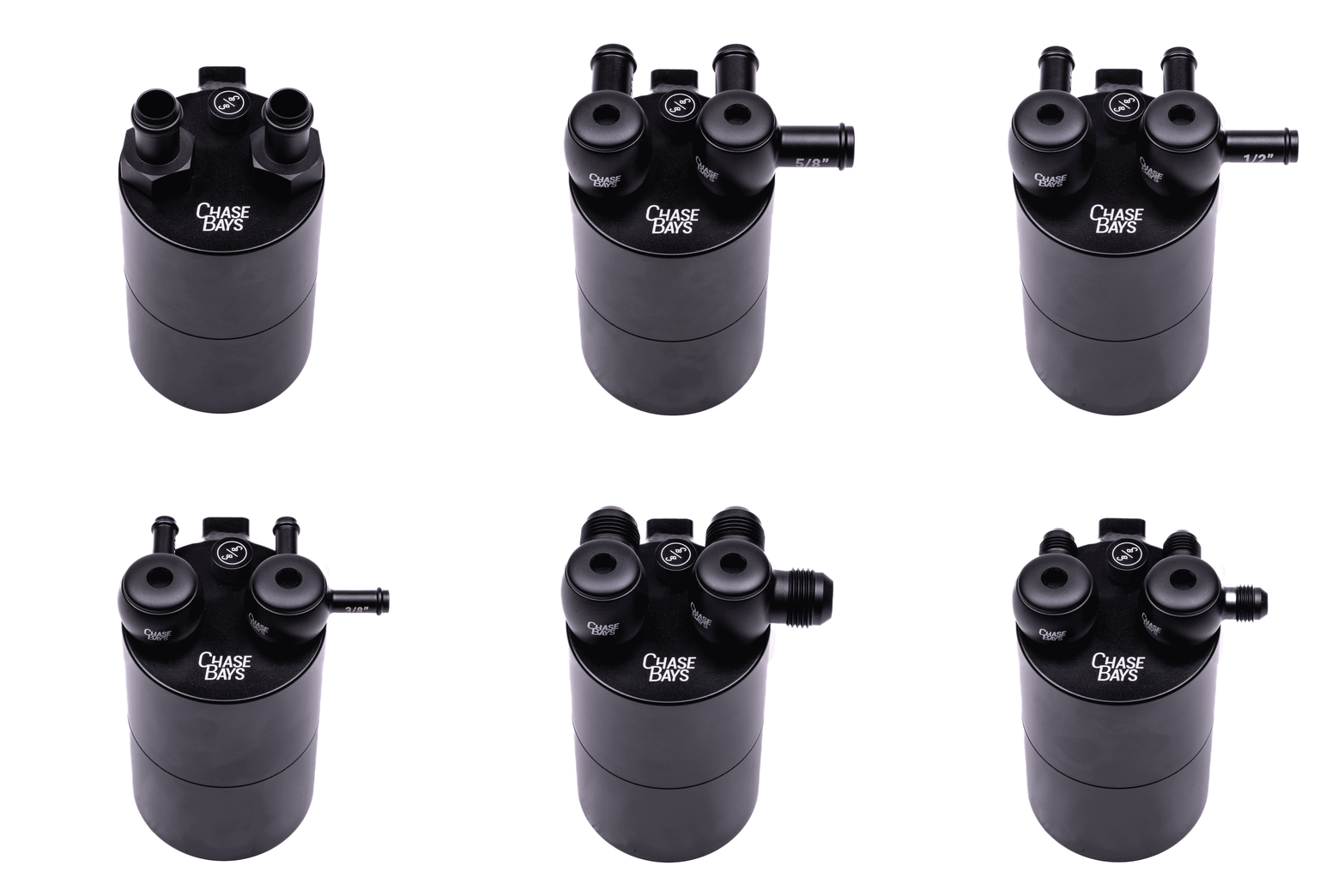
- Catch can kit (with hoses, brackets, and fittings)
- Wrenches and sockets (usually 10mm, 12mm, or 13mm)
- Screwdrivers (flat and Phillips)
- Pliers
- Hose cutter or sharp knife
- Zip ties (for securing hoses)
- Gloves and rags
- Ratchet and extensions
- Marker or tape (to label hoses)
Check your kit for missing parts before you start. Some universal kits need extra fittings for your specific car.
Credit: www.chasebays.com
Choosing The Right Catch Can
Not all catch cans are the same. Here’s what to look for when choosing one for your car:
Key Features To Compare
| Feature | Basic Catch Can | Advanced Catch Can |
|---|---|---|
| Internal Baffles | No | Yes |
| Drain Valve | No | Yes |
| Clear Sight Tube | No | Yes |
| Price Range | $20-$40 | $80-$200 |
- Internal baffles help separate oil from air. Always choose a can with baffles for best results.
- Drain valves make it easy to empty the can without removing it.
- A clear sight tube lets you see the oil level inside.
Matching The Catch Can To Your Car
Some catch cans are universal, but others are made for certain car brands or engines. Universal cans need extra work to fit properly. If possible, buy a kit designed for your car model, as it will come with the correct brackets and hose sizes.
Understanding Your Car’s Pcv System
Before installation, you need to find the PCV hose. This hose usually runs from the valve cover to the intake manifold or turbo inlet. It carries oily vapors out of the engine.
Some cars have more than one PCV hose. Check your car’s service manual or look for a diagram online. It is important not to confuse the PCV hose with other vacuum or breather hoses.
Example: Locating The Pcv Hose
- Honda Civic: The PCV hose is on the back of the engine, near the intake manifold.
- Ford Ecoboost: The PCV hose runs from the valve cover to the turbo inlet pipe.
If you are unsure, search for your car and “PCV hose location” online. You can also check Wikipedia for more technical background.
Step-by-step: How To Install A Catch Can Pcv System
Now you are ready to install the catch can. Work carefully and double-check each step.
1. Prepare The Engine Bay
Let the engine cool down completely before you start. Hot engine parts can burn you. Open the hood and remove any plastic covers that block access to the PCV hose.
Take a photo of the engine bay before you start. This helps you remember how everything fits together.
2. Remove The Pcv Hose
Locate the PCV hose and squeeze the hose clamps with pliers. Slide the hose off both ends (the valve cover and the intake manifold or turbo inlet). Some cars use quick-connect fittings that you can release with your fingers.
If the hose is stuck, twist it gently. Avoid using too much force, or you could break the plastic fittings.
3. Measure And Cut The Hoses
Your catch can kit comes with new hoses. Measure the distance from the PCV valve to the catch can, and from the catch can to the intake. Cut the hoses to length using a hose cutter or a sharp knife.
Leave a little extra hose for easy routing, but not so much that it sags or gets in the way of moving engine parts.
4. Mount The Catch Can
Find a good spot in the engine bay to mount the catch can. The best place is:
- Away from hot parts (like the exhaust manifold)
- Easy to reach for draining and checking oil
- Secure and not moving
Most kits include a bracket. Bolt the bracket to an existing hole in the engine bay (for example, on the firewall or fender). If you can’t find a good spot, you may need to drill a small hole for the bracket.
Secure the catch can tightly so it does not shake or rattle.
5. Connect The Hoses
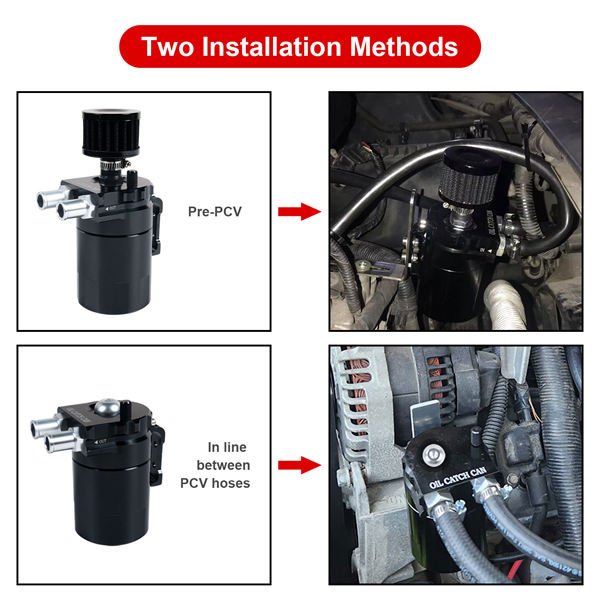
Attach the first hose from the PCV valve to the inlet of the catch can. Then connect the second hose from the outlet of the catch can to the intake manifold or turbo inlet.
Make sure you connect the hoses to the right ports. Most catch cans label “IN” and “OUT. ” If not, check the instructions or look for arrows on the fittings.
Push the hoses all the way onto the fittings, then secure them with hose clamps. Tighten the clamps with a screwdriver, but do not overtighten.
6. Secure The Hoses
Route the hoses neatly so they do not touch hot parts or moving belts. Use zip ties to hold the hoses in place. Check that the hoses do not kink or fold, as this can block airflow.
Double-check all connections. Loose hoses can cause vacuum leaks or oil spray in the engine bay.
7. Double-check And Test
Before starting the engine, check:
- All clamps are tight
- Hoses are secure and not rubbing on sharp edges
- Catch can is mounted solidly
Start the engine and let it idle for a few minutes. Check for air leaks, strange noises, or warning lights. If everything looks good, take a short drive and check again.
Common Mistakes And How To Avoid Them
Many beginners make simple mistakes that can cause leaks or engine problems. Here are two non-obvious things to watch out for:
- Wrong hose routing: If you connect the hoses backwards, the catch can will not work, and you could create pressure in the crankcase. Always follow the flow from the PCV valve to the catch can, then from the can to the intake.
- Forgetting to drain the catch can: After a few weeks, check the catch can. If it’s full, oil can go back into the intake. Drain it regularly—every oil change is a good habit.
Other common problems include not tightening clamps enough or letting hoses rest on hot parts, which can melt them.
Credit: www.tectruckparts.com
Maintenance After Installation
A catch can needs regular checks to work well. Here’s what you should do:
- Check the oil level in the can every month (or more often if you drive hard).
- Drain the catch can whenever it is half full. Most cans unscrew from the bottom, or you can use a drain valve.
- Inspect the hoses and clamps for leaks or cracks.
- Clean the catch can every 6-12 months. Rinse it with engine degreaser and let it dry fully before reinstalling.
Dirty or full catch cans can cause the same problems you wanted to avoid, so keep up with maintenance.
Real-world Benefits Of A Catch Can
You might wonder how much difference a catch can makes. Real-world data shows clear results:
| Car Model | Miles Driven | Oil Collected (ml) | Comments |
|---|---|---|---|
| Subaru WRX | 3,000 | 60 | Noticeable oil after hard driving |
| VW Golf GTI | 5,000 | 120 | Less carbon buildup seen |
| Ford Mustang | 4,500 | 90 | Smoother idle, better throttle response |
Drivers report improved engine response and cleaner intake valves after installing a catch can. In some cases, after 20,000 miles, the intake valves were almost clean compared to cars without a catch can.
Is A Catch Can Right For Every Car?
Most modern engines can benefit from a catch can, especially direct-injection and turbocharged engines. Older engines with carburetors or throttle body injection may not need one.
However, some cars (like certain Toyotas and Hondas) have less PCV oil buildup. For these, a catch can is optional but still helpful if you want to keep the engine as clean as possible.
How Much Does It Cost To Install A Catch Can?
Prices vary by brand and car model. Here’s a quick cost comparison:
| Catch Can Type | Average Price | Installation Time | Skill Level |
|---|---|---|---|
| Universal Kit | $30-$70 | 1.5-2 hours | Beginner |
| Car-Specific Kit | $100-$250 | 1 hour | Beginner |
| Professional Install | $200-$400 (parts+labor) | 30 min-1 hour | Professional |
Most people can install a catch can at home with basic tools. If you are not comfortable working on your engine, a mechanic can do it quickly.
Credit: www.youtube.com
Final Thoughts
Installing a car catch can PCV system is one of the simplest ways to protect your engine from oil buildup and keep it running at its best. With the right tools and careful steps, you can finish the job in about one or two hours. Remember to check and drain the can regularly, and your engine will thank you with smoother running and fewer problems. If you are still unsure, consult your car’s manual or an experienced mechanic for advice.
Frequently Asked Questions
What Is The Main Function Of A Catch Can In A Pcv System?
A catch can traps oil vapor and contaminants from the PCV system before they can enter the engine intake. This keeps the intake and valves cleaner, reduces carbon buildup, and helps the engine run more efficiently.
How Often Should I Drain The Catch Can?
It depends on how much oil your engine produces. Most people check and drain the catch can every oil change, but if you drive hard or have a turbocharged engine, check it monthly.
Can A Catch Can Cause Problems If Installed Wrong?
Yes. If you connect the hoses incorrectly, the PCV system may not work, causing pressure buildup or vacuum leaks. This can lead to engine warning lights, rough idle, or oil leaks. Always follow the correct routing.
Is A Catch Can Legal On The Street?
In most areas, catch cans are legal as long as they do not vent gases directly to the air. Some places require all emissions systems to remain factory stock, so check your local laws if you are unsure.
Do I Need Any Special Skills To Install A Catch Can?
No special skills are needed if you are comfortable using basic hand tools. The job mostly involves removing and replacing hoses and tightening clamps. If you are not confident, a mechanic can install it quickly.