
Thinking about installing a subwoofer in your car trunk? If you love music, a subwoofer can change your driving experience. Deep bass makes every song feel fuller and more powerful. But many car owners worry: Is installing a subwoofer too hard? Do you need special tools or a mechanic’s help? The truth is, you can install a subwoofer yourself with the right steps. Even if you are not an expert, careful work and patience can give you great results.
This guide will walk you through everything, from what you need to how to set up your subwoofer for best sound. You will learn about common mistakes, safety tips, and how to avoid problems with your car’s electrical system. By the end, you’ll feel confident to upgrade your car’s audio and enjoy music like never before.
Why Add A Subwoofer To Your Car Trunk?
A factory car stereo often lacks deep bass. It may sound flat or “tinny,” especially with modern music. A subwoofer adds low frequencies, making music richer and more exciting. When placed in the trunk, a subwoofer has space to produce strong, clear bass without taking up room in the passenger area.
Car trunks also help “hide” the subwoofer, protecting it from theft and accidental damage. Most importantly, you get big sound without losing comfort inside your car. Many people are surprised how much better movies, podcasts, and even phone calls sound with fuller bass.
Tools And Materials You Need
Installing a subwoofer requires some basic tools. Most are common, but a few might be new to you. Getting everything ready first will save you time and frustration.
Essential Tools
- Socket wrench set – For removing bolts and seats.
- Screwdrivers (Phillips and flathead) – For panels and speaker terminals.
- Wire stripper/crimper – To prepare and connect wires safely.
- Pliers – For gripping and bending wires.
- Electrical tape/heat shrink tubing – To insulate connections.
- Drill (optional) – For mounting the subwoofer box or amplifier.
Materials And Parts
- Subwoofer (usually 10-12 inches for most cars)
- Subwoofer enclosure/box (sealed or ported)
- Amplifier (matched to your subwoofer’s power)
- Amplifier wiring kit (with power, ground, remote, and RCA cables)
- Fuse holder and fuse (for safety)
- Speaker wire (16-12 gauge is typical)
- Cable ties (to keep wiring neat)
Pro tip: Buy a complete subwoofer kit if you are a beginner. It includes almost everything you need and avoids mismatched parts.
Planning The Installation
Before you start, take a few minutes to plan. This step is often skipped but makes everything easier.
Check Compatibility
- Make sure your amplifier’s RMS power matches your subwoofer’s RMS rating.
- Check if your car stereo has RCA outputs. If not, you might need a line output converter.
- Measure your trunk to ensure the subwoofer box fits.
Choose Your Wiring Path
- Find a safe, hidden route for the power wire from the battery to the trunk.
- Plan how you’ll hide wires under carpets or panels.
- Avoid running power and audio (RCA) wires side by side; it can cause noise.
Disconnect The Battery
Always disconnect the negative battery terminal before working. This protects you and your car from electrical shorts.
Step-by-step Subwoofer Installation
Let’s break down the process into clear steps. Take your time and check your work at each stage.
1. Mount The Subwoofer In The Box
If your subwoofer is not already in a box, install it now.
- Place the subwoofer into the cutout on the enclosure.
- Use screws to secure it evenly.
- Connect the speaker wire from the box terminals to the subwoofer.
2. Run Power Wire From Battery To Trunk
- Open your car’s hood and locate the battery.
- Connect the fuse holder to the power wire, about 18 inches from the battery.
- Find a rubber grommet in the firewall (the metal wall at the back of the engine bay).
- Push the power wire through the grommet and into the car’s cabin.
- Run the wire along the car’s edge, hiding it under trim panels or carpet.
- Pull the wire into the trunk.
Non-obvious tip: Always install the fuse last, after all wiring is done, to avoid accidental shorts.
3. Connect Ground Wire
- Find a solid metal point in the trunk (bare metal, not painted).
- Sand the area to remove paint for a good connection.
- Bolt the ground wire tightly to this spot.
A poor ground is a common cause of amplifier noise and failure. Take your time here.
4. Run Rca And Remote Turn-on Wires
- Connect RCA cables from your car stereo’s output to the amplifier input.
- Run these wires along the opposite side of the car from the power wire.
- Find the remote turn-on wire (often blue) on your stereo and run it to the amplifier. This wire tells the amp to turn on when the stereo is on.
If your stereo has no RCA output, use a line output converter to tap into the rear speaker wires.
5. Connect Speaker Wire From Amp To Subwoofer
- Use quality speaker wire between the amplifier and subwoofer box.
- Keep the wire as short as possible for best sound.
6. Secure The Amplifier
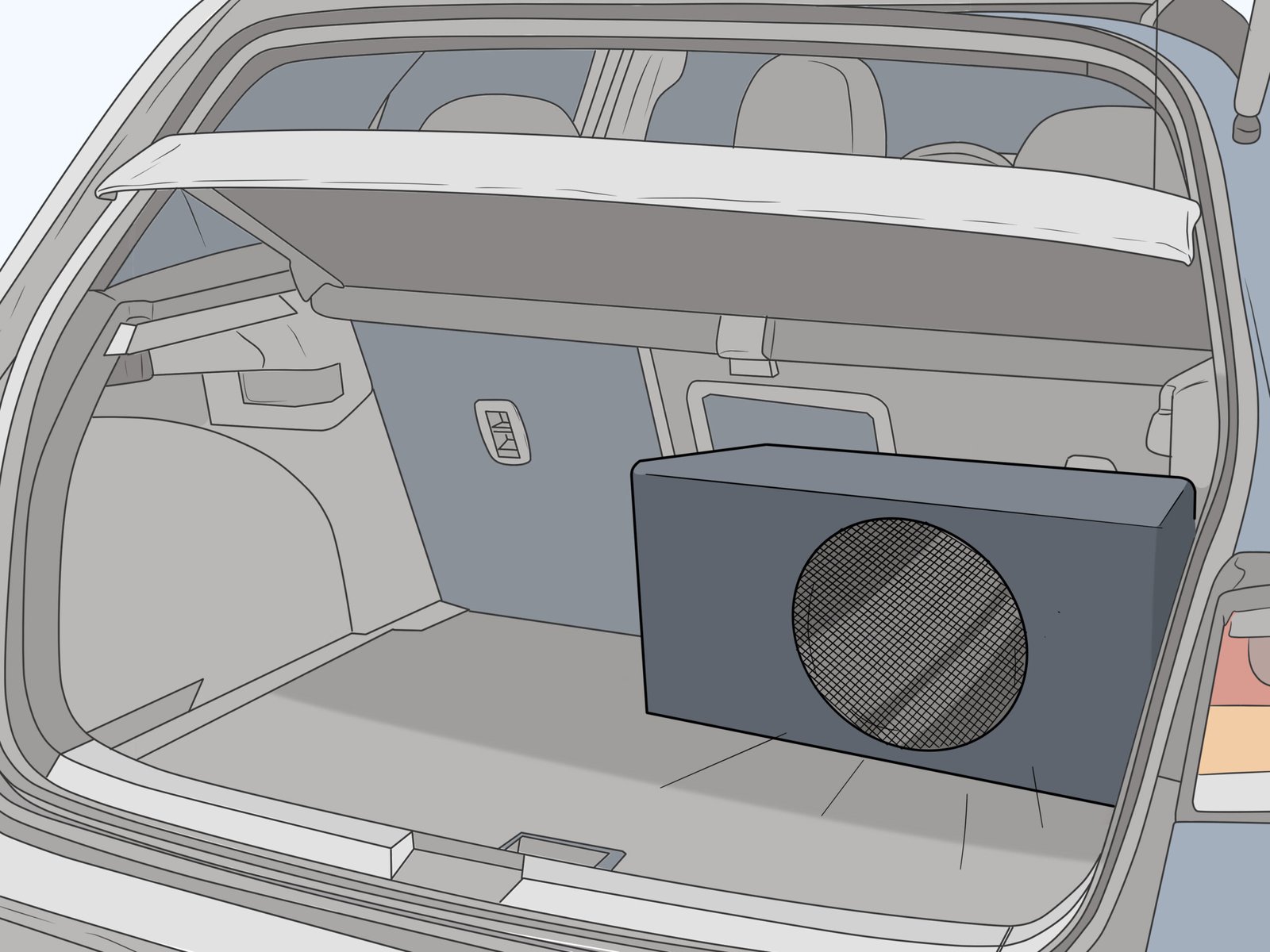
Mount the amplifier on a stable surface in the trunk. Many people attach it to the back of the rear seat or the side of the trunk. Make sure it has airflow and is not covered by carpet or other items.
7. Double-check Connections
- Check all wire connections are tight and insulated.
- Make sure no wires are pinched or exposed.
8. Install The Fuse And Reconnect Battery
Now, insert the fuse into the holder near the battery. Reconnect the negative battery terminal.
9. Test The System
- Turn on your car stereo.
- Check if the amplifier power light turns on.
- Play music and slowly increase the volume.
- Adjust the amplifier’s gain and crossover settings for clean bass.
If you hear distortion or rattling, lower the settings and check all connections.
Enclosure Types: Sealed Vs. Ported
The enclosure type affects the sound and space in your trunk.
| Type | Sound Quality | Bass Output | Size |
|---|---|---|---|
| Sealed | Tight, accurate | Moderate | Smaller |
| Ported | Louder, less precise | High | Larger |
Sealed boxes are best for music that needs clear, punchy bass (like rock or jazz). Ported boxes give more volume but can be less accurate. Think about your music style and trunk space.
Common Mistakes And How To Avoid Them
Many beginners make small errors that cause big problems. Here’s how to avoid them:
- Skipping the ground: Poor grounding creates buzzing or stops the amp from working.
- Wrong fuse size: Always use a fuse that matches your amp’s power. Too big is unsafe; too small will blow often.
- Loose connections: Every wire should be tight and covered. Loose wires can cause fires.
- Mixing power and RCA wires: Keep these apart to reduce noise.
- Over-tightening speaker screws: This can damage the subwoofer’s frame.
Hidden insight: Never cut the factory wiring unless you have to. Use adapters or a wiring harness if possible. This makes it easier to put your car back to stock if needed.
Credit: www.wikihow.com
Tuning Your Subwoofer For Best Sound
Once installed, tuning is crucial. Don’t just set everything to maximum.
Gain Setting
- Start with the gain at minimum.
- Play music and slowly raise the gain until you hear clean bass without distortion.
Crossover
- Set the low-pass filter on your amp to around 80 Hz.
- This lets only the deep bass reach your subwoofer.
Bass Boost
- Use bass boost carefully. Too much can damage the subwoofer or cause distortion.
Phase Switch
- If your subwoofer sounds weak, try flipping the phase switch (often labeled 0°/180°).
- This can fix bass cancellation caused by speaker placement.
Pro tip: Spend time adjusting settings with your favorite songs. Every car and subwoofer is different.
Safety Tips
Working with car electronics is safe if you follow basic rules:
- Always disconnect the battery before starting.
- Use proper fuses.
- Secure all wires away from moving parts.
- Don’t overload your car’s electrical system. Check your alternator and battery health if you add big subwoofers.
If you’re unsure, ask a friend with experience or check resources like Wikipedia’s subwoofer page.
Credit: audiodesignscg.com
Example Installation: Small Sedan Vs. Large Suv
How does installation differ by car type? Here’s a quick comparison:
| Feature | Small Sedan | Large SUV |
|---|---|---|
| Trunk space | Limited, use compact box | Plenty, can use bigger box |
| Wiring path | Narrow, may need to remove seats | Wide, easier to hide wires |
| Sound transfer | Bass stays mostly in trunk | Bass fills whole cabin |
| Theft risk | Lower, subwoofer hidden | Higher, visible through windows |
Non-obvious insight: In a sedan, folding the rear seat down can let more bass into the cabin. In an SUV, consider a removable box if you need cargo space sometimes.
Maintenance And Troubleshooting
After installation, maintenance keeps your system running well.
- Check connections every few months.
- Clean dust from the amp and subwoofer.
- Listen for rattles or new noises. Fix loose panels or screws.
- If the amp shuts off or the subwoofer stops working, check the fuse and wiring first.
Credit: www.fastcar.co.uk
Frequently Asked Questions
What Size Subwoofer Is Best For A Car Trunk?
Most cars fit a 10 or 12-inch subwoofer well. A 10-inch is great for tight, fast bass and smaller trunks. A 12-inch gives deeper, louder bass but needs more space.
Do I Need An Amplifier For My Subwoofer?
Yes, almost all car subwoofers require an amplifier. The factory stereo cannot produce enough power for strong bass. Match the amplifier’s RMS power to your subwoofer’s rating for best results.
Will Installing A Subwoofer Drain My Car Battery?
A properly installed subwoofer should not drain your battery while driving. If you play music loudly with the engine off, it can drain the battery. For very large systems, upgrading your car battery or alternator is smart.
Can I Install A Subwoofer Without Cutting Any Wires?
Yes. With plug-and-play adapters or a line output converter, you can avoid cutting factory wires. This is safer and keeps your car’s wiring intact.
How Do I Stop Rattling Noises In The Trunk?
Rattling is common with strong bass. Add foam or sound deadening material to loose panels. Tighten screws and clips in the trunk. Sometimes, just rearranging items in the trunk helps.
Upgrading your car’s sound with a subwoofer is one of the most rewarding DIY projects. With careful installation and attention to detail, you’ll enjoy powerful, clear music for years—making every drive a pleasure.